What to Wear in South Korea in October and November 2026
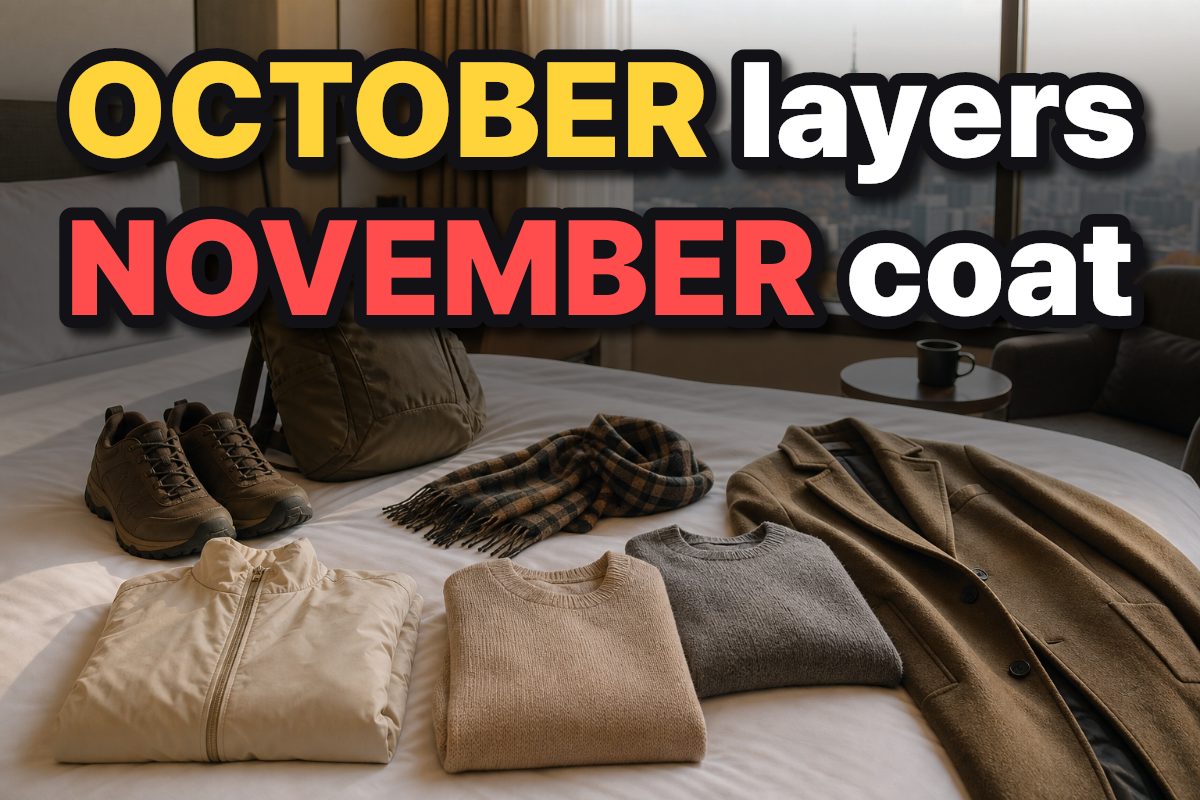
Key Takeaways
- For Seoul in October, pack clothes you can layer: afternoons may feel mild, while mornings and evenings can be much cooler.
- In November, bring a warm coat, insulating layers, and closed-toe shoes; Seoul’s overnight temperatures can fall below freezing.
- For foliage walks in the mountains, add wind-resistant outerwear and sturdy walking or hiking shoes rather than relying on city layers alone.
- Build outfits around removable layers so you can adjust between chilly outdoor sightseeing and heated indoor spaces.
Table of Contents
- What should you wear in South Korea in October 2026?
- How should your packing change for November?
- What should you wear for fall foliage walks?
- How do you choose layers for indoor and outdoor plans?
- What should you pack for October versus November?
- How should first-time visitors and foliage hikers adjust?
- Frequently Asked Questions
- Quick packing summary
What to wear in South Korea in October and November 2026 depends less on the calendar than on the time of day and where you are going. For Seoul, AccuWeather’s outlook lists October highs of 61°F to 82°F and lows of 45°F to 65°F, while November’s listed highs fall to 44°F to 65°F and lows to 25°F to 49°F. Pack layers for October and a genuinely warm outer layer for November, especially if your plans include early starts, evening walks, or mountain foliage.
What should you wear in South Korea in October 2026?
For a typical Seoul day in October, combine a comfortable base layer with a cardigan or light jacket you can take off later. A T-shirt can work for a mild afternoon, but it is not a dependable all-day outfit when the morning begins near the lower end of the month’s temperature range.
AccuWeather’s Seoul outlook gives October daily highs of 61°F to 82°F and overnight lows of 45°F to 65°F, with an average high of 71°F and average low of 53°F. Those broad ranges make a flexible outfit more useful than packing only for a warm forecast or only for a cold morning.
- Afternoon in the city: Try a T-shirt or long-sleeve top with jeans, trousers, or a skirt, and keep a light layer in your day bag.
- Early morning or evening: Add a cardigan, denim jacket, or other light-to-medium jacket. A warmer top helps if you will be outdoors for an extended period.
- Palace, park, or market visit: Choose walking shoes and layers that are easy to carry when you warm up.
The Korea Meteorological Administration warned of sharp autumn temperature swings and chilly mornings and evenings, in a report covered by CHOSUNBIZ on September 27, 2026. The practical takeaway is to plan for both ends of the day, not just the afternoon high.
How should your packing change for November?
November calls for warmer mid-layers and a coat that can handle a cold evening. In Seoul, AccuWeather’s November outlook lists an average high of 53°F and an average low of 37°F, with the full daily ranges extending from 44°F to 65°F for highs and 25°F to 49°F for lows.
For early November, start with a long-sleeve base layer, add a warm sweater, and bring a light-to-medium coat. For later dates, a wool coat or light puffer, scarf, and thermal base layers are more practical—particularly if you expect to be outside after dark or at the start of the day.
| November plan | Useful clothing | Why it fits |
|---|---|---|
| Mostly daytime city sightseeing | Sweater, trousers, medium-weight coat, closed-toe walking shoes | Lets you remove the coat indoors while keeping a warm layer for outdoor walks. |
| Early start or evening plans | Thermal base layer, warmer coat, scarf, covered shoes | Seoul’s listed November overnight lows can reach 25°F. |
| Late-month outdoor sightseeing | Wool or puffer coat, warm mid-layer, gloves if you prefer them | Provides more insulation for a longer stretch outside in colder conditions. |
Odynovo’s November regional averages give Busan a high of 63°F and low of 47°F, and Jeju Island a high of 61°F and low of 50°F. These figures are milder than Seoul’s November average, but they are not a reason to leave every warm layer at home: mornings, breezes, and time outdoors can still make a light jacket useful.
What should you wear for fall foliage walks?
For a foliage outing in a mountainous area, dress for more exposure to wind and a longer period outdoors than you might experience during a short city stop. VisitKorea’s foliage guidance recommends windproof outerwear and hiking boots for mountainous destinations such as Seoraksan and Bukhansan.
Use a three-part system: a base layer next to your skin, a warm mid-layer, and an outer layer that blocks wind. This arrangement is easier to adjust than one very bulky garment: you can add the outer layer at a breezy viewpoint and remove it during a warmer stretch of the walk.
- Start with footwear. Wear comfortable shoes with a secure fit and a sole suited to the route. For a mountain hike, follow VisitKorea’s recommendation for hiking boots rather than treating the outing like a paved city stroll.
- Pack a wind-resistant outer layer. It helps protect you when exposed sections feel colder than sheltered streets.
- Keep a warm layer accessible. Put it where you can reach it without unpacking everything at a viewpoint or rest stop.
- Check the day’s forecast before leaving. Use it to decide whether your mid-layer should be a light sweater or a warmer insulating layer.
Do not assume that a mild temperature in central Seoul will describe conditions on a mountain trail. The location and exposure differ, so choose clothing for the activity and route as well as the city forecast.
How do you choose layers for indoor and outdoor plans?
Layering works because one outfit has to serve different environments: chilly streets, long outdoor walks, and heated cafés or public transportation. A single heavy coat over a thin shirt can feel comfortable outside but too warm indoors; removable layers give you more control.
| Layer | What to pack | When to adjust it |
|---|---|---|
| Base | T-shirt or long-sleeve top in October; thermal top for colder November plans | Choose a warmer base when you expect a cold morning or extended outdoor time. |
| Mid-layer | Cardigan or light sweater in October; warmer sweater in November | Add it when temperatures drop, especially after sunset. |
| Outer layer | Light jacket in October; medium or heavier coat in November | Wear it outdoors and remove it when an indoor space feels warm. |
For a compact suitcase, use pieces that work together rather than packing a separate outfit for every day. Two or three sweaters or cardigans can rotate with a small set of tops, while one suitable jacket or coat handles the outer layer. Prioritize shoes you can comfortably walk in; foliage sightseeing often involves more time on your feet than a short transfer between attractions.
What should you pack for October versus November?
Use this checklist as a starting point, then adjust it for your itinerary and the latest forecast. The biggest change is the outer layer: October usually centers on a light jacket, while November calls for a warmer coat and more deliberate insulation.
- October: Pack one light jacket, two or three cardigans or sweaters, comfortable walking sneakers, and tops that work alone on mild afternoons or under a layer in the morning.
- November: Pack one warm coat, two or three thermal tops or bottoms if you expect cold outdoor days, a scarf, and closed-toe shoes or boots.
- Either month: Add a compact waterproof umbrella or light waterproof shell. CHOSUNBIZ’s September 27, 2026 report on the KMA warning also noted spotty rain.
- For skirts or dresses: They can work in either month; add tights or leggings as the weather cools rather than relying on bare legs for a long outdoor day.
A common packing mistake is treating “fall” as one temperature. Seoul’s listed October and November ranges show a substantial seasonal shift, and the KMA warning also highlights day-to-day swings. A second mistake is dressing only for the daytime high: if your itinerary includes an evening palace visit or night market, keep a warm layer with you instead of leaving it at your accommodation.
How should first-time visitors and foliage hikers adjust?
If this is your first trip, pack for the coldest part of your planned day, then use removable layers to stay comfortable during warmer hours. If you already know you run warm or cold, adjust the base and mid-layer first; the outer layer is still useful for wind and changing conditions.
- First-time visitor with a city-heavy itinerary: In October, take a light jacket every day. In November, bring a warm coat even if you expect to spend time indoors.
- Foliage-focused traveler: Put wind-resistant outerwear and suitable hiking footwear at the top of the list, as VisitKorea recommends for mountainous areas.
- Traveler visiting Busan or Jeju in November: Use the regional averages as context—Odynovo lists warmer average lows than Seoul—but still pack a layer for mornings and outdoor sightseeing.
- Carry-on packer: Wear your bulkiest coat in transit and pack lighter layers that can be combined. This saves bag space without leaving you dependent on a single thin outfit.
For late November, snowfall is possible in Seoul and Gangwon Province, according to Odynovo. Treat that as a reason to check the forecast close to your travel date, not as a guarantee that snow will fall during your visit.
Frequently Asked Questions
Do I need a heavy winter coat in October?
Usually not for ordinary city sightseeing; a light jacket or cardigan is a more flexible starting point. For a late-October mountain hike or a long day outdoors, bring a warmer mid-layer or medium-weight jacket.
Can I wear a T-shirt in South Korea in October?
A T-shirt can suit a mild afternoon, especially early or mid-month, but it may not be enough for a chilly morning or evening. Carry a layer so your outfit works when the temperature drops.
Are skirts and dresses practical in November?
Yes. Add tights or leggings as the weather gets colder, and choose a coat that covers the outfit comfortably if you will be outdoors for a while.
Should I pack an umbrella?
A compact waterproof umbrella or light waterproof shell is a useful option. CHOSUNBIZ reported spotty rain alongside the KMA’s autumn temperature warning on September 27, 2026.
Quick packing summary
For October, plan on a light jacket, removable sweaters, and walking shoes; for November, upgrade to a warm coat, insulating layers, and closed-toe footwear. For mountain foliage walks, add windproof outerwear and hiking boots. Check the forecast shortly before each outing, since the temperature and rain outlook can change during the season.
For practical travel help while in South Korea, VisitKorea lists the 1330 Korea Travel Helpline.
References
- Seoul, Seoul, South Korea Monthly Weather | AccuWeather
- KMA warns Korea of spotty rain and sharp autumn temperature swings - CHOSUNBIZ
- Seoul, Seoul, South Korea Monthly Weather | AccuWeather
- South Korea in November 2026: Peak of Fall Foliage
Information in this post was checked as of 2026-09-27. Policies and prices may change, so please verify important details with official sources.


Comments
Post a Comment