South Korea Fall Foliage Peak 2026: Dates by Region
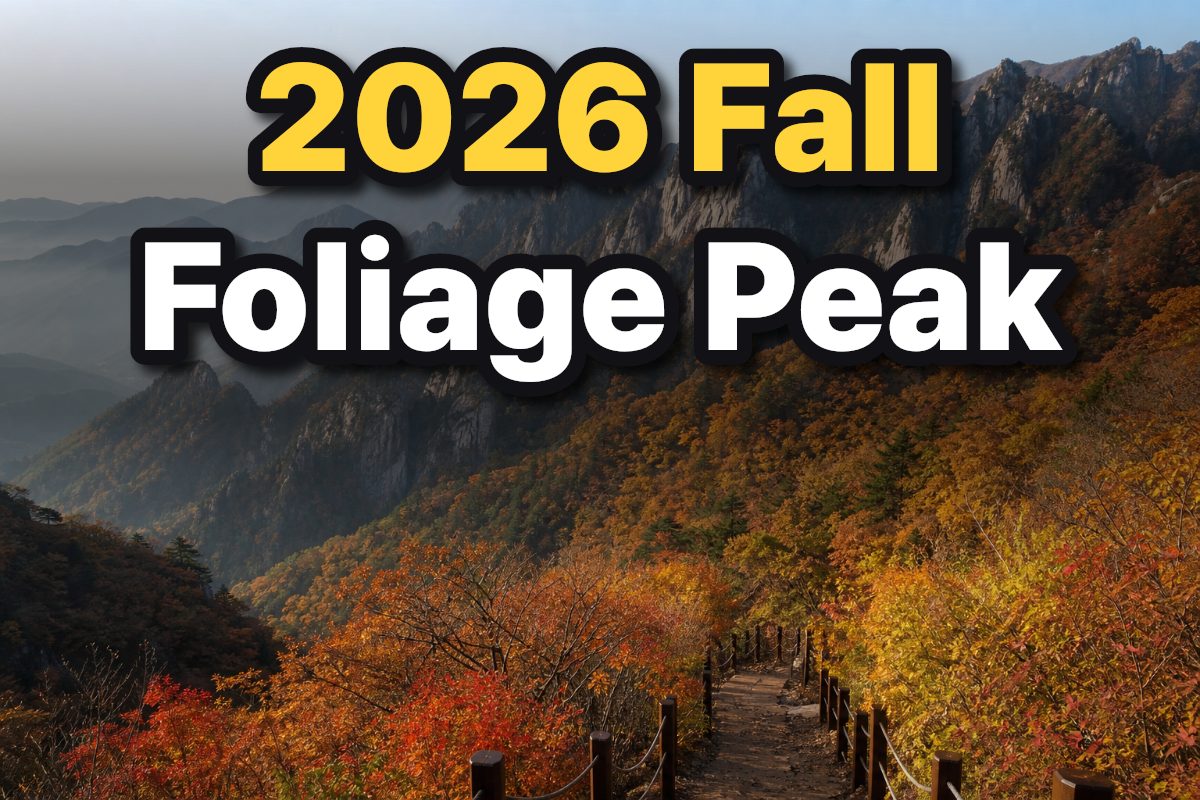
Key Takeaways
- South Korea’s 2026 fall colors are expected to progress from northern mountains to southern regions from late September through mid-November.
- The Korea Forest Service’s September 22 forecast puts peak color at Seoraksan on October 20 and Naejangsan on November 4.
- Forecasts differ: VISITKOREA’s Weatheri forecast gives later peak dates for Seoraksan, Jirisan, Naejangsan, and Hallasan.
- Choose dates for a specific mountain or city, and leave room for a few days of flexibility.
Table of Contents
- When will fall foliage peak in South Korea in 2026?
- What does “peak foliage” mean?
- Which region should you visit, and when?
- How to plan around the forecast differences
- What should first-time and repeat visitors prioritize?
- Common planning mistakes to avoid
- Frequently Asked Questions
- Key dates at a glance
South Korea’s 2026 fall foliage peak is expected to move from the northern mountains in October to southern destinations and Jeju in November. The Korea Forest Service’s latest forecast, released September 22, puts the nationwide average peak for maple and oak at October 31; for travel planning, the best date depends on the place you want to see.
When will fall foliage peak in South Korea in 2026?
The Korea Forest Service forecasts peak foliage from October 20 at Seoraksan to November 6 at Hallasan. Its nationwide averages are October 31 for maple and oak and October 30 for ginkgo, according to the forecast reported by CHOSUNBIZ on September 22, 2026.
Those averages are useful for a broad itinerary, but they do not describe one nationwide “peak day.” Color develops earlier at higher elevations and in northern areas, then advances south and into lower-elevation city streets. Use a mountain’s forecast for a mountain trip and a city’s seasonal window for an urban visit.
| Destination | Korea Forest Service forecast | Weatheri forecast via VISITKOREA |
|---|---|---|
| Seoraksan | October 20 | October 25 |
| Jirisan | October 27 | November 5 |
| Songnisan | October 28 | Not listed in the comparison |
| Naejangsan | November 4 | November 11 |
| Hallasan | November 6 | November 13 |
The Korea Forest Service dates are from September 22; VISITKOREA’s forecast, citing Weatheri Inc., was published September 8. These are forecasts from different sources, not a promise that every trail or tree will peak on that date.
What does “peak foliage” mean?
The Korea Forest Service defines peak foliage as the point when about 50% of the leaves on an observed tree have changed color. This is a practical benchmark for comparing forecasts, not a claim that an entire mountain is uniformly colorful on that day.
First foliage and peak foliage are different milestones. VISITKOREA’s Weatheri forecast says the first foliage at Seoraksan will begin on October 3, while its peak forecast is October 25. A first-color date signals that the season is starting; it is not the date to expect the broadest display.
Forecast methods can also produce different dates. For example, VISITKOREA’s September forecast places Seoraksan’s peak five days later than the Korea Forest Service’s September 22 forecast. If a trip depends on a specific mountain, compare the latest updates close to departure rather than treating an early-season forecast as fixed.
Which region should you visit, and when?
For an autumn trip, follow the color progression: northern and higher-elevation destinations first, central Korea next, then southern areas and Jeju. The regional windows below are broad planning guides; the named mountain forecasts offer more specific reference dates.
| Trip style | Suggested window | Places to consider |
|---|---|---|
| Early mountain colors | Late September to mid-October | Seoraksan and other northern mountain areas |
| Central Korea and Seoul-area scenery | Late October to early November | Bukhansan, Nami Island, Gapyeong, and Changdeokgung Secret Garden |
| Later-season color | Early to mid-November | Naejangsan, Hallasan, and Seoul city parks |
Seoul-area mountain scenery and city trees do not necessarily peak together. Bukhansan’s forecast through VISITKOREA is November 4, while Seoul’s city foliage is generally expected from late October into early November, with ginkgo avenues potentially holding color into mid-to-late November. For an itinerary focused on street trees, allow more time than you would for a single mountain visit.
How to plan around the forecast differences
Build your itinerary around a destination window rather than a single supposedly perfect day. The Korea Forest Service forecasts Seoraksan for October 20, while Weatheri via VISITKOREA forecasts October 25; Jirisan differs by nine days between the two sources. The gap matters most when you have fixed travel dates.
- Pick the landscape first. Decide whether you want mountain scenery, a city walk, or a later-season southern destination. Their color schedules do not line up.
- Use the relevant forecast. Compare dates for your chosen mountain or region instead of relying only on the nationwide average.
- Keep a nearby backup. If the mountain is ahead of or behind the forecast, a city park or another stop in the same region may offer a different stage of color.
- Check updates before travel. Temperature and sunshine affect color timing, and sudden weather changes can shift the actual display by several days.
CHOSUNBIZ reported that the Korea Forest Service expects the 2026 peak to be about 0.8 days later than the recent five-year average. Kweather’s outlook, as summarized in the forecast memo, expects color slightly earlier than last year as cooler weather settles in. These comparisons describe different outlooks; the more useful decision for travelers is to check the named destination’s forecast and preserve some flexibility.
What should first-time and repeat visitors prioritize?
First-time visitors with limited dates should choose one main foliage setting and avoid trying to chase every regional peak. A late-October stay around Seoul and central Korea lines up with the broad central window; a November trip fits Naejangsan or Hallasan better, based on the Korea Forest Service’s dates of November 4 and November 6.
Repeat visitors who have already seen Seoul in autumn can target a different point in the progression. An early October mountain trip centers on Seoraksan’s first foliage and approaching peak, while a later trip offers a chance to compare southern mountain color with Seoul’s ginkgo streets. If you have several days, use the forecast dates as anchors, not as a day-by-day guarantee for every trail.
- For a short trip: Choose one region and one or two nearby stops, so a small forecast shift does not undermine the whole plan.
- For a flexible trip: Travel north first and move south later, matching the general progression of the season.
- For a city-focused visit: Plan for late October to mid-November, with the understanding that mountain and street-tree timing differs.
Common planning mistakes to avoid
The biggest mistake is treating the first foliage date as the peak. Seoraksan illustrates the difference: VISITKOREA’s Weatheri forecast lists October 3 for the start of foliage and October 25 for peak color.
Another common error is assuming that a mountain forecast applies to a nearby city. Elevation affects timing, so a colorful mountain slope does not mean every street at a similar latitude has reached its best display. Likewise, the nationwide maple-and-oak average of October 31 is not a substitute for a destination-specific date.
Finally, do not read a forecast date as a guaranteed “perfect day.” The Korea Forest Service and Weatheri forecasts differ, and local color can progress unevenly. Check the latest forecast before setting nonrefundable plans around a single day; flight, hotel, and attraction details should also be checked with their official providers.
Frequently Asked Questions
When does fall foliage start in South Korea in 2026?
Fall color is expected to begin in northern mountain areas around late September or early October. VISITKOREA’s Weatheri forecast gives October 3 as the first-foliage date for Seoraksan; this is earlier than its October 25 peak forecast.
When will Seoraksan peak in 2026?
The Korea Forest Service forecast reported by CHOSUNBIZ gives October 20. VISITKOREA’s September 8 forecast, citing Weatheri, gives October 25, so the two sources differ by five days.
When is the best time to see fall foliage in Seoul?
Seoul’s foliage is generally expected from late October to early November, with city ginkgo color potentially extending into mid-to-late November. Bukhansan has a separate mountain forecast: VISITKOREA lists November 4.
When should I visit Naejangsan in 2026?
The Korea Forest Service forecast gives November 4, while VISITKOREA’s Weatheri forecast gives November 11. If your dates are flexible, plan for early to mid-November and check for updates before the visit.
How long does the fall foliage season last in South Korea?
The overall season is expected to run from late September to mid-November, roughly six weeks. Color moves from north to south and from higher to lower elevations, so the best window depends on your destination.
Key dates at a glance
- October 20: Korea Forest Service forecast for Seoraksan peak.
- October 27–28: Forecast peaks for Jirisan and Songnisan.
- October 31: Korea Forest Service nationwide average peak for maple and oak.
- November 4–6: Forecast peaks for Naejangsan and Hallasan.
- Late September to mid-November: Expected overall foliage season across South Korea.
For 2026, use the Korea Forest Service’s September 22 forecast as the newer reference point, while recognizing that VISITKOREA’s Weatheri dates differ for several mountains. Check for updated destination forecasts as your travel dates approach, especially if your plans depend on one specific day.
References
- Korea Forest Service forecasts late-October peak for fall foliage nationwide - CHOSUNBIZ
- 2026 Fall Foliage Forecast- VISITKOREA
Information in this post was checked as of 2026-09-27. Policies and prices may change, so please verify important details with official sources.


Comments
Post a Comment