What to Pack for South Korea in December: Winter List
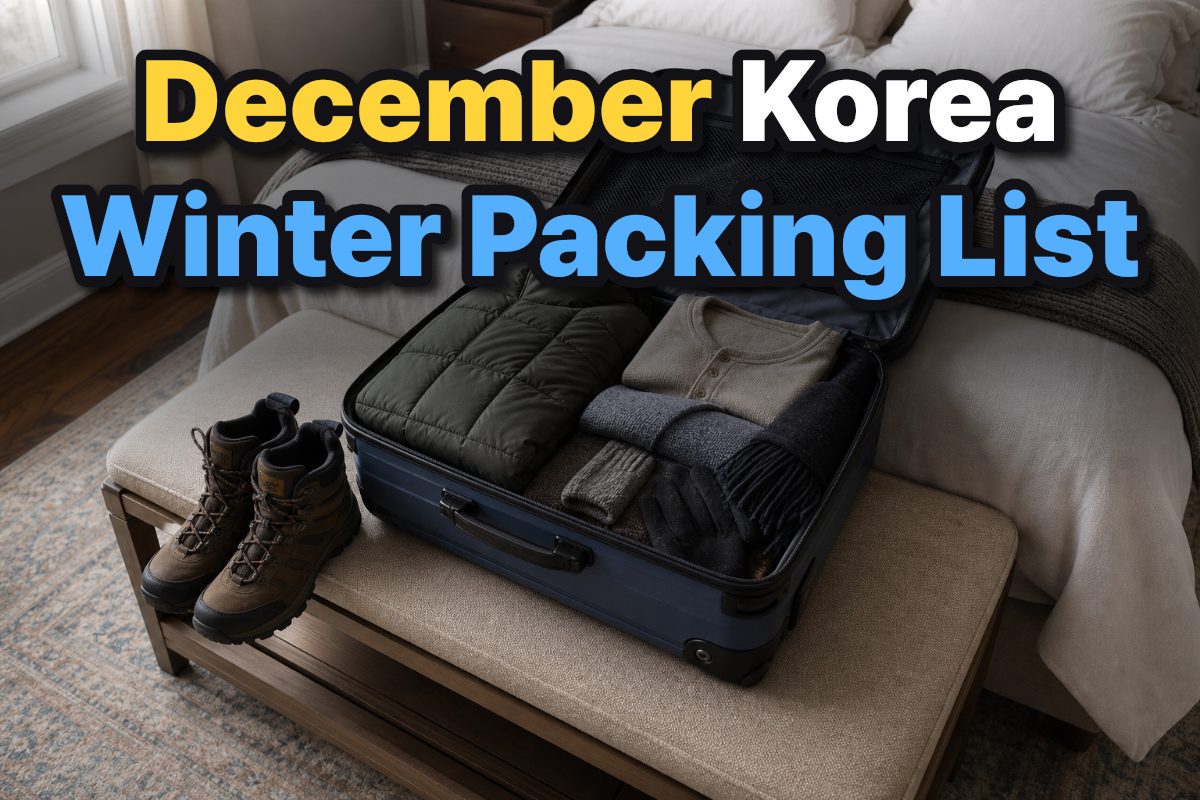
For what to pack for South Korea in December, start with a warm outer jacket, clothes you can layer, a hat, gloves, scarf, warm socks, and comfortable shoes with good grip. Add lip balm and moisturizer, then adjust the list for plans such as skiing or long walks outdoors.
Key Takeaways
- Build outfits from a thermal base layer, an insulating middle layer, and a warm outer layer.
- Keep gloves, a hat, and a scarf easy to reach so you can add them when you are outside.
- Choose comfortable walking shoes, and bring waterproof footwear if snow or wet conditions are part of your plans.
- Pack lip balm and moisturizer for dry winter conditions, and save suitcase space by buying heat packs in Korea if needed.
Table of Contents
What to pack for South Korea in December
South Korea’s winter packing needs center on warmth, layers, and footwear suited to walking. One general Korea packing guide gives a broad winter average of 14–32°F; treat that as seasonal context, not as a December forecast for a particular city or travel date. A layered outfit is more adaptable than relying on one thick sweater, because you can adjust what you wear as your plans move between outdoors and indoors.
Before packing, sort your items into the following groups. The list covers a regular city trip; add activity-specific equipment only when it matches your itinerary.
- Warm layers: thermal base layers, long-sleeve shirts, sweaters, and warm trousers or leggings.
- Outerwear: a down jacket, puffer, or parka that fits comfortably over your layers.
- Cold-weather accessories: a hat or beanie, scarf, gloves, and thick socks.
- Footwear: comfortable walking shoes with grip, plus waterproof boots if your plans call for them.
- Personal care: lip balm and moisturizer.
- Sleepwear: warm pajamas for your accommodation.
How to build a warm outfit in layers
Use a base layer next to your skin, a warmer layer over it, and an outer jacket on top. Thermal clothing adds warmth without requiring a bulky sweater as the first layer, while the outer jacket protects the outfit as a whole from winter conditions.
- Choose the base layer. Pack thermal tops and bottoms or other warm long-sleeve layers. Select pieces that fit under your everyday clothes without making them uncomfortable.
- Add an insulating layer. Bring sweaters or another warm top to wear over the base layer. A separate middle layer gives you more control than trying to make one heavy garment work for every outing.
- Finish with a warm jacket. Choose a puffer, down jacket, or parka with enough room for the layers underneath. Try the full combination before you leave so you know the sleeves and body still allow easy movement.
- Cover exposed areas. Put a hat, scarf, and gloves in your day bag or coat pockets. These accessories are useful additions when you are spending time outside, and they are easier to use when they are not buried in your luggage.
- Pack warm socks. Bring thick socks that work with your walking shoes or boots. Test the combination together; a warm sock is only practical if your footwear still fits comfortably.
A useful packing decision is to build complete outfits rather than count warm items in isolation. If a sweater only works with one shirt or a pair of boots is uncomfortable with thick socks, it may take up space without giving you a wearable option.
Which shoes should you bring?
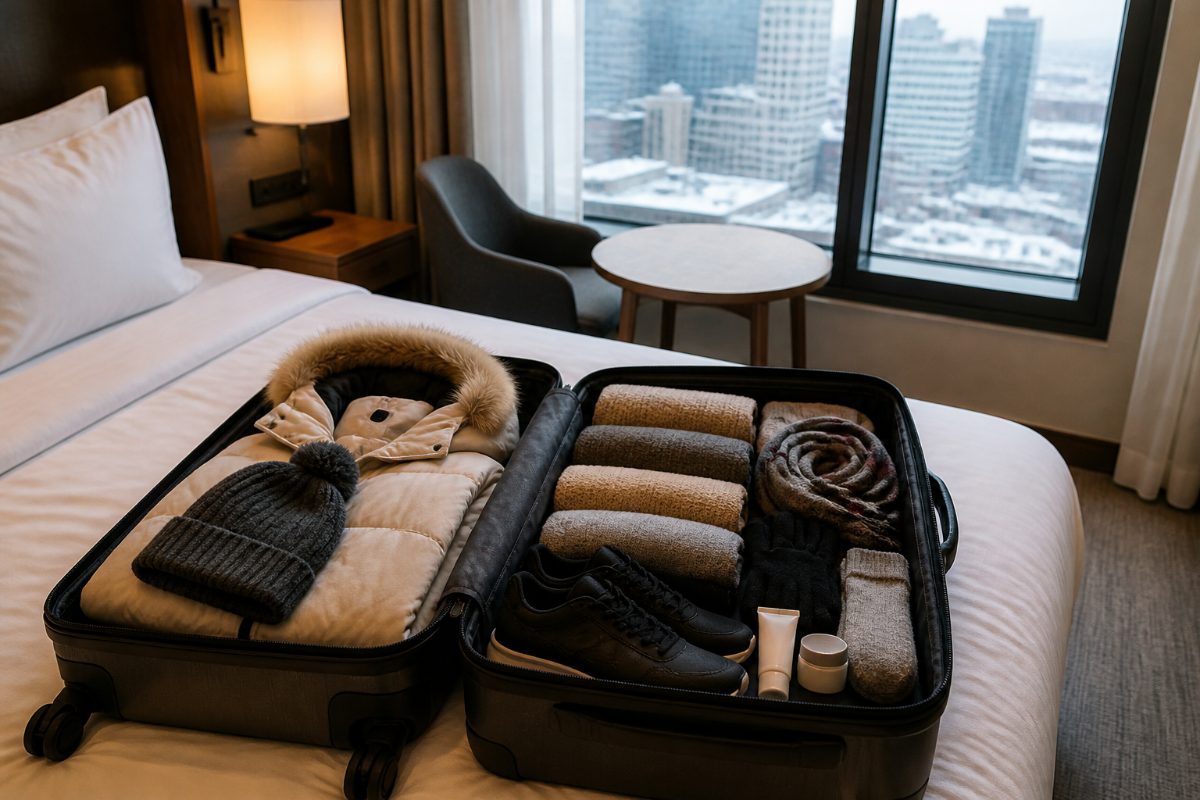
Make comfortable walking shoes your everyday choice, and look for grip on the sole. If snow or wet conditions are part of your itinerary, add waterproof boots; a winter packing list specifically includes them alongside sneakers. You do not need to pack multiple pairs of heavy winter shoes if one suitable pair covers your planned activities.
Choose shoes that are easy to take off and put back on. Visitors may need to remove shoes at homes, temples, and palaces, so quick-lace or otherwise easy-to-remove footwear can make those transitions simpler. Keep socks presentable and comfortable, since they remain on when shoes come off.
For a city-focused trip, prioritize a pair you can walk in for extended outings over a dress shoe that has little use in your itinerary. If you are planning a serious mountain hike, treat that as a separate gear decision rather than assuming everyday sneakers or winter boots are automatically suitable. Hiking equipment depends on the route and conditions, so do not use this general packing list as a substitute for activity-specific preparation.
What changes if you plan to ski or spend time in snow?
Snow sports call for more than the clothing needed for ordinary sightseeing. Add ski gloves, goggles, and waterproof outerwear when skiing or snowboarding is on your schedule; those items address exposure and wet conditions on the slopes rather than everyday city walking.
Keep activity gear separate from your basic winter layers when planning the suitcase. Your thermal clothing and warm jacket may be useful in both settings, but goggles and ski gloves are specialized items. If your trip includes only a short snow activity, compare the space they take with your planned use before packing them for the entire trip.
For a city itinerary without snow sports, focus on warm everyday layers, gloves, and footwear suited to walking. That distinction helps prevent a common packing imbalance: carrying specialized gear for an activity that is not actually part of the trip while overlooking useful everyday items.
How to pack for dry air and daily comfort
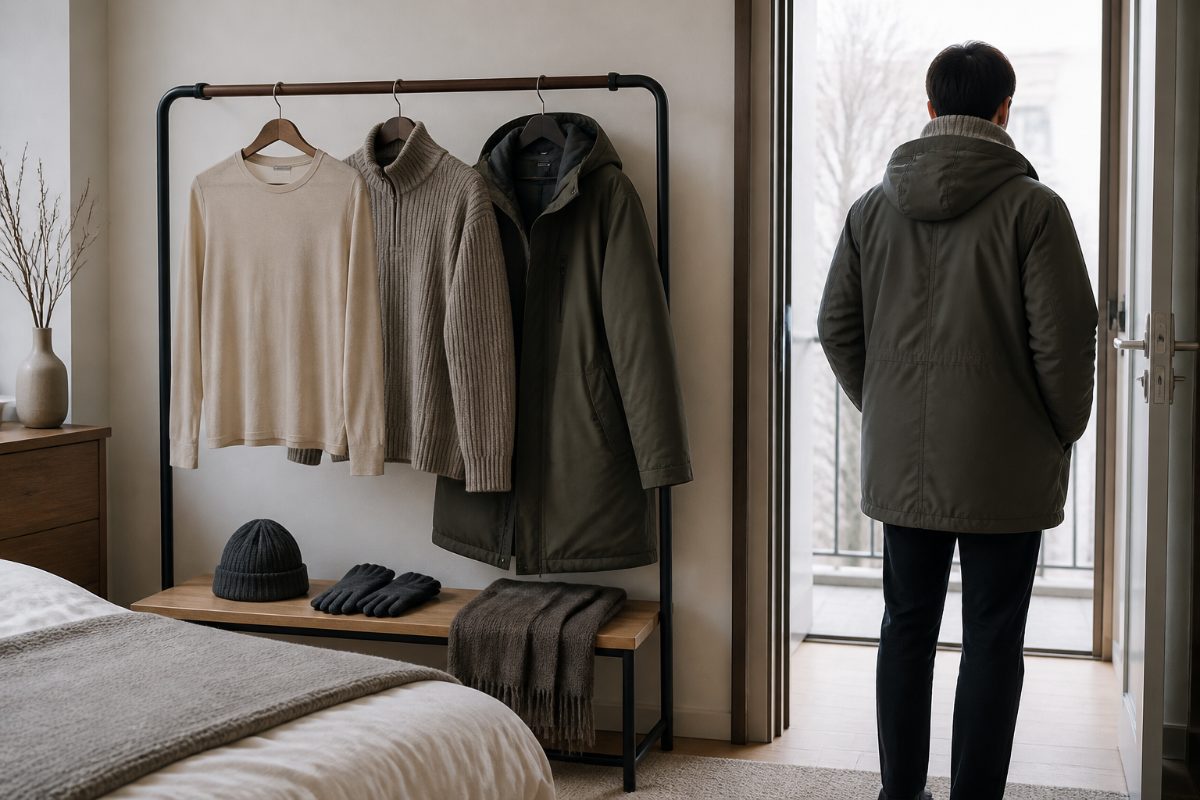
Include lip balm and moisturizer in your toiletries. Winter travel accounts from Korea describe December as dry as well as cold, and lip balm is also included in a winter travel packing list. These small items are easier to use when kept with your daily essentials rather than packed at the bottom of a suitcase.
Warm pajamas are another practical item to consider. They appear on a Korea winter packing list and can be useful when you want sleepwear that feels warm rather than relying on the clothes you wore outdoors. Keep daytime layers and sleepwear separate so you can change without searching through your travel bag.
Heat packs do not have to take up room in your luggage. They are available at Daiso and convenience stores in Korea, so you can leave them off your pre-trip list and pick them up there if you want them. That is a straightforward way to keep your packing focused on clothes and essentials you will use throughout the trip.
For your final packing pass, lay out one complete cold-weather outfit, including socks and shoes, and make sure each layer works with the next. If your trip is mainly urban sightseeing, prioritize a warm jacket, flexible layers, accessories, and comfortable walking shoes; if skiing or snowboarding is planned, add the activity-specific gloves, goggles, and waterproof outerwear.
What to wear by temperature
December in Seoul is cold and dry. One general Korea packing guide gives a broad winter average of 14-32°F (about -10 to 0°C), and the Korea Meteorological Administration lists January, the coldest month, at -1.9°C on average for Seoul (1991-2020 normals). Use the temperature, not the calendar, to decide what to put on.
| Temperature | What to wear | Notes |
|---|---|---|
| 0 to -5°C (32 to 23°F) | Thermal base layer, sweater, down jacket or puffer, scarf, gloves, warm socks, walking shoes with grip | A typical December daytime in Seoul |
| -5 to -10°C (23 to 14°F) | Add a second insulating layer and thicker thermal bottoms; add a beanie and consider waterproof boots | Cold mornings, evenings, and windy days |
| Below -10°C (below 14°F) | Full layering: thermal top and bottom, two insulating layers, parka, beanie, scarf, insulated gloves, thick socks, waterproof boots | The coldest spells; also the range for mountain and ski areas |
Packing checklist
- Outerwear: a down jacket, puffer, or parka that fits over your layers
- Warm layers: thermal base layers (top and bottom), long-sleeve shirts, sweaters, warm trousers
- Cold-weather accessories: a hat or beanie, scarf, gloves, and thick socks
- Footwear: comfortable walking shoes with grip; waterproof boots if snow or wet conditions are expected
- Personal care: lip balm and moisturizer
- Sleepwear: warm pajamas
- Day bag: a small bag for your hat, scarf, and gloves when you go indoors
Heat packs do not need to take up room in your luggage. They are available at Daiso and convenience stores in Korea, so you can pick them up after you arrive.
References
- Complete Guide to Korea University Winter Exchange: Costs, Activities & Tips
- The Ultimate Packing List for Winter Travel in Korea | 2025 real user experience on Lemon8
- Essential Packing Guide for South Korea: Ultimate Tips | U30X
- What to Pack for Korea: The ULTIMATE Korea Packing List [2025]
- Ultimate Packing List for Korea (Winter) - alovelettertoasia.com
Official Sources
- Korea Tourism Organization, VISITKOREA — official tourism information
- Korea Meteorological Administration — official weather and climate information (English)
Information in this post was checked as of November 2026. Policies and prices may change, so please verify important details with official sources.

Comments
Post a Comment