Does Busan Get Snow in Winter? What Travelers Should Expect

Key Takeaways
- Busan can get snow, but snowfall is rare, so a snowy city view is not something to count on.
- The winter season in Busan generally runs from the end of November through February, with an average temperature of 3.8°C.
- Pack for cold sightseeing rather than for a snow trip, and use the Korea Meteorological Administration forecast to check conditions close to your dates.
- If seeing snow is a priority, choose a destination with more dependable winter snow rather than building your plans around Busan.
Table of Contents
Does Busan get snow in winter? Yes, it can, but snow is rare and a white city or beach is not a realistic expectation to build a trip around. Busan’s winter is relatively mild by Korean standards: the city’s winter profile from ISMP gives an average winter temperature of 3.8°C. ISMP is the International Symposium on Microelectronics Packaging, an academic conference, and this figure comes from its Busan travel-information page rather than from a meteorological agency.
For most visitors, that means planning for chilly walks, clear or changing winter weather, and warm layers—not a guaranteed snow day. If you are choosing Busan specifically to see falling snow, treat it as a possible bonus and plan a separate snow-focused destination if snowfall is central to your trip.
Does Busan get snow in winter?
Yes, snowfall is possible in Busan, but it is uncommon. ISMP’s Busan profile describes the city as rarely receiving snowfall, so travelers should not expect snow to be part of an ordinary winter visit.
There is a useful distinction between snow falling and snow accumulating. A brief snow shower does not automatically mean streets, rooftops, or the coastline will turn white. For a trip planned months ahead, the sensible assumption is that Busan may be cold, but it probably will not be snowy.
What is Busan’s winter weather usually like?
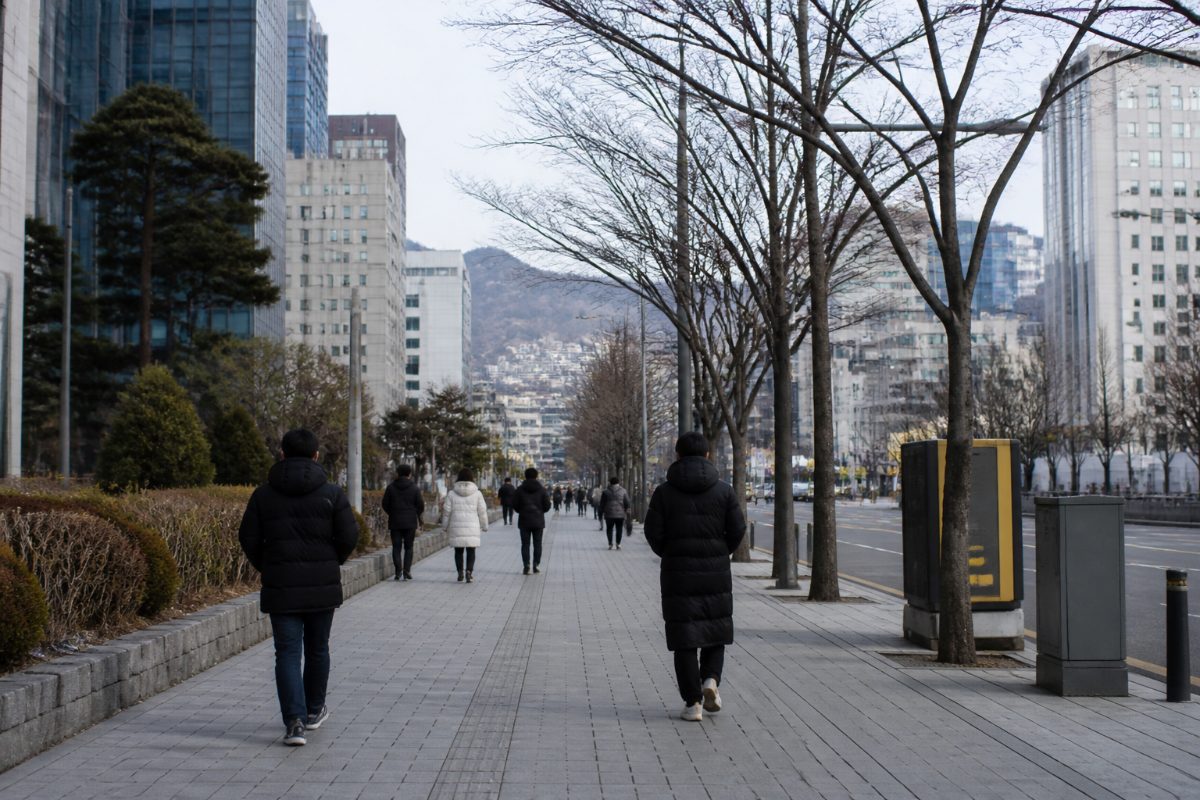
ISMP places Busan’s winter from the end of November through February and reports an average winter temperature. That average gives a better planning baseline than imagining a long stretch of deep-freeze weather, though individual days can still feel colder.
ISMP also describes a local winter pattern of about three cold days followed by four warmer days. Think of this as a broad description, not a fixed weekly forecast: a cold spell can overlap with your visit, and the average does not tell you the temperature on a particular morning.
Busan is described by ISMP as having the mildest weather in Korea after Jeju Island. That helps explain why snow is not a dependable feature of the city’s winter. It does not mean you can leave winter clothing at home; outdoor sightseeing still involves time in the cold, especially when you are walking between stops.
When is snow most likely in Busan?
Busan’s winter season runs from late November to February, according to ISMP, so that is the broad period in which travelers should consider the possibility of winter weather. But the same source says the city rarely receives snow; the season itself is not a promise of snowfall.
For a trip in November or February, do not assume the calendar alone tells you whether snow is likely. For a trip in December or January, do not assume the coldest-feeling part of winter will produce a snowy landscape. Snow needs the right combination of cold air and moisture, and a seasonal average cannot reveal whether those conditions will occur on your travel dates.
Use the Korea Meteorological Administration’s forecast when your visit is close. Look for the forecast for Busan itself rather than using a forecast for Seoul as a substitute: the cities have different winter climates, and a snow forecast elsewhere in Korea does not mean Busan will get snow.
How should you pack for a winter trip to Busan?
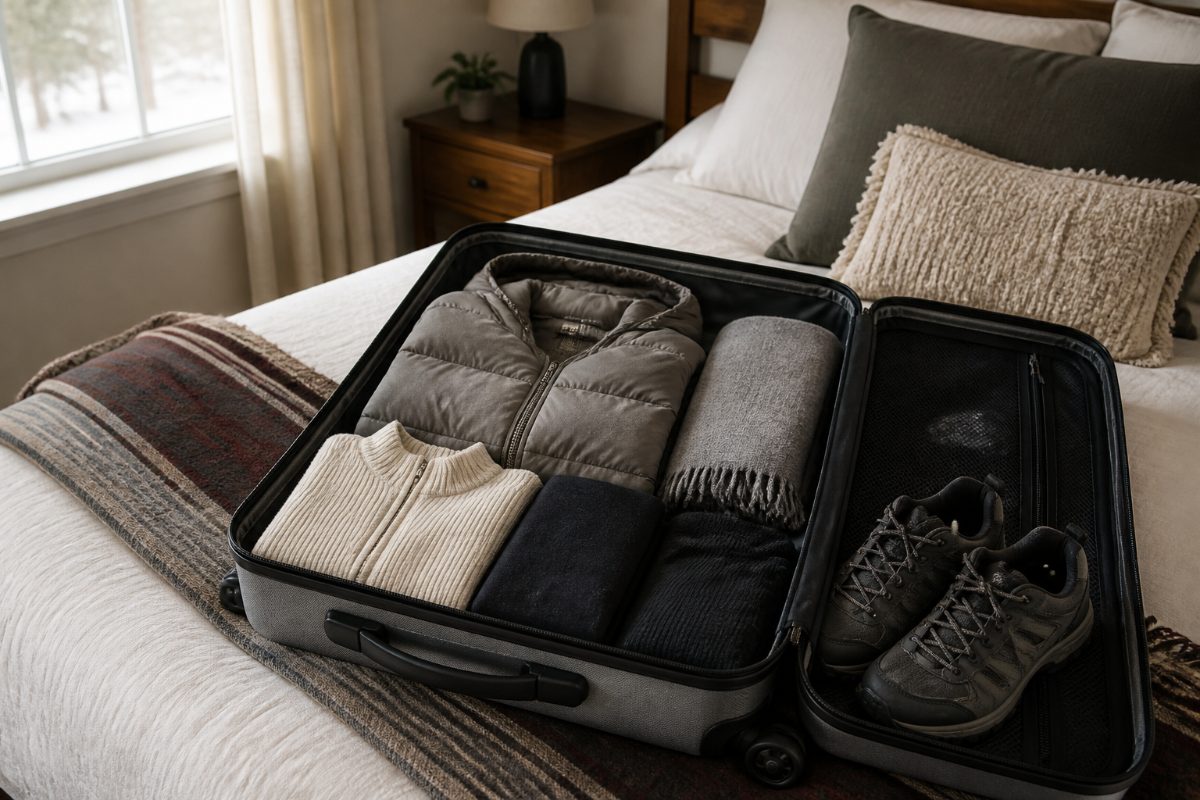
Pack for cold-weather sightseeing, not for a ski holiday. The city’s reported average winter temperature is a practical starting point for choosing layers, but it is not a daily low or a guarantee that every afternoon will feel the same.
A simple packing approach is more useful than bringing specialized snow gear for a snow event that may not happen:
- Start with layers: Wear a base layer under a warm top so you can adjust when moving between indoor stops and outdoor walks.
- Bring a warm outer layer: A coat that covers your usual sightseeing clothes is more useful than packing only light outfits based on the city’s relatively mild reputation.
- Choose comfortable walking shoes: You can use your normal travel footwear for a typical city visit. If the forecast calls for snow or icy conditions, reassess your footwear before setting out.
- Pack a compact umbrella or rain layer if useful for your plans: These are general travel choices, not evidence that snow or rain is guaranteed on a given day.
The common mistake is to read “mildest after Jeju” as “warm enough for light clothing.” Mild is relative to other Korean locations; ISMP still classifies the period from late November through February as winter and gives an average temperature. Keep warm layers in your day bag so a cold morning does not dictate the rest of your outing.
Should you choose Busan if you want to see snow?
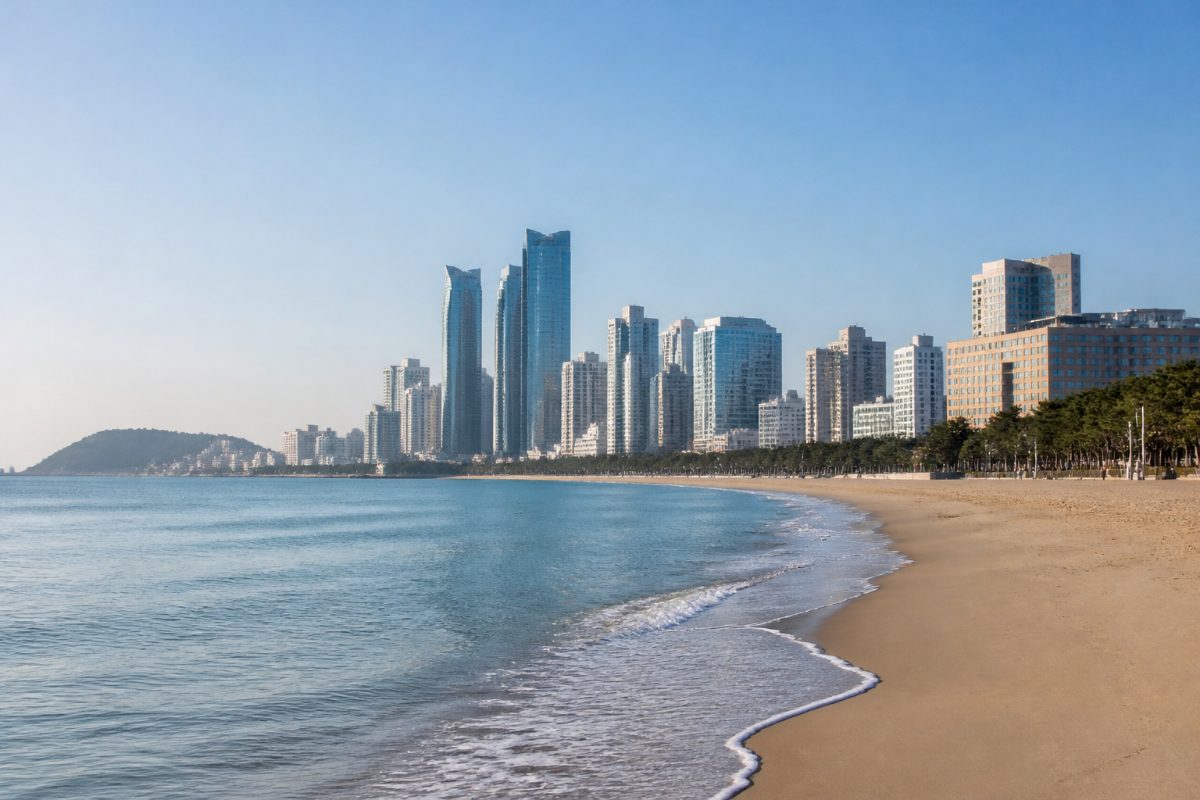
Choose Busan for a winter city trip if its places and experiences appeal to you; do not choose it as your best bet for a snowy landscape. ISMP notes that Haeundae and Gwangalli are among Busan’s beaches, but a beach visit in winter is a coastal sightseeing experience, not a snow activity you can count on.
| Your priority | How to plan |
|---|---|
| Explore Busan in winter | Keep Busan in your plans and pack for cold outdoor walks. Treat snowfall as an unexpected extra. |
| Photograph a snow-covered city | Do not make Busan the only destination in a snow-focused itinerary. Select a place with more reliable winter snow and confirm local conditions close to travel. |
| Visit Busan and hope for snow | Keep your plans flexible enough to enjoy the city without snow, then check the Busan forecast shortly before outdoor activities. |
| Travel with limited luggage | Prioritize warm everyday layers over bulky snow equipment unless the forecast and your planned activities call for specialized gear. |
For first-time visitors, the simplest decision is to separate the two goals. Busan can be a rewarding winter stop without snow; a snow-seeking trip needs a destination choice based on snowfall rather than on Busan’s reputation as a southern city.
How to plan around a snow forecast
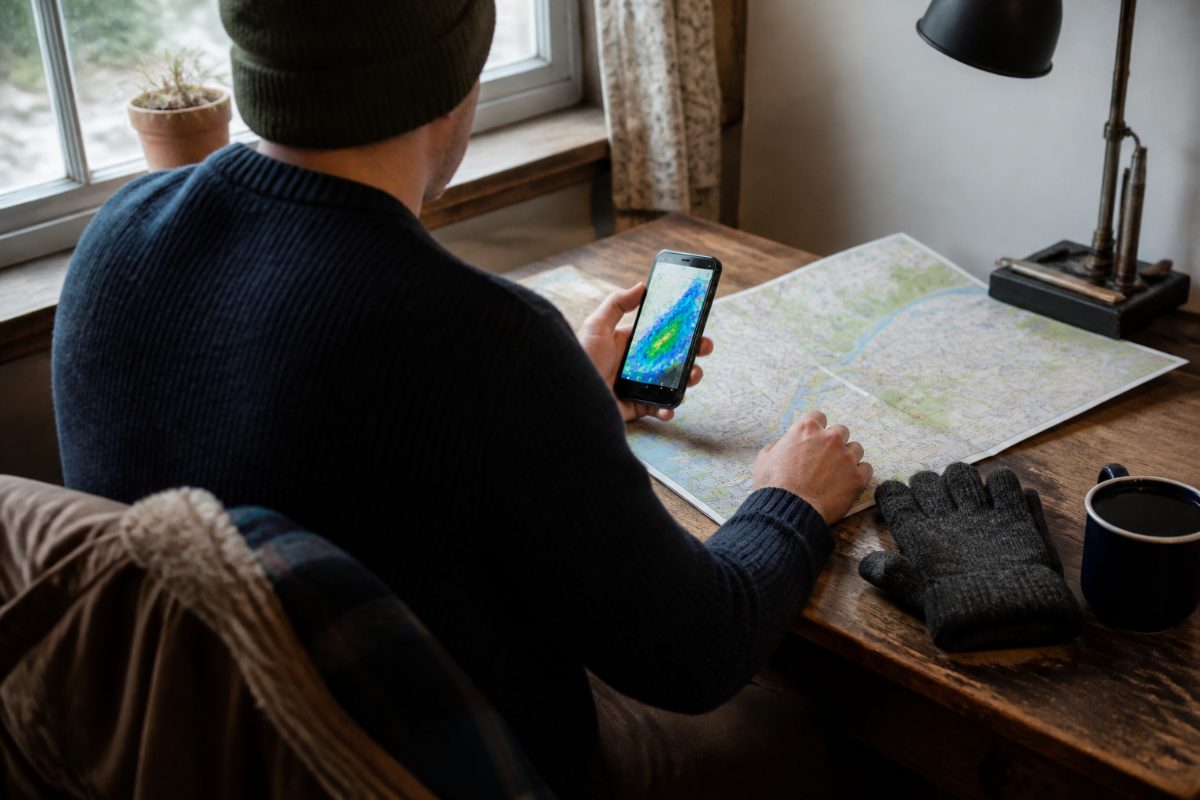
Because snowfall is rare, use a short decision process rather than locking your itinerary to a predicted snow scene. ISMP’s description of Busan’s winter provides the baseline—late November through February and rare snowfall—while a current forecast is what matters for your actual dates.
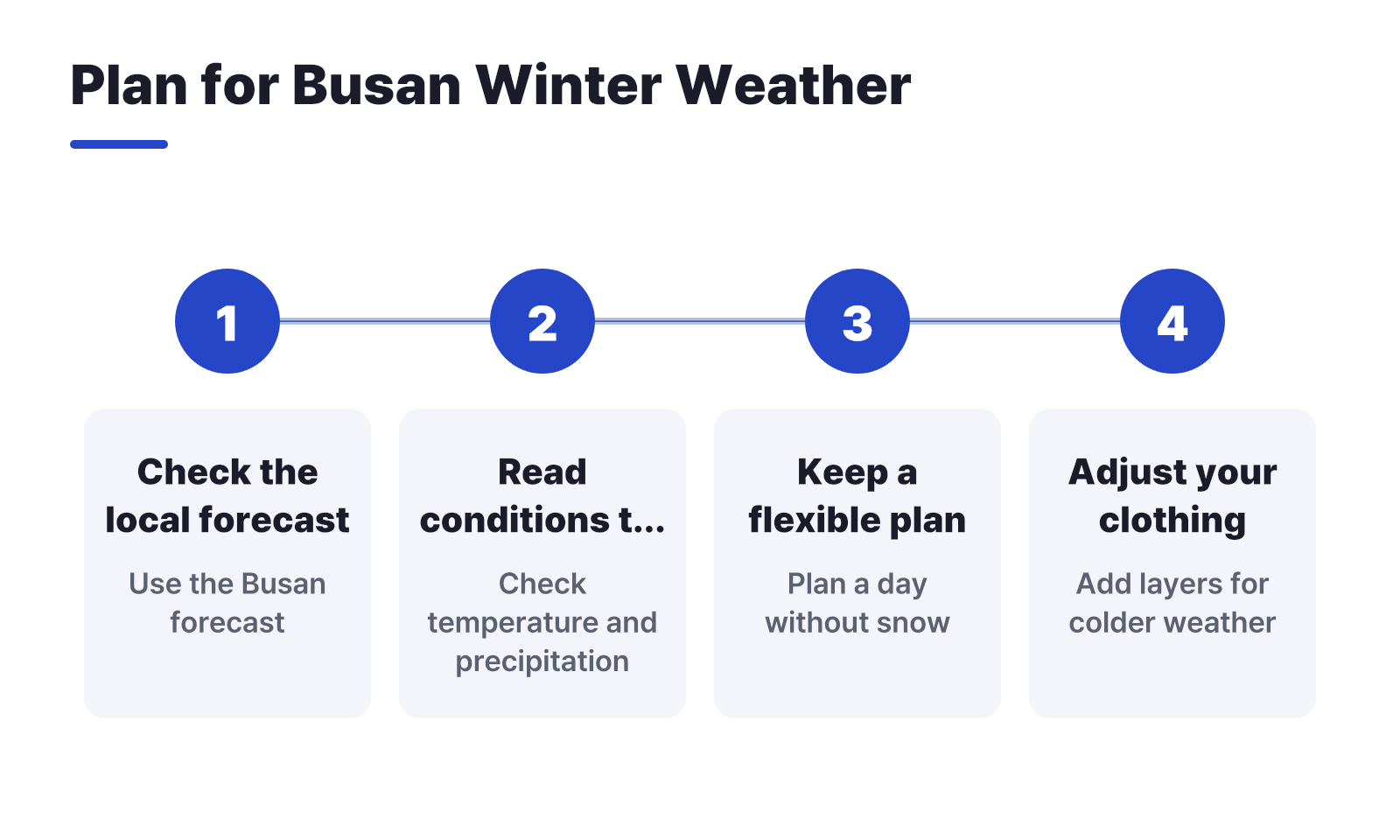
- Check the Busan forecast close to your visit. Use the Korea Meteorological Administration’s local forecast rather than relying on a seasonal average.
- Read the precipitation and temperature together. A cold forecast without precipitation does not indicate falling snow, while precipitation alone does not mean it will fall as snow.
- Keep a no-snow version of your day. Plan city sightseeing you would still enjoy if the forecast changes or no snow accumulates.
- Adjust clothing to the conditions shown. Add warmer layers for a colder forecast; do not pack specialist equipment solely because snow is theoretically possible.
This approach avoids a familiar planning error: treating the word “winter” as if it guarantees a particular weather scene. In Busan, the useful plan is a cold-weather visit that works either way.
For a closer look at the temperature gap, read our first-time winter visitor guide.
Frequently Asked Questions
Does Busan get snow every year?
Busan can receive snow, but ISMP describes snowfall as rare. That is why a traveler should not count on snow during any particular winter visit.
Is Busan cold in winter?
Busan has a relatively mild winter compared with much of Korea, but it is still winter. ISMP gives the city an average winter temperature for the season from the end of November through February.
Should I pack snow boots for Busan?
Not solely because you are visiting in winter. Pack comfortable walking shoes and warm layers for ordinary sightseeing, then use the local forecast to decide whether you need footwear suited to snow or icy conditions.
Can I plan a Busan trip around a white Christmas?
A white Christmas is not a dependable plan in a city that rarely receives snowfall. Visit Busan for the trip itself and treat snow, if it happens, as a bonus rather than the reason the itinerary works.
The practical answer
Busan does get snow occasionally, but it is one of the least reliable parts of a winter trip there. ISMP describes snowfall as rare and gives Busan’s average winter temperature from late November through February.
Pack for cold sightseeing, check the local forecast near your dates, and keep plans that do not depend on a snowy view. If seeing snow is the main goal, choose a destination for its winter-snow conditions instead of relying on Busan.
Busan winter by the official climate normals
The Korea Meteorological Administration's 1991–2020 climate normals for Busan put the city's winter in context. The figures below are the official normals, checked on November 16, 2026.
Note that the two figures use different periods and baselines: the ISMP average of 3.8°C covers late November through February, while the KMA figure of 5.0°C is the December–February mean from the 1991–2020 climate normals.
| Measure | Busan (KMA 1991–2020 normal) |
|---|---|
| Annual mean temperature | 15.0°C |
| Winter (December–February) mean temperature | 5.0°C |
| Winter (December–February) precipitation | 117.6 mm |
| Winter (December–February) mean wind speed | 3.4 m/s |
| Annual precipitation | 1,576.7 mm |
KMA's regional climate description links Busan snow to low-pressure systems over the South Sea and easterly winds, which is why it stays rare: the setup that brings snow to the south coast does not occur often. Use the KMA forecast close to your dates rather than the seasonal average.
References
Information in this post was checked as of November 2026. Prices, hours, and availability may change, so please verify important details with official sources.


Comments
Post a Comment