How to Use Ondol Floor Heating in a Korean Hotel
Key Takeaways
- Ondol is underfloor heating; in many modern Korean buildings, hot-water pipes beneath the floor warm the room.
- Ask how to use the room’s heating control before changing settings, because controls differ and the floor may take time to warm up or cool down.
- Give the system time to respond rather than turning the heat sharply higher after only a few cold minutes.
- Remove outdoor shoes, keep bathroom slippers in the bathroom, and place luggage where it will not dirty or scratch the floor.
Table of Contents
- What is ondol floor heating?
- How do you use the heating control in a Korean hotel?
- Why does the floor take time to warm up?
- What should you ask the host or front desk?
- How should you behave on a heated floor?
- Where should you put luggage and floor coverings?
- What should first-time visitors and experienced travelers do differently?
- Common mistakes to avoid
- Frequently Asked Questions
- Key points to remember
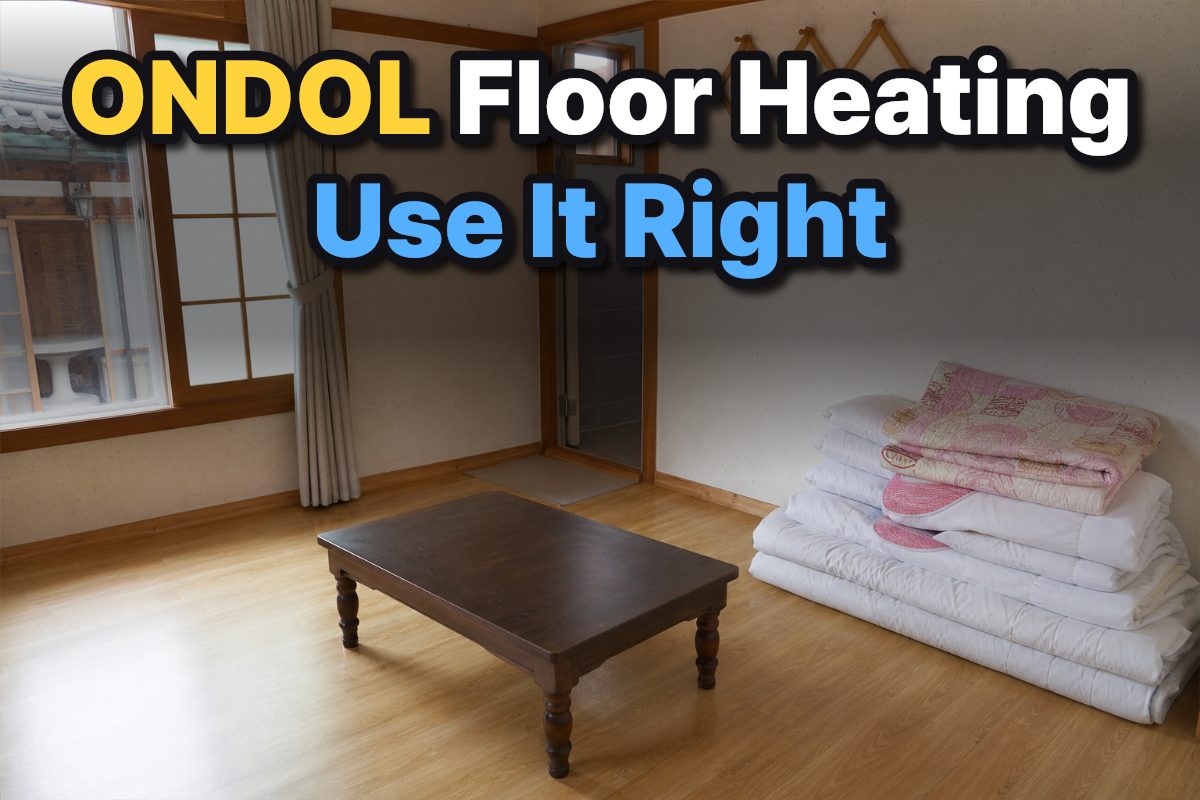
Ondol is a Korean underfloor heating system, not simply a heater that blows warm air into a room. In many modern Korean homes and buildings, hot water circulates through pipes beneath the floor, so the floor itself becomes warm. In a hotel or guesthouse, the easiest approach is to ask how that room’s control works, make a small adjustment if needed, and allow time for the floor to respond.
What is ondol floor heating?
Ondol is a heating method that warms a room from below. Asia Society explains that modern systems use hot-water pipes installed under the floor, replacing the fireplace and smoke channels used in traditional ondol. The result is a different kind of warmth from a typical forced-air heater: heat comes from the floor rather than a vent blowing warm air at you.
That difference affects how you use the room. You may notice the floor warming before the air feels noticeably warmer, and the floor can stay warm for a while after you change the setting. A study of Korean building systems also describes hot water in embedded tubes as a widely used form of residential heating in Korea.
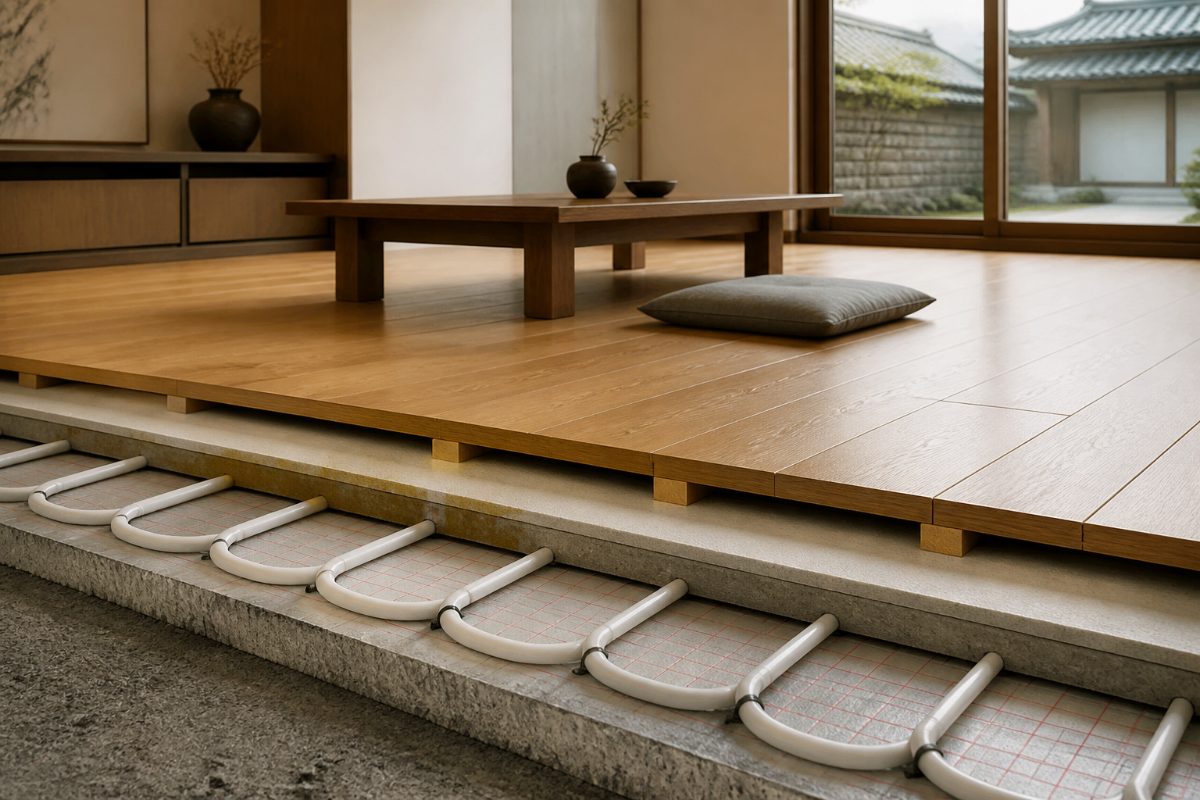
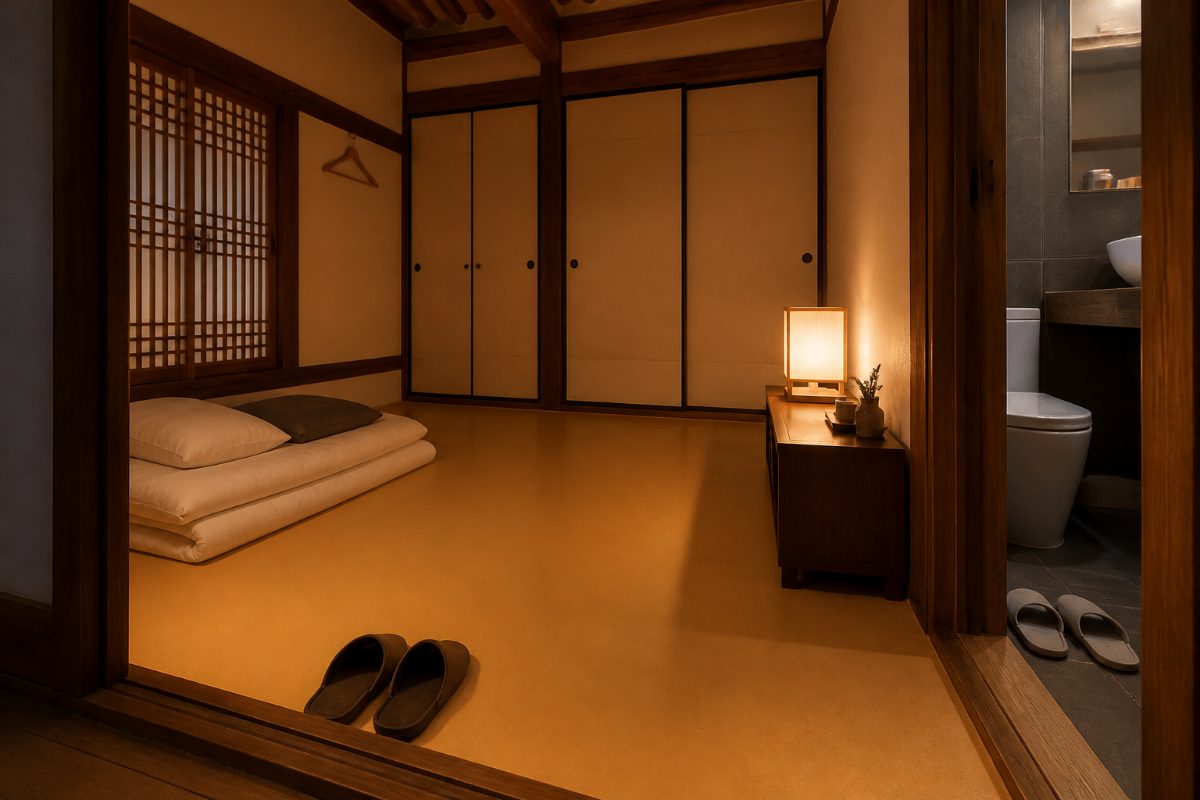
In a traditional-style guesthouse, a warm floor can be part of the stay’s everyday rhythm: sitting on floor cushions, using a low table, or sleeping on bedding laid out on the floor. Not every Korean hotel room is arranged this way, and some properties combine floor heating with Western-style furniture. Check the room description if the sleeping arrangement matters to you.
How do you use the heating control in a Korean hotel?
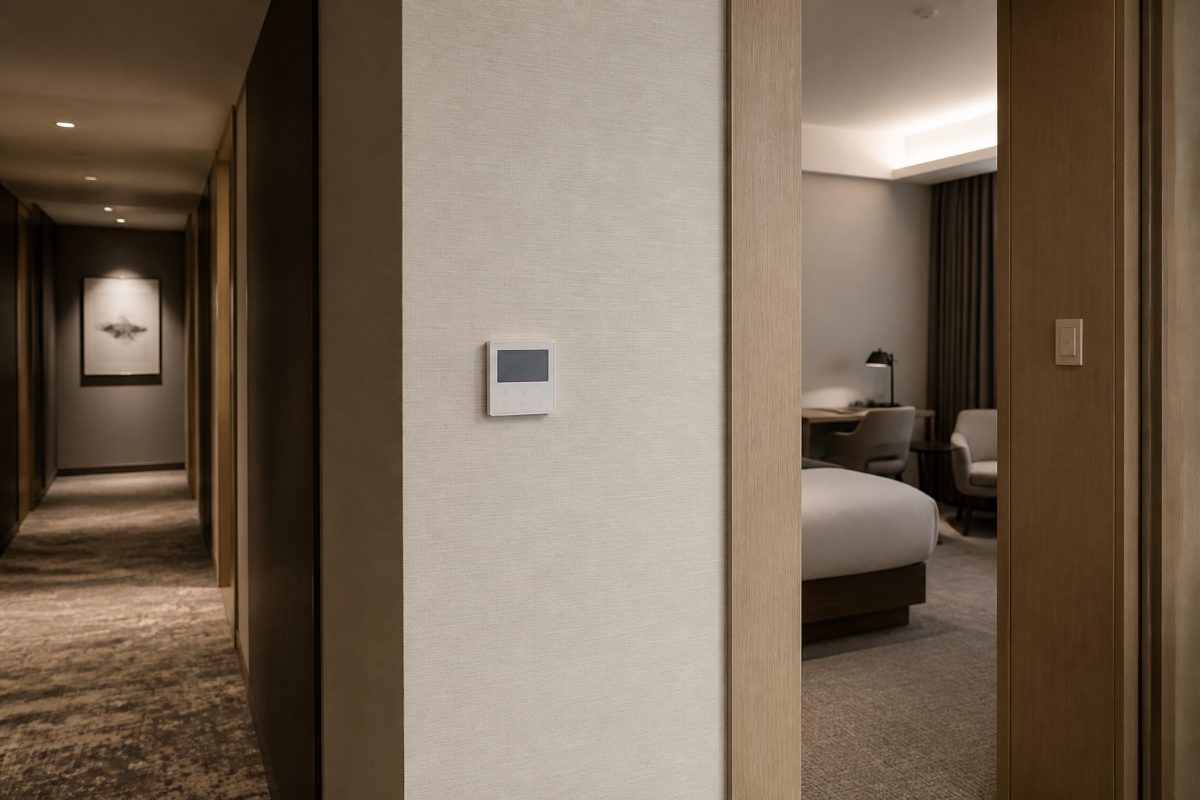
There is no single control layout that applies to every hotel or guesthouse. Before changing a setting, ask the host or front desk to show you which control operates the floor heating and how to return it to its original setting. This is especially useful when the panel’s labels are unfamiliar or the display is difficult to interpret.
Some controls may use Korean words such as 난방 (heating), 온수 (hot water), or 외출 (away), but the functions and layout depend on the system. Do not assume that a dial or number is measuring the room’s air temperature. If you cannot identify a control, take a photo of the panel and ask the host to point out the correct setting rather than testing buttons at random.
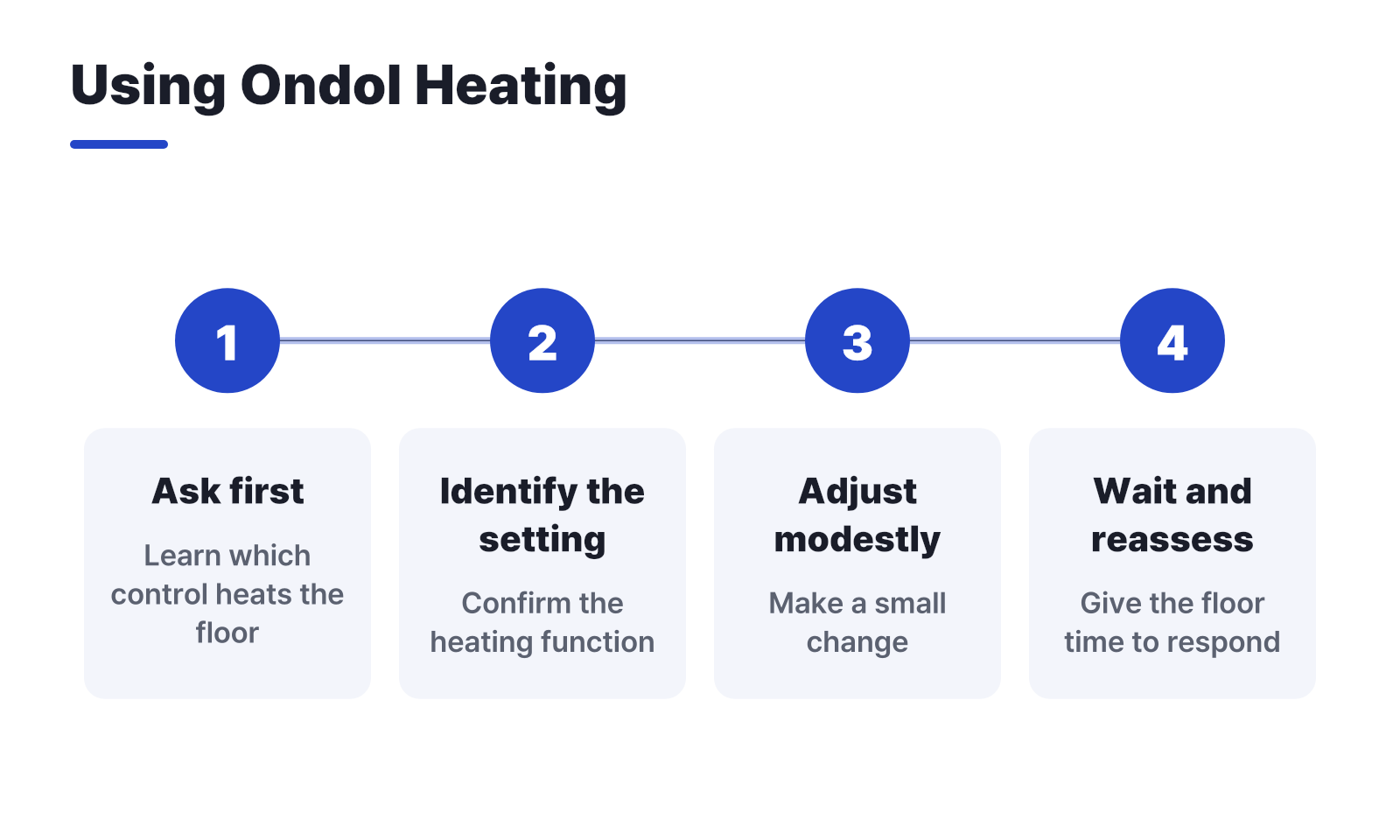
- Find the control panel, often placed near an entrance or in a hallway, if the room has one.
- Ask which setting controls floor heating and whether the current setting should be changed.
- Make a modest adjustment only after you understand the control.
- Wait and reassess the room before adjusting it again.
Why does the floor take time to warm up?
Ondol heats the floor structure, so it does not necessarily make the room feel warm immediately after you change a setting. The travel advice in Epickor cautions that underfloor heating can take time to warm or cool. Turning the heat high because you feel cold for ten minutes can leave the room too hot later.
Instead of repeatedly raising the setting, give the floor time to respond. If the room still feels uncomfortable after a reasonable wait, check that you selected the heating function and ask the host to confirm the intended setting. This approach is more comfortable than making a large change and then trying to cool the room down after the floor has heated.
| What you notice | Practical response |
|---|---|
| The floor still feels cool soon after a change | Wait before increasing the setting again; underfloor heating can respond gradually. |
| The room becomes warmer than expected | Lower or restore the setting as the host showed you, then allow time for the floor to cool. |
| You cannot tell which control is for heating | Ask the host or front desk to identify it rather than guessing from a dial or number. |
What should you ask the host or front desk?
A quick demonstration can prevent confusion, particularly in a guesthouse where the control panel may not resemble one you have used before. Epickor specifically advises visitors to learn the controller or ask the host in guesthouses and rentals. You do not need to understand the boiler system: you only need to know which control to use and what setting the property recommends.
- “Which button or setting turns on the floor heating?”
- “Is the heating already set for this room?”
- “How long should I wait before changing it again?”
- “How do I return the control to its original setting?”
If the panel has Korean labels, ask the host to point them out in person or write down the relevant word. A translated label alone may not explain how that specific panel behaves. When the control is in a shared hallway or affects more than one room, ask before adjusting it.
How should you behave on a heated floor?
Ondol is closely connected to floor-based living: people may sit, eat, or sleep close to the floor. Asia Society describes traditional ondol as heating the room, while Epickor’s guidance highlights practical floor etiquette for visitors. Removing shoes at the entrance helps keep the living area clean, and socks are useful if you are wearing sandals.
Keep bathroom slippers in the bathroom. Epickor advises using plastic bathroom slippers there and leaving them there, rather than carrying bathroom wetness into the living area. If a low table is set for a meal, keep street bags off the eating surface and avoid stepping carelessly between people and food when others are sitting on the floor.
- Pause at the entrance and follow the property’s shoe-removal routine.
- Bring socks if you expect to spend time in a traditional guesthouse or a room where people sit on the floor.
- Use bathroom slippers only in the bathroom and leave them there.
- Keep bags and suitcase wheels away from clean floor and eating areas.
Where should you put luggage and floor coverings?
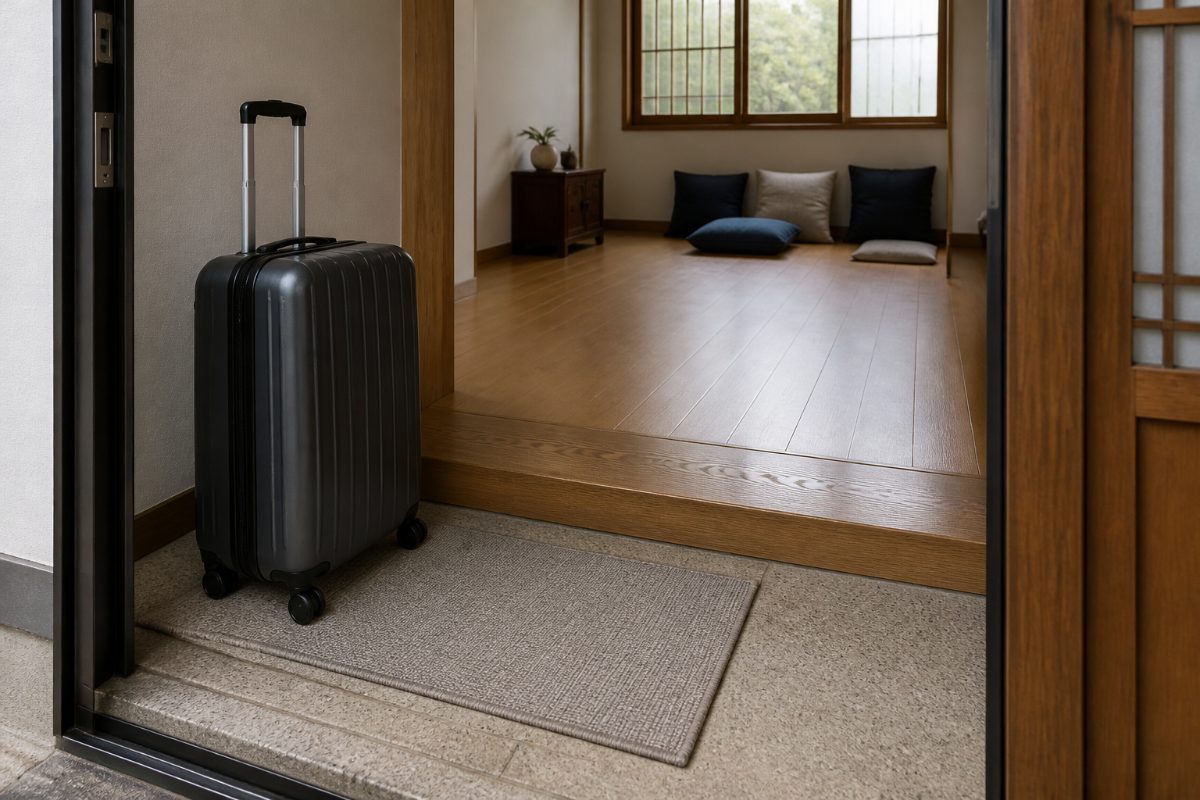
Suitcase wheels collect dirt from streets, stations, bathrooms, sidewalks, and airports. Epickor advises against dragging a suitcase across a clean living-room floor unless the host says it is acceptable. Set luggage near the entrance, on a mat, or in the spot the host indicates; wipe the wheels if needed.
Floor-heated rooms are also places where guests may sit or sleep close to the floor, so keep the area you plan to use clear of outdoor dirt. If the room provides a rug or mat, use it as intended rather than assuming every floor covering should be moved. Ask before rearranging furnishings in a traditional-style room, especially if you are unsure where guests are expected to sit or place their belongings.
What should first-time visitors and experienced travelers do differently?
If this is your first ondol stay, focus on learning the room’s controls and routines before making changes. Ask for a short demonstration, note the heating setting, and check where to leave shoes, bathroom slippers, and luggage. These steps address the main surprises: gradual heating and a room where the floor is part of the living space.
If you have used ondol before, do not assume the next property has the same controller or recommended setting. A hotel, a modern guesthouse, and a traditional-style stay can present different layouts. Treat each room’s instructions as specific to that room, especially if the panel labels or furniture arrangement differ from your last stay.
| Your situation | Best first move | Why it helps |
|---|---|---|
| First ondol stay | Ask for a control demonstration and shoe-removal instructions. | You learn the property’s routine instead of guessing at an unfamiliar panel. |
| Cold after arriving | Check the setting with the host and wait for the floor to respond. | The floor may warm gradually, so a quick increase can overshoot later. |
| Traditional room with floor bedding | Keep shoes, wet bathroom slippers, and street luggage out of the living area. | The floor may be used for sitting, eating, and sleeping. |
| Returning ondol user | Confirm the control at each new property. | Panel layouts and room routines are not universal. |
Common mistakes to avoid
The most common heating mistake is reacting to a cool floor by turning the control far up, then discovering that the room continues to warm after the change. Epickor’s guidance is to account for the system’s slower response and ask how the controller works. Make a measured adjustment, wait, and reassess rather than treating the control like an instant air-temperature switch.
A second mistake is treating the room like a shoe-on living room. Keep outdoor shoes and wheeled luggage from crossing clean floor areas, and do not carry damp bathroom slippers into the room. These habits matter whether the floor is heated or not, and they are especially practical in a space where guests sit or sleep close to it.
If you want more warmth than your room offers, see what to expect at a Korean jjimjilbang.
Frequently Asked Questions
Is ondol the same as a space heater?
No. Ondol warms the room through the floor; modern systems commonly use hot-water pipes beneath it, as described by Asia Society. A space heater, by contrast, is a separate appliance that heats from its location.
How long does ondol take to warm a hotel room?
There is no single timing that applies to every room or system. Epickor notes that underfloor heating can take time to warm or cool, so ask the host what to expect in your room and avoid turning the setting sharply higher after only a short wait.
Can I change the boiler control myself?
Ask the host or front desk to identify the correct heating control first, particularly if the labels are unfamiliar. Follow the property’s instructions and avoid guessing at buttons or changing a shared control.
Do all Korean hotels use ondol?
Ondol-style heating is widely used in Korean residential buildings, and some hotels and traditional guesthouses offer rooms with heated floors. However, the heating setup and room furnishings differ by property, so check the room details if floor heating or floor bedding is central to your plans.
Key points to remember
- Ondol heats from beneath the floor, and modern systems commonly use hot-water pipes.
- Ask how the room’s controller works before changing settings; do not assume its dial shows air temperature.
- Give the floor time to warm or cool before making another adjustment.
- Follow the property’s shoe and slipper routine, and keep street luggage off clean living areas.
Heating controls and room arrangements vary by property. For current instructions about a specific room, follow the hotel or guesthouse’s guidance before changing its settings.
References
- Korean Floor Culture: Shoes Off, Ondol On, and the Boiler Dial That Is Not Room Temperature
- Trends in the Korean building ventilation market and ...
- Korean Ondol Floor Heating Explained: 4 Parts + Real Bills
- Ondol: Korean Traditional Heating System | Asia Society
Information in this post was checked as of November 2026. Prices, hours, and availability may change, so please verify important details with official sources.


Comments
Post a Comment