Hwacheon Sancheoneo Ice Festival 2027: Dates & Transit
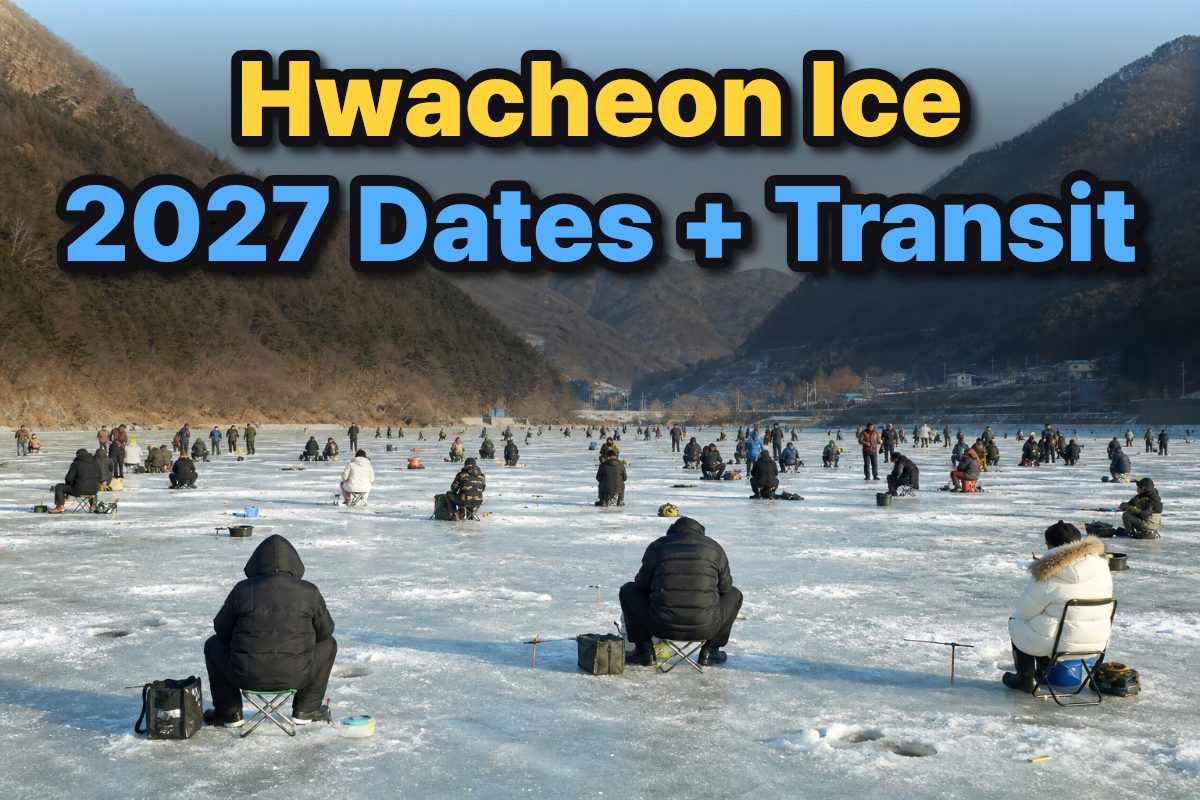
Table of Contents
If you’re planning a winter trip to South Korea, the Hwacheon Sancheoneo Ice Festival is scheduled for January 9–31, 2027, in Hwacheon, Gangwon Province. The practical route from Seoul is an intercity bus from Dong Seoul Bus Terminal to Hwacheon Public Bus Terminal; plan the bus journey and the festival’s paid activities as separate parts of your day.
When and where is the Hwacheon Sancheoneo Ice Festival?
VISITKOREA lists the 2027 Hwacheon Sancheoneo Ice Festival period as January 9–31, 2027, with the venue at Hwacheoncheon Stream. The event takes place in Hwacheon-eup, Hwacheon-gun, Gangwon Province. These details are useful for distinguishing the festival grounds from the county or town as a whole when you plan the trip.
For navigation, the listed address is 137 Sancheoneo-gil, Hwacheon-eup, Hwacheon-gun, Gangwon-do. The Korean address is 강원특별자치도 화천군 화천읍 산천어길 137. Keeping the Korean text handy can help when entering the destination into a map app or showing it to a driver. Use the address as the destination for the festival area rather than assuming that a search for Hwacheon alone will identify the place you need.
Hwacheon is a county destination in Gangwon Province, not a Seoul neighborhood or a short subway excursion. A day trip is possible to plan, but the bus ride takes time in both directions and festival activities have their own entry and operating arrangements. Travelers who want room for fishing, sledding, and a meal should treat the visit as a full-day outing rather than trying to fit it into a brief stop between Seoul attractions.
When you map out the visit, keep the event period, the stream venue, and the street address together as separate pieces of information. The date range tells you when the festival is scheduled, while the address helps you navigate to the grounds. This simple distinction can make planning clearer, especially when arranging transport and deciding how much of the day to reserve for the festival itself.
What can you do at the festival?
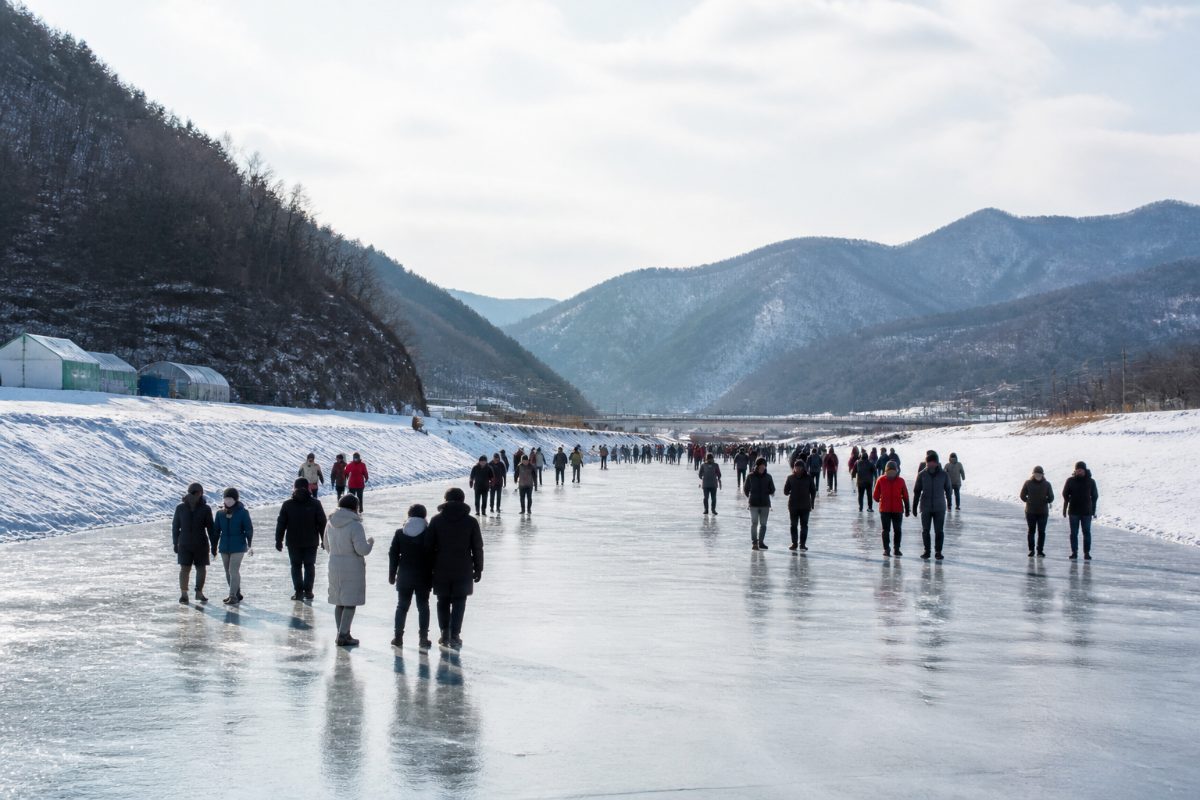
Sancheoneo means mountain trout, and the festival centers on catching the fish in a winter setting. Listed activities include ice fishing, lure fishing, and bare-handed catching, alongside snow sledding and ice sledding. The fishing options give visitors more than one way to take part, while sledding offers a non-fishing activity for companions who would rather spend their time on the snow.
Ice fishing is the most direct choice if you want the classic festival experience: you fish through an opening in the ice. Bare-handed catching is a separate activity rather than a variation of fishing with a rod, so consider what kind of participation you prefer before deciding how to spend your time. The different options are not interchangeable; choosing a priority in advance can help you use your visit for the experience that matters most to you.
The published festival information also lists on-site and reservation-based ice fishing. That distinction matters for planning: an activity may have a reservation route as well as an on-site route, and those arrangements can affect how you organize your day. The event is paid, but a specific 2027 fee is not included here. Check the current festival information at narafestival.com for the activity rules, prices, and reservation details you intend to use.
Listed festival hours include daytime activities from 9:00 a.m. to 6:00 p.m. and night fishing from 6:00 p.m. to 9:00 p.m. Treat those hours as a planning reference, not a guarantee that every 2027 activity will run for the full period. The 2027 event date listing and the activity information are not equally detailed, so make the current program your final reference before choosing a particular fishing session.
Before settling on an activity, consider how much time you want to devote to it and whether the people traveling with you share the same interests. A fishing-focused visit benefits from deciding which fishing format is the main priority, while a mixed-interest group may want to leave room for a non-fishing activity. You do not need to plan every moment in advance, but knowing your preferred activity makes it easier to compare the available arrangements and fit the visit around your transport.
Keep the activity details you need in one place, including the relevant rules, price information, and any reservation information. That way, you can review the requirements for your chosen option without confusing one activity’s arrangements with another’s. If you are still deciding, compare the options first and make the activity choice that best fits the time you have available at the festival.
How do you get to Hwacheon from Seoul?
The route for Seoul visitors is an intercity bus from Dong Seoul Bus Terminal (동서울종합터미널) to Hwacheon Public Bus Terminal (화천공영버스터미널). A travel guide estimates the bus journey at about two hours. That is the bus leg, not a door-to-door journey from a Seoul hotel to the festival grounds. Plan for the terminal-to-terminal ride as one part of the journey, then account separately for reaching the venue.
Start from Dong Seoul Bus Terminal, the departure terminal for the intercity route to Hwacheon. Check the service for the date you plan to travel and use the actual departure information when setting the rest of your schedule.
Take an intercity bus to Hwacheon Public Bus Terminal. Build your plan around the terminal-to-terminal ride, then allow additional time for getting from the bus terminal to the festival address.
Use the festival address given above as your destination for the final leg. Keep the Korean address with you as well, especially if you need to show the location to someone locally.
Plan the return leg before you leave Seoul. For a day trip, the bus schedule in each direction shapes how long you can stay; do not base your return plan only on the festival’s listed closing time.
Exact bus departure times and fares are not provided here, so avoid building a tight itinerary around an assumed departure. Look up the outbound and return service for your chosen date, then match your festival activities to the time you have between buses. This is particularly useful if you want to fish and sled: two activities plus the bus journey leave less flexibility than a visit focused on one experience.
Keep the bus journey and the final trip to the event area as distinct parts of your route. Reaching Hwacheon Public Bus Terminal does not, by itself, complete the journey to the festival entrance. Allowing for that transfer in your plan helps you avoid treating the bus arrival time as the time you will be ready to begin an activity.
It is also helpful to have both directions of travel in mind before choosing an activity or making a reservation. First check the outbound and return bus options for your chosen date; then decide how much time remains for the festival. If your available time is limited, focus the visit on the activity you most want to do rather than assuming the bus schedule will leave room for every option.
Keep your departure terminal, arrival terminal, destination address, and return plan easy to find while traveling. Having these navigation details together makes it simpler to move from one stage of the trip to the next and reduces the risk of confusing the bus terminal with the festival venue. Build the schedule around confirmed transport details rather than an estimated door-to-door travel time.
How should you plan your festival day?
Start by choosing your main activity. If catching sancheoneo is the reason for the trip, organize the day around the fishing option you want and its reservation or on-site arrangement. If you are traveling with people who do not want to fish, the festival’s non-fishing activities give them a separate way to spend time. Agreeing on a main priority before the trip can make it easier to balance different preferences without trying to fit every activity into one visit.
Next, line up the travel and activity pieces in order: Seoul hotel to Dong Seoul Bus Terminal, bus to Hwacheon Public Bus Terminal, transfer to the festival area, activity time, and return to Seoul. This sequence makes the day’s constraints visible before you commit to a reservation. It also helps prevent a common planning mismatch: booking an activity without leaving enough time for the bus journey and the trip from the terminal to the venue.
Keep the festival’s exact address, your bus details, and any activity booking information together on your phone. If your itinerary depends on night fishing, use the published evening window as a prompt to check the current 2027 schedule rather than assuming that a daytime ticket or activity arrangement covers the evening session. Confirm that the activity time you intend to use fits the transport plan you have made.
For the simplest visit, choose one main activity and leave your transport plan with enough room for the full return journey. If a reservation-based fishing session is the experience you most want to secure, make the rest of the day fit around that choice. If you would rather avoid building the day around a fishing slot, plan a more flexible visit centered on another activity. Either approach works best when you decide what matters most before arranging the travel details.
When comparing possible plans, consider the complete sequence rather than looking only at the time spent at the festival. The outbound journey, transfer to the venue, activity, and return journey all use part of the day. Leaving space between these pieces gives you a more workable schedule and makes it less likely that one delay or activity choice will disrupt the entire plan.
Before leaving, check the transport information for both directions and review the current details for the activity you selected. Keep the address and booking information accessible so you can refer to them when needed. If plans change, use the activity and travel details together to decide what can still fit, rather than relying only on the festival’s opening or closing hours.
A useful day plan is specific about the main activity but realistic about everything around it. Set priorities, allow time for the journey to and from the grounds, and avoid assuming that reaching the bus terminal means you are already at the event. With those elements considered in advance, you can spend your available time on the experience you chose instead of sorting out basic logistics during the visit.
References
- 2027 South Korea Winter Festivals: 6 Must-Visit Events Including the Hwacheon Sancheoneo Ice Festival | Trip.c
- Hwacheon Sancheoneo Ice Festival (얼음나라화천 산천어축제)- VISITKOREA
- 2027 South Korea Winter Festivals: 6 Must-Visit Events Including the Hwacheon Sancheoneo Ice Festival | Trip.c
- 11 Winter Festivals to Enjoy in Korea 2026–2027- VISITKOREA
- Hwacheon Ice Festival 2027: Dates & Seoul Guide
Information in this post was checked as of November 2026. Policies and prices may change, so please verify important details with official sources.


Comments
Post a Comment