Korean Jjimjilbang in Winter: What to Bring & Expect
Key Takeaways
- A Korean jjimjilbang combines a gender-separated bath area, where guests are nude, with a co-ed sauna and lounge area, where you wear the facility’s uniform.
- Bring hair ties, personal skincare if you want it, and earplugs if you plan to rest; most facilities provide a simple uniform and small towels.
- Shower thoroughly before using the tubs, and expect a shared, social atmosphere rather than a silent spa.
- In winter, moving between heated rooms and colder spaces can make the visit feel especially dramatic, so take breaks and choose rooms at your own pace.
Table of Contents
- What is a Korean jjimjilbang, and what happens inside?
- What should you bring to a jjimjilbang in winter?
- How does the bath and sauna sequence work?
- What feels different about visiting in winter?
- What should you eat and try in the common area?
- How much should you plan to do on your first visit?
- What etiquette mistakes should you avoid?
- Frequently Asked Questions
- Quick takeaways for a winter visit
A Korean jjimjilbang in winter offers a warm indoor break after time outside, but the bathing customs can be unfamiliar on a first visit. The key distinction is simple: the mokyoktang is the gender-separated bath area, while the jjimjilbang common area is mixed-gender and requires the provided uniform.
What is a Korean jjimjilbang, and what happens inside?
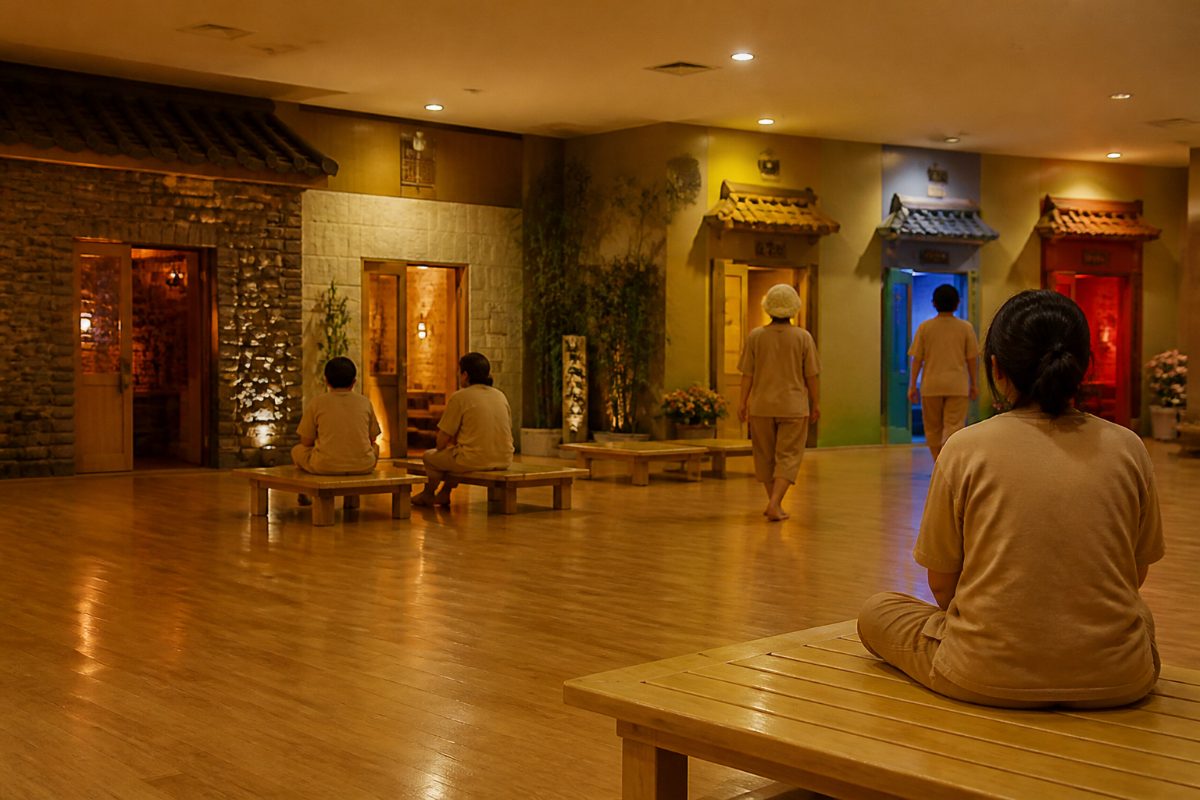
A jjimjilbang is a Korean public bath and sauna complex with separate bathing rooms and shared spaces for relaxing, eating, and using themed heated rooms. Seoul Tourism Guide describes the common area as a co-ed space where visitors wear facility-provided cotton clothes.
Many first-time visitors picture a quiet spa, but a jjimjilbang is also a social place. Families and groups may talk or eat together, and sleeping areas can include snoring or other everyday noise. Go Farther’s etiquette guide frames the experience as communal rather than silent, so it helps to choose your pace and expectations accordingly.
What should you bring to a jjimjilbang in winter?
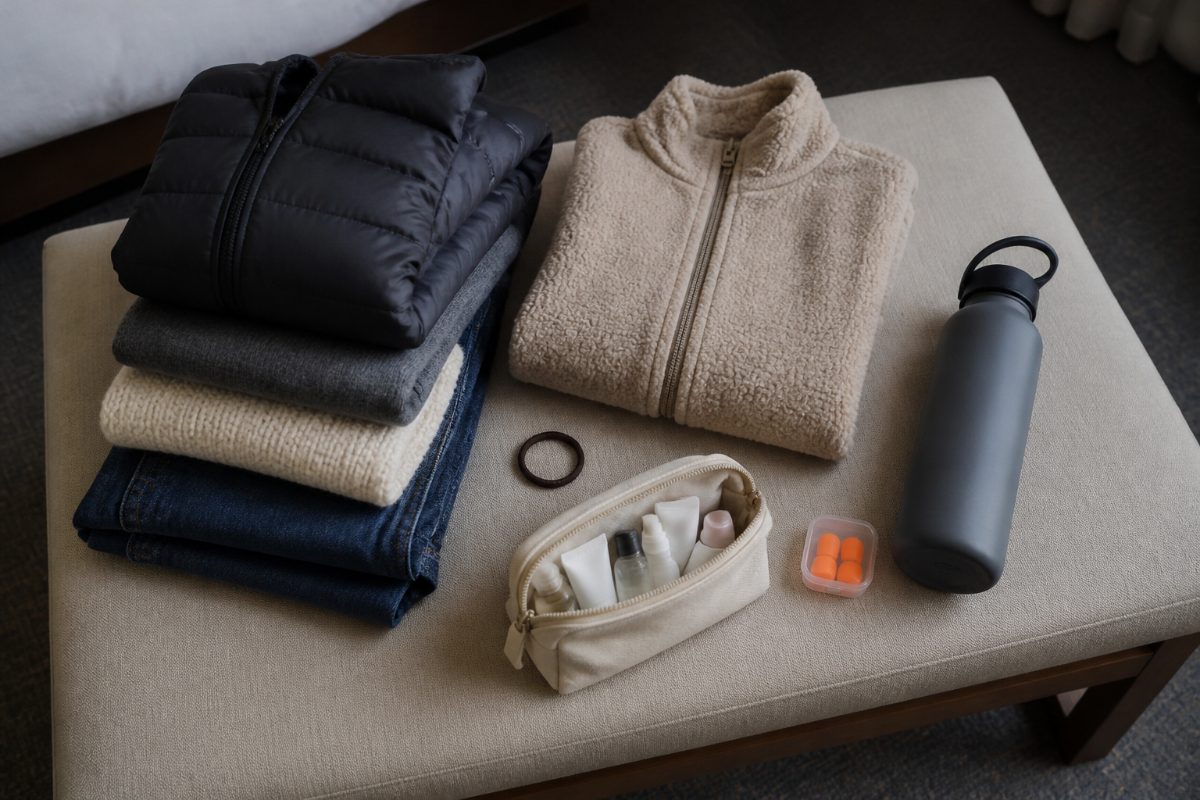
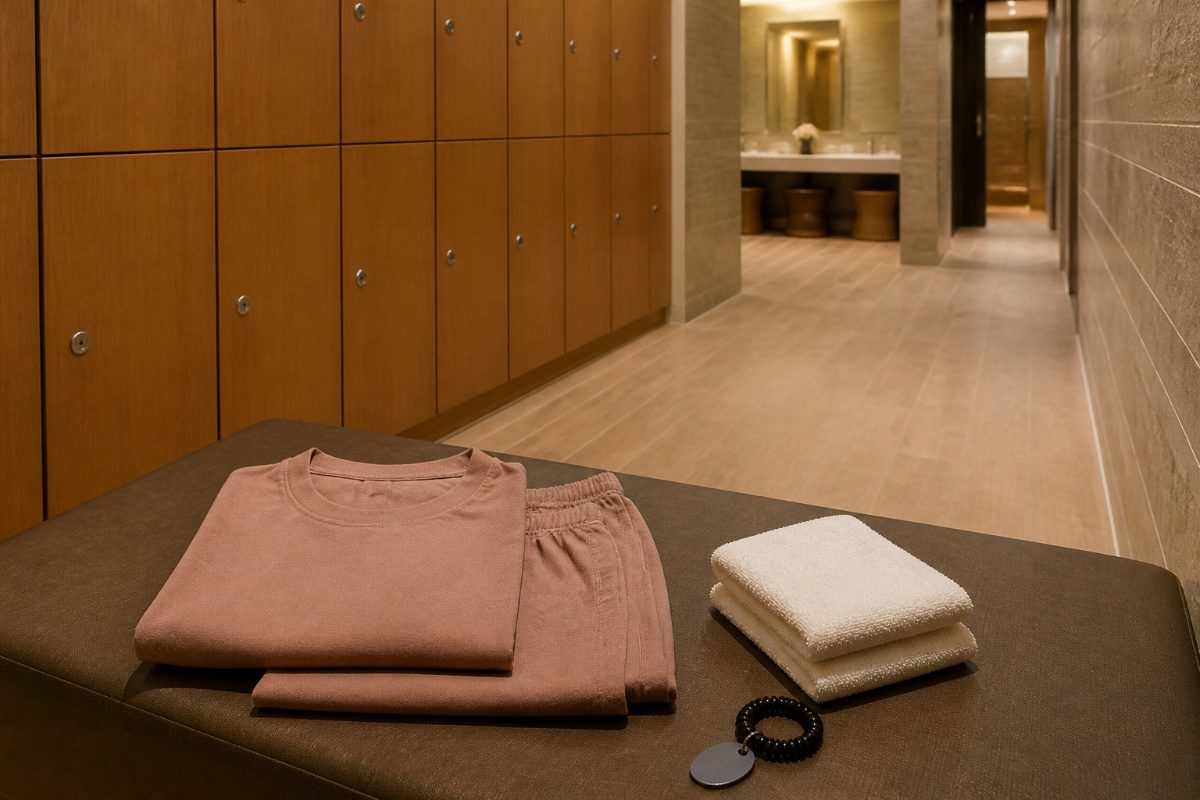
You usually do not need to pack a towel or sauna outfit: AZIT Dance Studio’s visitor guide describes an entry kit with a locker key, a T-shirt-and-shorts uniform, and two small towels. Pack personal items that make your visit more comfortable, and keep your bag compact enough to manage in a locker.
- Hair tie or clip: Useful for keeping long hair out of the way in the bath and sauna areas.
- Personal skincare: Bring products you prefer if you want to follow your usual routine after bathing.
- Earplugs: A practical choice if you expect to rest in a shared area, where other guests may be talking or snoring.
- Reusable water bottle: Convenient for keeping water close during a visit, if the facility allows outside bottles.
- Warm clothes for leaving: Keep your winter coat and outdoor layers in your locker so they are ready when you return to the cold.
Do not assume every facility has identical supplies or entry rules. If you have a particular need, check what the venue provides before you go; a compact personal kit is more useful than bringing a full toiletry bag.
How does the bath and sauna sequence work?
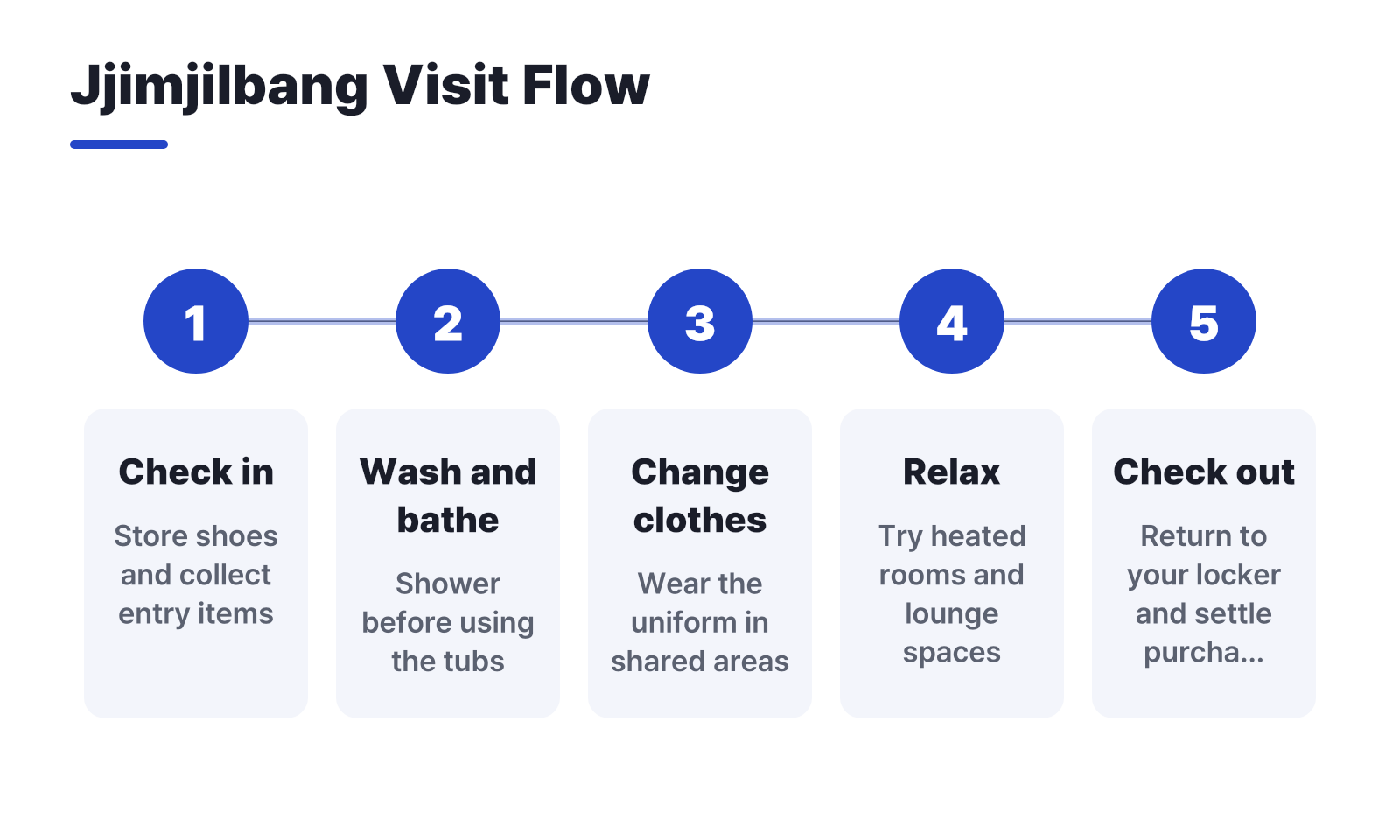
The usual flow is to check in, use the gender-separated bath area, change into the provided uniform, and then visit the shared sauna and lounge spaces. Koro’s jjimjilbang guide emphasizes showering thoroughly before entering the tubs; this is a basic hygiene step, not an optional extra.
- Check in and store your shoes. Go Farther describes shoe lockers as part of arrival. Follow the venue’s instructions for the shoe locker and payment at the entrance.
- Collect your entry items. You may receive a wristband locker key, a uniform, and small towels. Keep the key with you because it is used to identify your locker.
- Go to the gender-separated bath area. Leave your clothes in the locker and wash before using the tubs. The bath area is nude; swimsuits are not worn there, as Koro explains.
- Change into the uniform for the common area. Once dressed, you can enter the co-ed areas and use the available heated rooms, rest spaces, or food areas.
- Return to your locker before leaving. Shower and get dressed, then settle any purchases recorded to your wristband at the front desk, as described by Go Farther.
What feels different about visiting in winter?
In winter, the contrast between cold outdoor air and a heated indoor room is a defining part of the visit. You can move between warm sauna rooms and cooler spaces at your own pace; there is no need to copy another guest’s routine or stay in a room that feels uncomfortable.
Think of the temperature change as a personal comfort choice, not a treatment you have to complete. Take a break in a resting area, drink water, and leave a hot room whenever you want. A visit can still feel restorative if you skip the coldest room or spend more time lounging than sweating.
Winter is also a good time to slow down and enjoy the communal side of the experience. Go Farther describes the jjimjilbang as a shared place to relax, and the heated floor and lounge spaces make it easy to take a pause between rooms. The point is not to race through every sauna but to find a comfortable rhythm.
What should you eat and try in the common area?
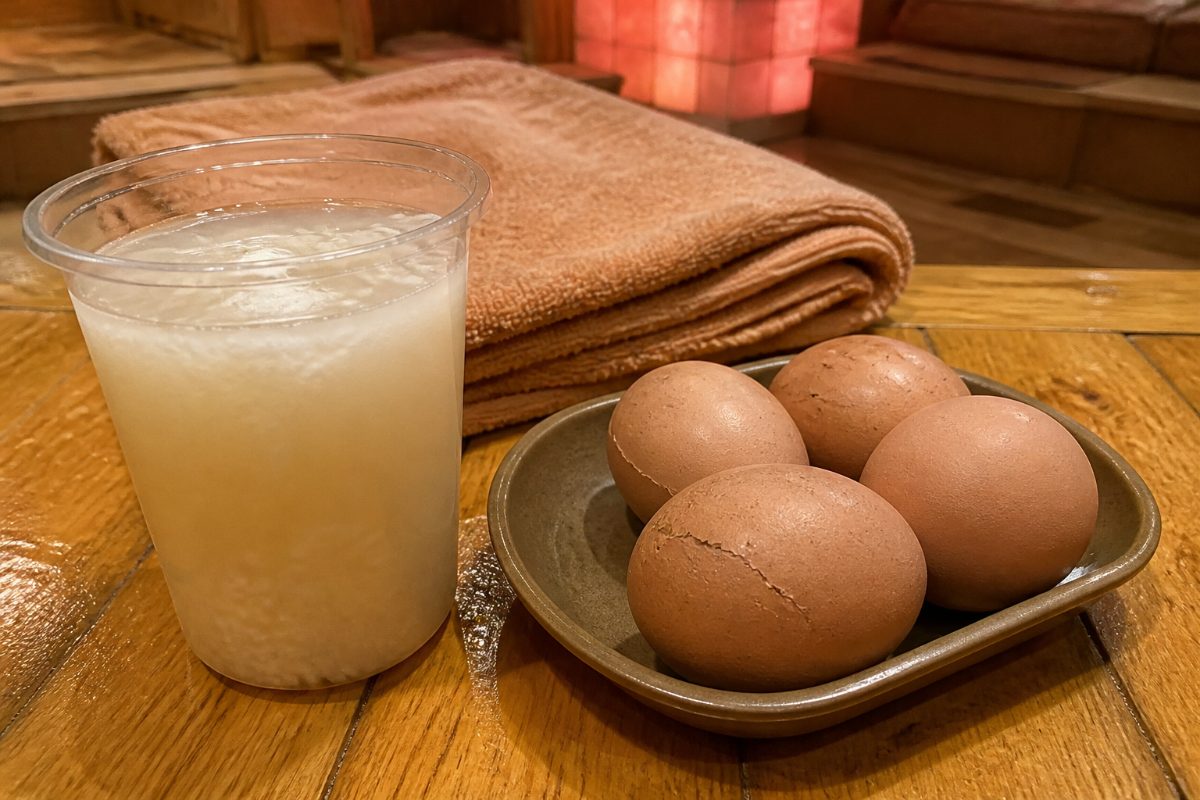
Two familiar jjimjilbang snacks are sikhye, a sweet rice drink, and maekbanseok eggs, baked eggs associated with the sauna experience. BeautiPin Seoul presents them as a classic pairing, so they are an easy starting point if you want to try a traditional snack during your visit.
Another recognizable custom is the yangmori, a towel folded into a lamb-like head covering. Creatrip describes it as a cultural staple. You can try making one if the towels and instructions at your facility allow it, but it is not required to use the sauna.
Some facilities also offer paid add-on services. Seoulstart lists professional body scrubs, called seshin, as one option, with a reported price range of ₩20,000–₩35,000 in its guide. Treat that as a reference rather than a guaranteed current price, and check the facility’s posted menu before agreeing to a service. If you have sensitive skin, you can simply skip the scrub.
How much should you plan to do on your first visit?
For a first visit, keep the plan simple: learn the locker routine, use the bath area only if you are comfortable with its nudity rules, and then try one or two shared rooms. This gives you time to understand the layout without turning a relaxing outing into a checklist.
| Your situation | A practical approach | Why it helps |
|---|---|---|
| First time in a Korean bathhouse | Read the entry instructions, shower before the tubs, and ask staff about the locker or uniform if needed. | Knowing the two-zone layout prevents confusion about where clothing is expected. |
| Prefer a quieter visit | Choose a less crowded time if the venue provides occupancy or visiting information, and bring earplugs if you plan to rest. | Shared spaces are social, so a quieter time and a way to reduce noise can make resting easier. |
| Traveling with a companion of another gender | Agree on a meeting point and time in the co-ed area before separating for the bath section. | The bathing area is gender-separated, while the common area is shared. |
| Interested in a body scrub | Ask for the current service and price menu before choosing, and do not feel obliged to add it. | Scrubs are a separate service, not a required part of the jjimjilbang visit. |
What etiquette mistakes should you avoid?
The most important etiquette point is to wash before getting into a tub. Koro’s guide specifically describes showering first, so do not treat the bath as a place to rinse off after arriving from outside.
- Do not wear a swimsuit in the bath area. The mokyoktang follows nude bathing customs; the provided uniform is for the shared area.
- Do not assume the whole facility is silent. Jjimjilbangs are shared social spaces, and other guests may talk or sleep nearby.
- Do not leave your wristband behind. Facilities may use it for locker access and recording purchases, so keep it secure until checkout.
- Do not assume every venue has the same policies. If you have a concern about access, services, or what to bring, check the specific facility’s current instructions.
If you would rather soak outdoors, compare hot springs near Seoul; for warming up at your hotel, see how to use ondol floor heating.
Frequently Asked Questions
Do I have to be naked at a Korean jjimjilbang?
You are nude in the gender-separated mokyoktang bath area, where swimsuits are not worn. In the co-ed jjimjilbang common area, you wear the facility-provided uniform.
Do jjimjilbangs provide towels and clothes?
Many provide a simple uniform and small towels with admission; AZIT Dance Studio’s guide describes a T-shirt-and-shorts set and two small towels. Check the specific venue if you need a particular size or item.
Can I sleep at a jjimjilbang?
Some facilities have shared rest or sleeping areas, but their opening hours and overnight rules are venue-specific. Bring earplugs if you plan to rest in a shared space, and confirm the facility’s current policy before planning an overnight stay.
Do I need to try the body scrub?
No. A seshin body scrub is an optional service, not a required step. Seoulstart lists a guide price range of ₩20,000–₩35,000, but confirm the current price at the facility before choosing it.
Quick takeaways for a winter visit
Pack light, keep your locker key with you, and remember the central distinction: nude bathing happens in the gender-separated bath area, while the common sauna spaces are co-ed and require the provided clothes. Shower before entering the tubs, bring earplugs if you expect to rest, and choose heated rooms according to your own comfort.
Opening hours, included items, and service prices can differ by venue and change over time. Check the facility’s current visitor information before setting out, especially if you are planning an overnight stay or a paid treatment.
References
- Korean Spa and Jjimjilbang Decoded: What Every Foreign Resident Should Know (2026) | Seoulstart
- The Ultimate Guide to Korean Jjimjilbang: A to Z for First-Timers | AZIT Dance Studio
- The Complete Jjimjilbang Guide: Korean Bathhouse Experience for Foreigners — Koro Journal
- Jjimjilbang Guide: Korean Spa Experience for Tourists (2026) - Seoul Tourism Guide
- Korean Spa Etiquette: Do’s and Don’ts for International Visitors | Go Farther
- Jjimjilbang Guide: Etiquette, Cost and What to Expect | BEAUTIPIN SEOUL – BeautiPin Seoul
- 9 Best Korean Saunas in Seoul & Busan 2026: Prices, Rules & What to Bring
Information in this post was checked as of November 2026. Prices, hours, and availability may change, so please verify important details with official sources.


Comments
Post a Comment