Korean Persimmon Varieties: Dan-gam, Hongsi & Gotgam
Key Takeaways
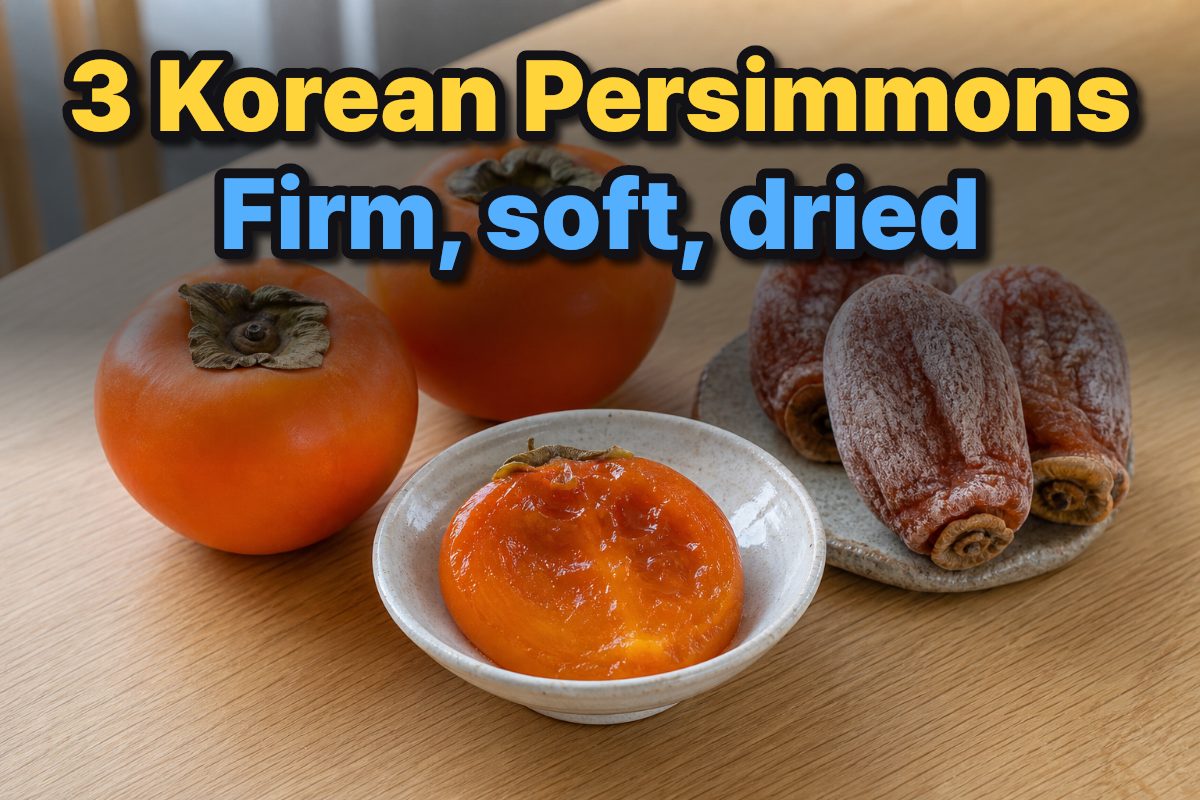
- Dan-gam is the firm, fresh-eating option; some sources also use the name for non-astringent Fuyu persimmons.
- Hongsi is a fully ripened, soft persimmon, also called mulleong-gam.
- Gotgam is persimmon that has been peeled and dried, giving you a very different texture from fresh fruit.
- For a first taste, choose by texture: crisp and firm, soft and ripe, or dried and concentrated.
Table of Contents
- What do dan-gam, hongsi, and gotgam mean?
- What is dan-gam like?
- How is hongsi different from firm persimmon?
- What is gotgam, and how is it eaten?
- Which Korean persimmon should you try first?
- Where do the names get confusing?
- A note for travelers taking warfarin
- Frequently Asked Questions
- Quick recap
Korean persimmon varieties are easiest to understand by how the fruit is prepared and eaten: firm dan-gam, soft hongsi, and dried gotgam. The names can refer to different stages or forms of the fruit, so checking whether a persimmon is firm, fully soft, or dried is often more useful than relying on the name alone.
What do dan-gam, hongsi, and gotgam mean?
These Korean names describe three familiar ways of enjoying persimmons. In a classification described in a medical journal article about Korean persimmons, dan-gam is firm fruit eaten fresh, hongsi is fully ripened and soft fruit, and gotgam is peeled and dried fruit.
There is a small naming wrinkle: another review identifies Dan Gam with Fuyu, and a 2026 scientific article describes non-astringent Fuyu as known as Dangam in Korea. In practice, the terms are not always presented as a strict list of separate cultivars. Think of them first as useful cues to the fruit’s condition and preparation, while remembering that dan-gam can also be used in connection with Fuyu.
| Name | What it describes | Texture cue |
|---|---|---|
| Dan-gam (단감) | Firm persimmon eaten fresh; also associated with non-astringent Fuyu in some sources | Firm |
| Hongsi (홍시) | Fully ripened persimmon eaten fresh | Soft |
| Gotgam (곶감) | Peeled persimmon dried before eating | Dried |
What is dan-gam like?
Dan-gam is the choice to look for if you want a firm persimmon you can eat fresh. The Korean term literally identifies the “sweet persimmon” category in common usage, while the source descriptions emphasize its firm condition. Some references connect dan-gam with Fuyu, a non-astringent variety that can be peeled and eaten after harvest.
For a first-time taster, firmness is the practical clue: it is the least soft of the three forms in this guide. If you prefer fruit that holds its shape rather than a very ripe, yielding texture, ask for a firm persimmon or look for dan-gam. If a label uses the name without explaining the fruit’s condition, check whether it is firm and ready to eat rather than assuming every seller is using the term in exactly the same way.
One common misunderstanding is that dan-gam, hongsi, and gotgam must be three unrelated fruit varieties. The Korean classification in the cited article groups them by ripeness and preparation, while other sources also use Dan Gam in connection with Fuyu. The simplest way to avoid confusion is to ask about texture and preparation, not just cultivar.
How is hongsi different from firm persimmon?
Hongsi is a fully ripened, soft persimmon. It is also known as mulleong-gam, a name that points to its soft texture. Compared with firm dan-gam, hongsi is the form to choose when you want fruit that has ripened further rather than a crisp bite.
When choosing between the two, use the texture you enjoy as your guide. Pick a firm persimmon if you want a fruit that keeps its shape; choose hongsi if you are looking for a soft, fully ripe fruit. These are two different eating experiences, not a simple quality ranking: one is not automatically better than the other.
Hongsi also illustrates why the names can be confusing. In the Korean classification, naturally ripened fruit is called hongsi, whereas dan-gam describes firm fruit. That distinction is about the fruit’s state when eaten, so a fruit’s label alone may not tell you everything about its texture.
What is gotgam, and how is it eaten?
Gotgam is persimmon that has been peeled and dried before eating. It differs from dan-gam and hongsi because drying, rather than eating the fruit fresh at a particular stage of ripeness, defines this form.
In Korean food traditions, dried persimmons are also used in sujeonggwa, a traditional spicy punch, according to the persimmon reference. This makes gotgam worth noticing even if you are not looking for a piece of fresh fruit: it can appear as an ingredient in a prepared drink as well as being eaten dried.
If you are ordering or browsing and want to know what you are getting, check whether the item is a whole fresh fruit or dried persimmon. The name gotgam refers to the dried form, not a soft fresh persimmon. That one distinction helps prevent a mismatch if you were expecting a juicy fruit rather than a dried one.
Which Korean persimmon should you try first?
Choose according to texture and how you plan to eat it. A simple comparison is more helpful than treating the names as a ranking:
| If you prefer… | Try… | Why it fits |
|---|---|---|
| A firm, fresh fruit | Dan-gam | It is described as firm and eaten fresh. |
| A fully ripe, soft fruit | Hongsi | It is the soft, fully ripened form. |
| A dried fruit or an ingredient in a traditional drink | Gotgam | It is peeled and dried, and is used in sujeonggwa. |
For a first visit to Korea, trying two forms side by side can make the difference especially clear: choose one firm persimmon and one soft hongsi, or compare fresh fruit with gotgam. If you already know you dislike very soft fruit, start with dan-gam rather than hongsi. If you want to explore a traditional prepared drink, ask whether sujeonggwa includes dried persimmon.
Where do the names get confusing?
The main source of confusion is that the names do not all work in the same way. Dan-gam and hongsi are described in one source as firm and fully ripened forms, respectively; gotgam is defined by peeling and drying. At the same time, a review and a 2026 article connect Dan Gam or Dangam with Fuyu.
So, if you see “Fuyu” and “dan-gam” used together, do not assume that one label must be wrong. The terms are often used in overlapping ways. For a straightforward food choice, ask whether the persimmon is firm, soft and fully ripe, or dried. That question gets directly to the eating experience.
A note for travelers taking warfarin
A medical case report published in a journal indexed by PubMed Central discusses excessive anticoagulation in a patient with mechanical heart valves receiving warfarin and raises persimmon as a possible interaction concern. The report also says that further research is needed; it does not show that ordinary persimmon consumption will affect everyone taking warfarin.
If you take warfarin, do not change your medication or diet based on a general travel article. Ask the clinician who manages your treatment whether a change in persimmon intake matters for your situation. This is especially relevant if you are considering a noticeable change in how much you eat, rather than simply trying a small serving.
To pick your own fruit, look for a persimmon-picking farm tour; for other seasonal snacks, try roasted chestnuts in Seoul.
Frequently Asked Questions
Are dan-gam and hongsi different varieties?
They are often described as different forms based on ripeness: dan-gam is firm, while hongsi is fully ripened and soft. Some sources also associate dan-gam with the Fuyu variety, so the names can overlap in use.
Is gotgam fresh persimmon?
No. Gotgam is persimmon that has been peeled and dried. It can be eaten dried and is also used in sujeonggwa, a traditional Korean spicy punch.
What does mulleong-gam mean?
Mulleong-gam is another name used for hongsi. It refers to the soft, fully ripened form of persimmon.
Which Korean persimmon is best for a first-time taster?
Choose based on texture: dan-gam for firm fruit, hongsi for soft and fully ripe fruit, or gotgam if you want to try dried persimmon. If you are unsure what a label means, ask whether the fruit is firm, soft, or dried.
Quick recap
- Dan-gam: firm persimmon eaten fresh; some sources connect the name with Fuyu.
- Hongsi: fully ripened, soft persimmon, also called mulleong-gam.
- Gotgam: peeled and dried persimmon, also used in sujeonggwa.
- Best way to choose: decide by texture and preparation, since naming can overlap.
Names and labels can differ in how they use dan-gam and Fuyu, so check current product descriptions when choosing. If you take warfarin, discuss a significant change in persimmon intake with the clinician managing your treatment.
References
- Persimmon-induced excessive anticoagulation in a patient with mechanical heart valves receiving warfarin thera
- Persimmon - Wikipedia
- Persimmon Leaves: Nutritional, Pharmaceutical, and Industrial Potential—A Review - PMC
Official Sources
- Korea Tourism Organization, VISITKOREA — official tourism information
- Korea.net — official Korean government information portal
Information in this post was checked as of November 2026. Prices, hours, and availability may change, so please verify important details with official sources.


Comments
Post a Comment