Where to See Camellia Flowers in Jeju in Winter
Table of Contents
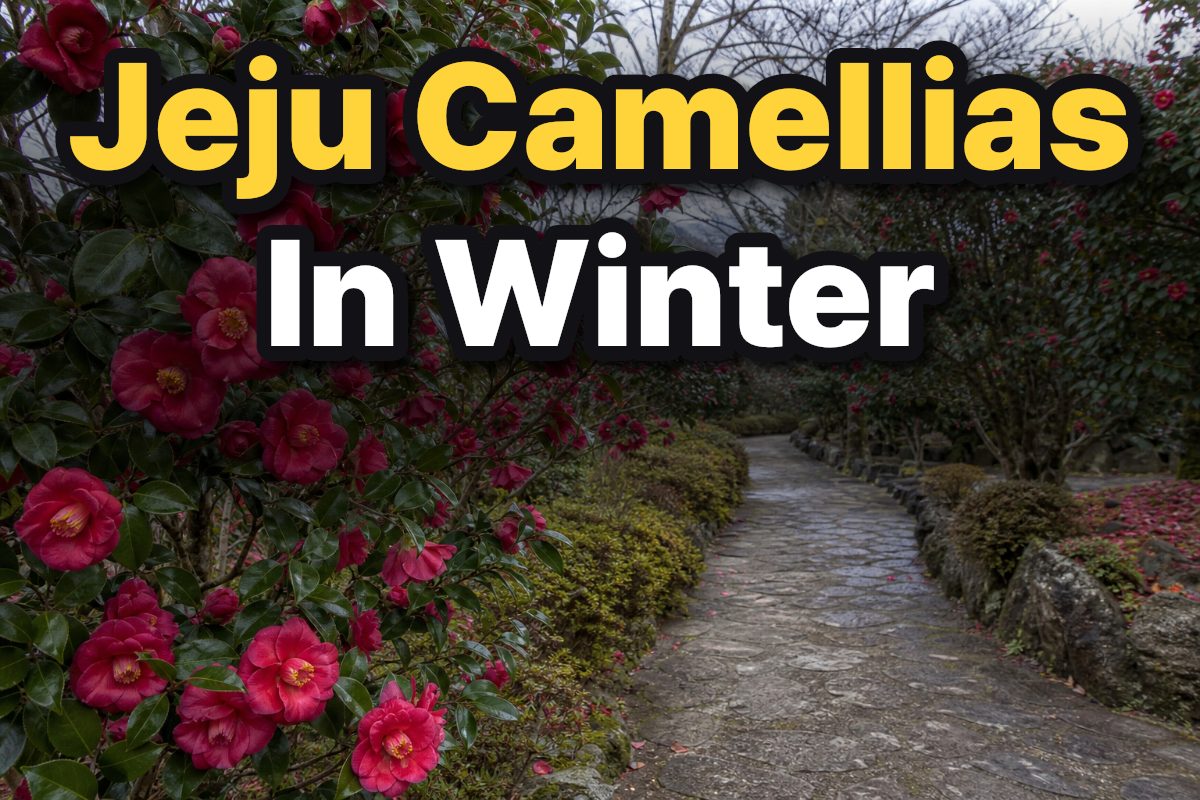
Camellia flowers in Jeju are easiest to see on a planned garden visit to Camellia Hill, while a flexible drive through the island’s south can turn up camellias outside formal gardens. The season generally spans winter into early spring, but bloom timing differs by place, so a garden with many camellia trees is the more dependable choice when flowers are the main reason for your trip.
When can you see camellia flowers in Jeju?
Jeju’s camellia season usually falls in the winter months and can extend into early spring. The island’s official tourism guide describes camellias as a winter highlight, and the timing of individual blooms varies by location and season. Treat the season as a window rather than a promise that every tree will be flowering on a particular day.
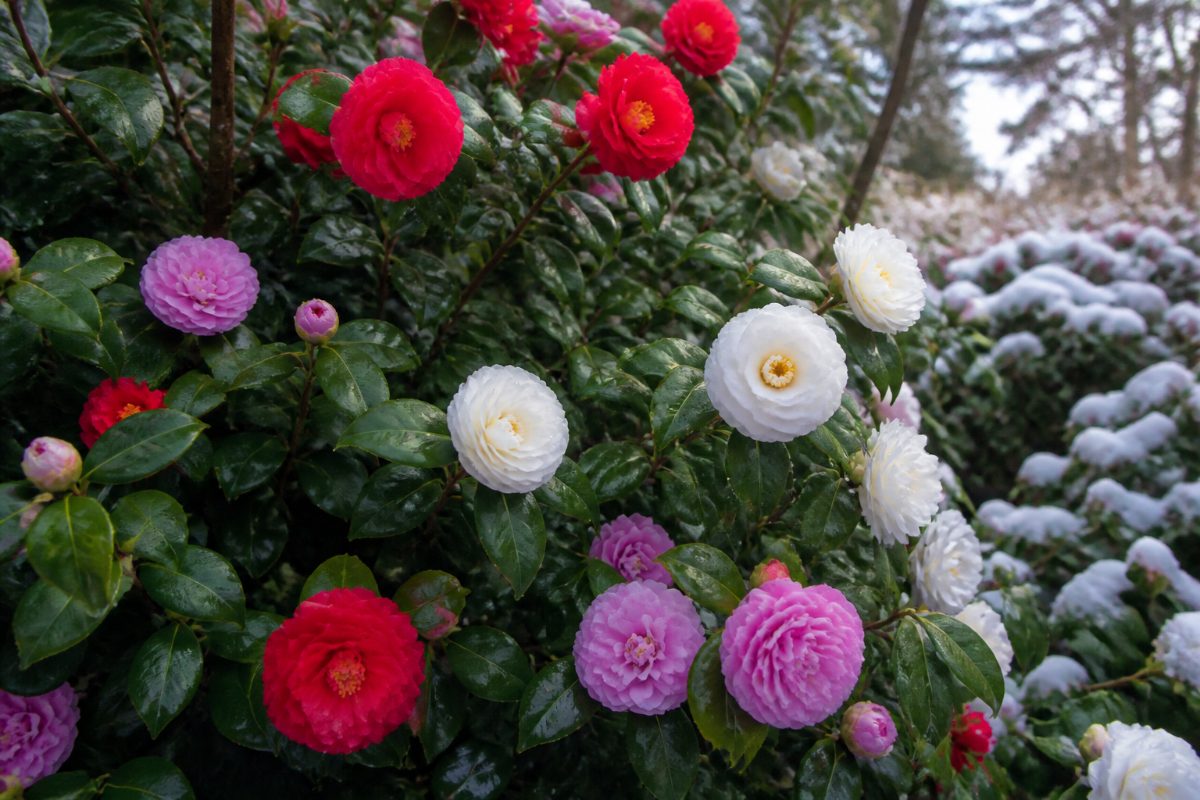
Early winter can suit travelers who want to look for the first red flowers while exploring other seasonal scenery. Later in winter, Camellia Hill’s collection includes red, white, and purple blooms, so the garden can offer more than one color to look for. Individual trees may be at different stages, which is part of the reason a visit to a large collection is more reliable than planning around a single roadside tree.
Camellias can remain in bloom into early spring, but the best timing differs across Jeju. A date that works for one garden or village may not match another location’s display. If flower viewing is the priority, plan for the winter-to-early-spring period and look for a current bloom update from the place you intend to visit before setting out.
Winter is also a distinctive season for seeing Jeju beyond the flowers. The official Jeju tourism guide notes that temperatures in the city rarely fall below freezing, while Hallasan can be covered in snow and ripe mandarins are ready for picking. That contrast—camellias in bloom, snowy mountain scenery, and citrus in season—can make a winter visit appealing even when the flowers are not at their peak.
Which Jeju camellia spot fits your trip?
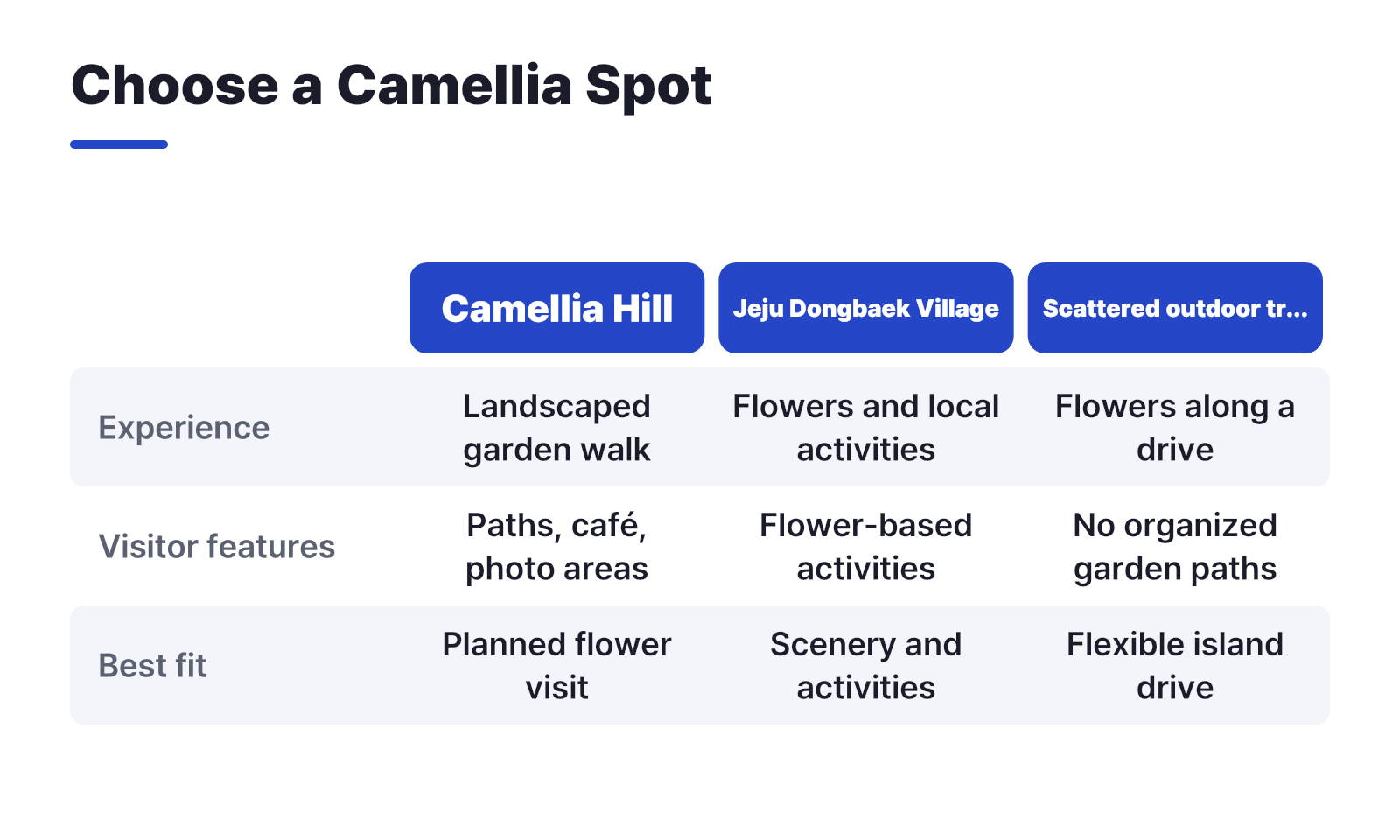
Camellia Hill is the clearest choice for a dedicated flower visit: it is a landscaped garden with a large camellia collection and maintained paths. Other options include named camellia areas, village experiences, and flowers encountered while driving around the island. Choose based on whether you want a planned garden walk, a local activity, or a more spontaneous stop along your route.
| Place or outing | What the visit offers | Best fit |
|---|---|---|
| Camellia Hill | A landscaped garden, walking paths, a café, and photo areas | A planned visit centered on camellias |
| Dongbaek Forest | A named camellia spot in Namwon-eup, Seogwipo | Travelers exploring the Seogwipo area |
| Jeju Dongbaek Village | Camellia scenery and flower-based activities, including soap-making and a bibimbap experience | Visitors who want local activities as well as flowers |
| Outdoor trees and roadside stops | Camellias can be found in parts of Jeju, including on routes through the south | Travelers already exploring the island by car |
The main difference is how much of the outing is arranged for you. Camellia Hill brings flowers, paths, and visitor facilities together in one place; an outdoor search gives you more flexibility but depends on what is flowering along your route. A village activity adds a hands-on element, so it can suit a group whose interests go beyond taking flower photos.
What makes Camellia Hill a practical winter choice?
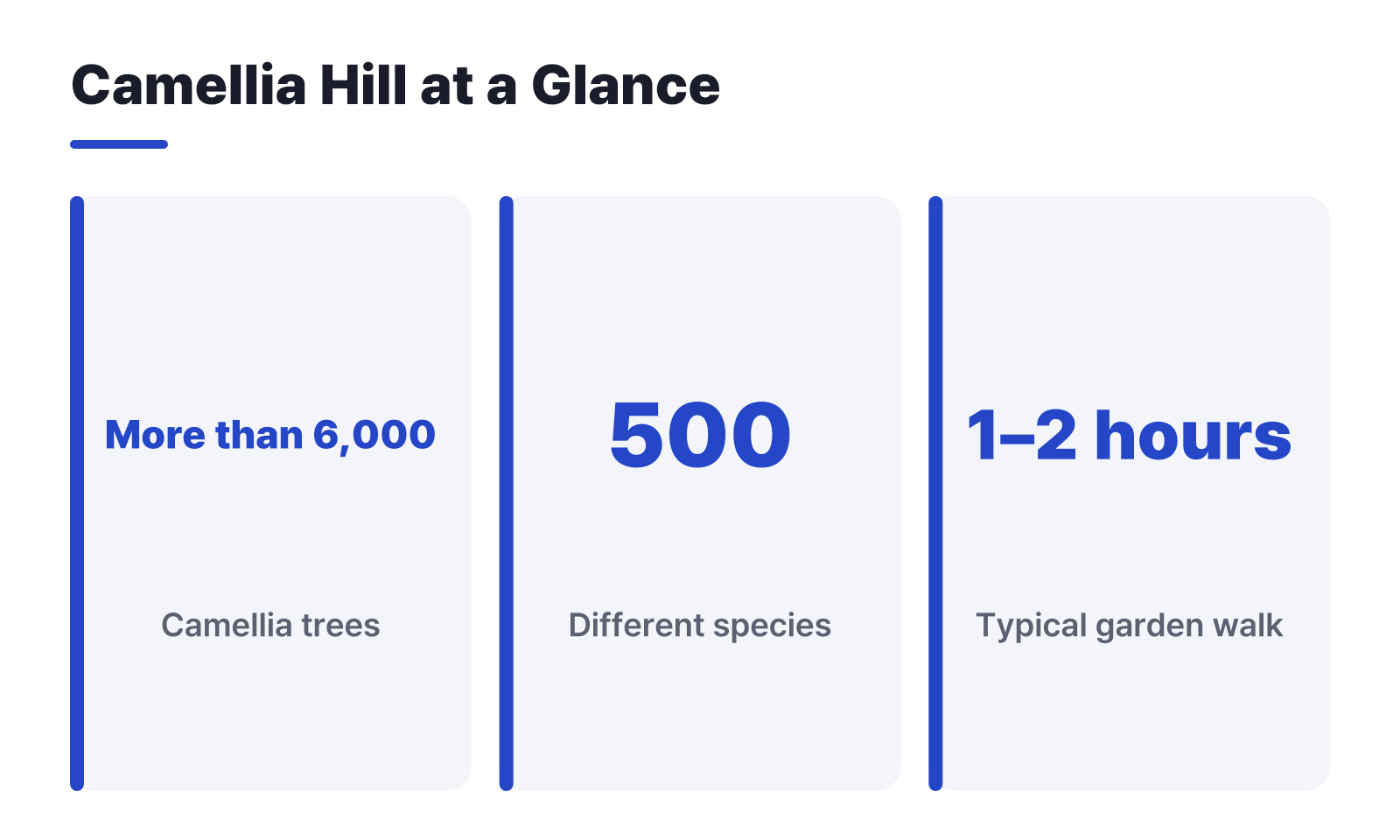
Camellia Hill has more than 6,000 camellia trees and a collection of over 500 varieties. That concentration gives visitors a dedicated place to see different camellias rather than relying on the chance of finding a flowering tree during a drive. The garden’s scale also makes it possible to spend time walking among the plantings instead of treating the stop as a quick photo opportunity.
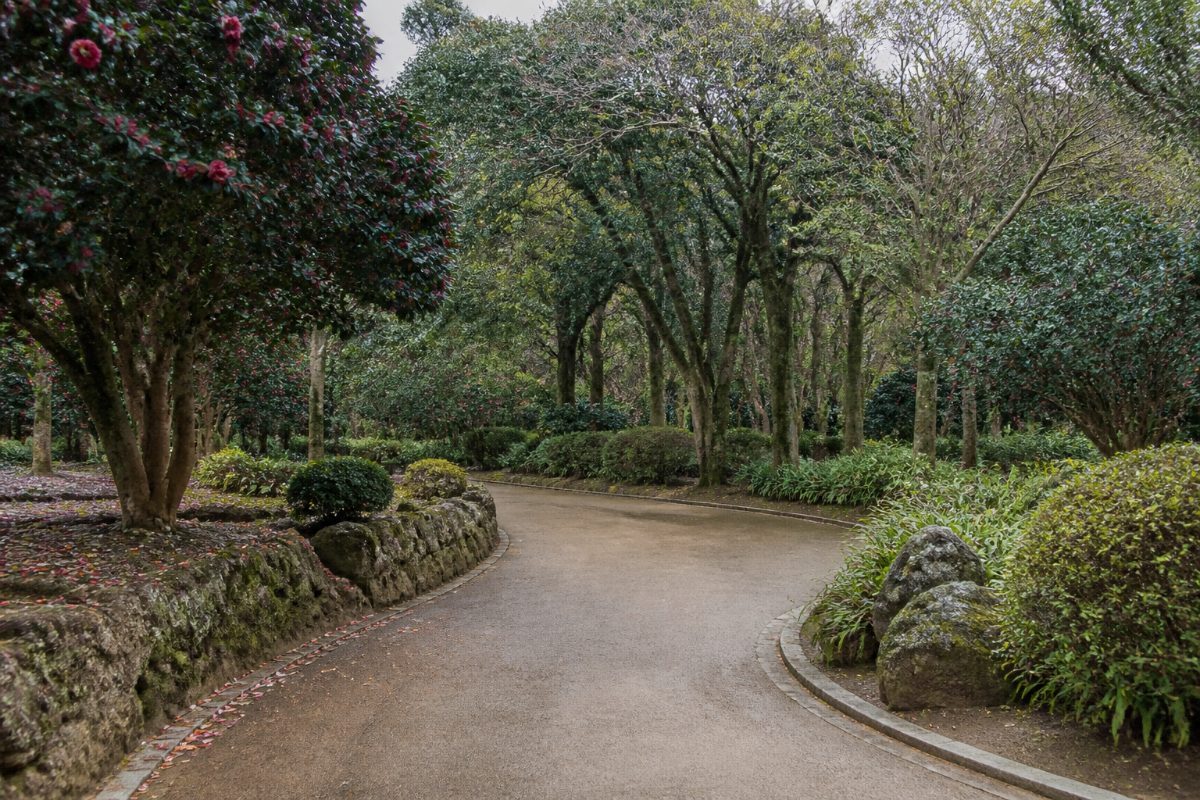
The grounds are landscaped, with maintained paths connecting different areas. The garden includes an area with a European theme, a stone-wall path, a café, and photo spots, so the visit has features to explore beyond the flowers. Those options can be useful when traveling with companions who want a walk and a place to pause, but are less focused on photographing blooms.
Plan enough time to stroll through the grounds rather than arriving just before moving on to another stop. A garden walk lets you look at different parts of the collection and notice how the colors and stages of bloom vary from tree to tree. The exact time needed depends on how long you spend walking, taking photos, or stopping at the café, so leave room in your day if you want a relaxed visit.
Camellia Hill is a paid attraction, making it a straightforward choice when you want a managed garden experience rather than an open-ended search. Its paths and concentrated planting make it especially suitable when flowers are the main objective. For current admission and opening details, use the garden’s own visitor information; Visit Jeju’s official site is visitjeju.net.
The garden can also be part of a Jeju trip outside camellia season. Its seasonal displays include cherry blossoms and lavender in spring, hydrangeas in summer, and autumn colors. Those flowers give the grounds interest at other times of year, although a trip specifically for camellias is best planned for winter into early spring.
Where can you see camellias outside a formal garden?
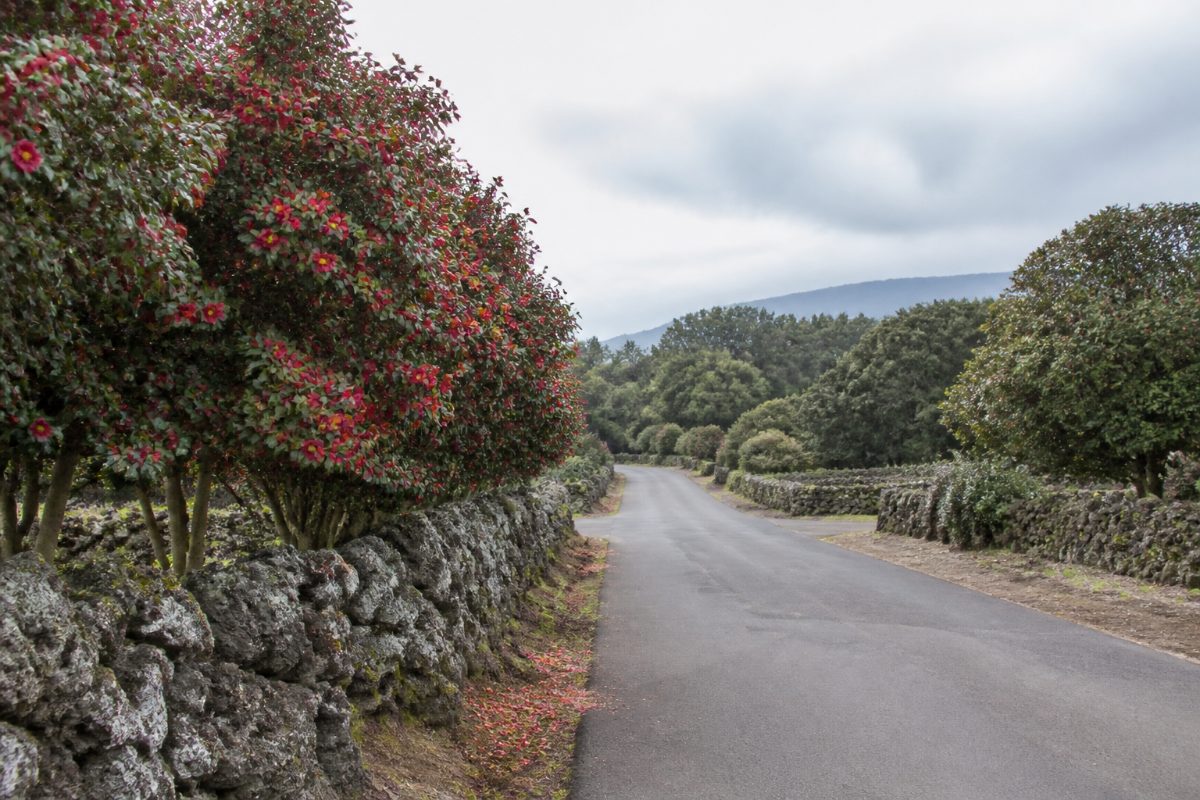
For a less structured outing, look for camellias around Seogwipo or along a drive through southern Jeju. Some outdoor trees can be viewed without entering a ticketed garden, but the experience is different: roadside or naturally growing flowers do not come with the same organized paths and visitor facilities. This option works best when the route itself is part of the plan and you have time to pause where flowers are visible.
Dongbaek Forest in Namwon-eup, Seogwipo, is another named option for a southern Jeju outing. It can fit a day focused on the island’s south, while Camellia Hill is the stronger match for travelers looking for a large, landscaped garden with paths and additional visitor features. These choices are not interchangeable: one is a named outdoor area, while the other is a dedicated garden visit.
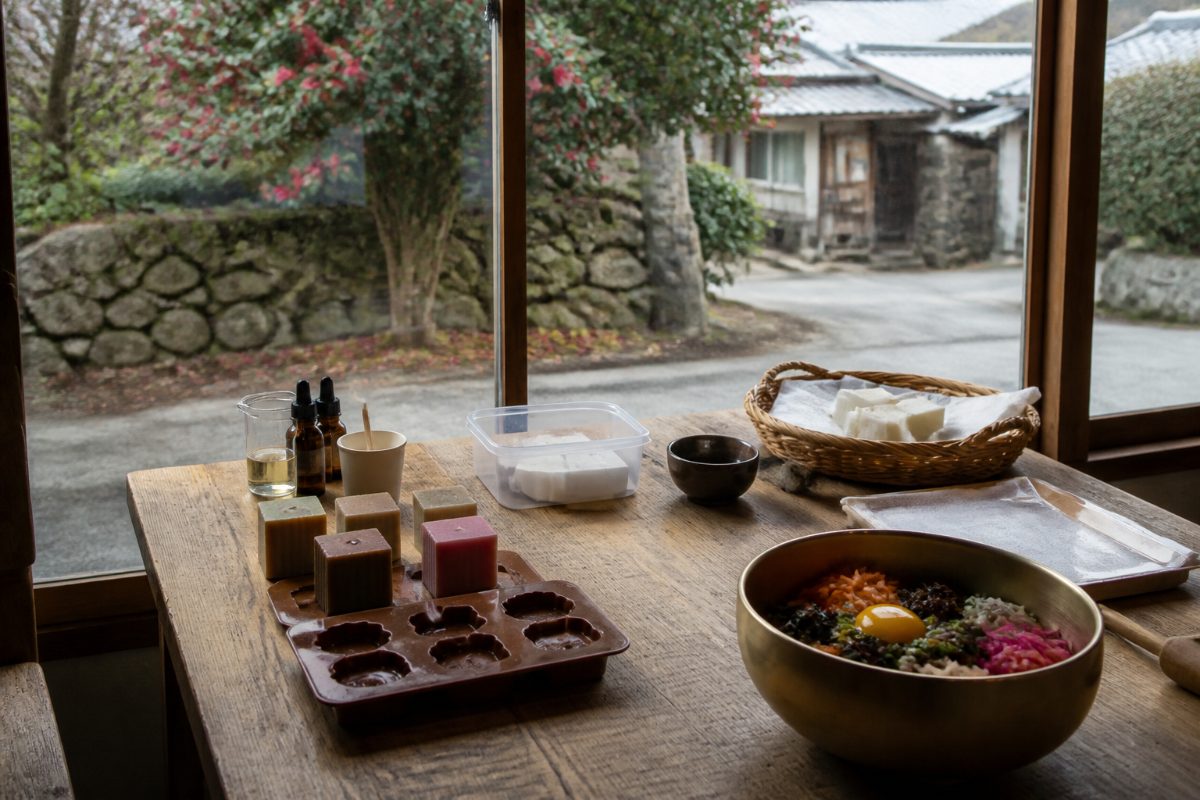
Jeju Dongbaek Village combines camellia scenery with activities related to the flower. Visitors can take part in experiences such as making camellia oil pasta or soap, or trying a camellia bibimbap activity. The village also offers overnight stays, which can suit travelers who want a quieter visit with more time for local activities rather than a brief stop between attractions.
The village was recognized in 2023 by the United Nations World Tourism Organization as a Best Tourism Village for its community-led tourism initiatives and its balance between people and nature. That recognition gives context to the village’s community-based approach; it is a different kind of outing from visiting a landscaped flower garden. If you are interested in a particular activity or an overnight stay, make that the focus of your plan and check the village’s current arrangements before building the day around it.
How can you plan a winter day around Jeju’s camellias?
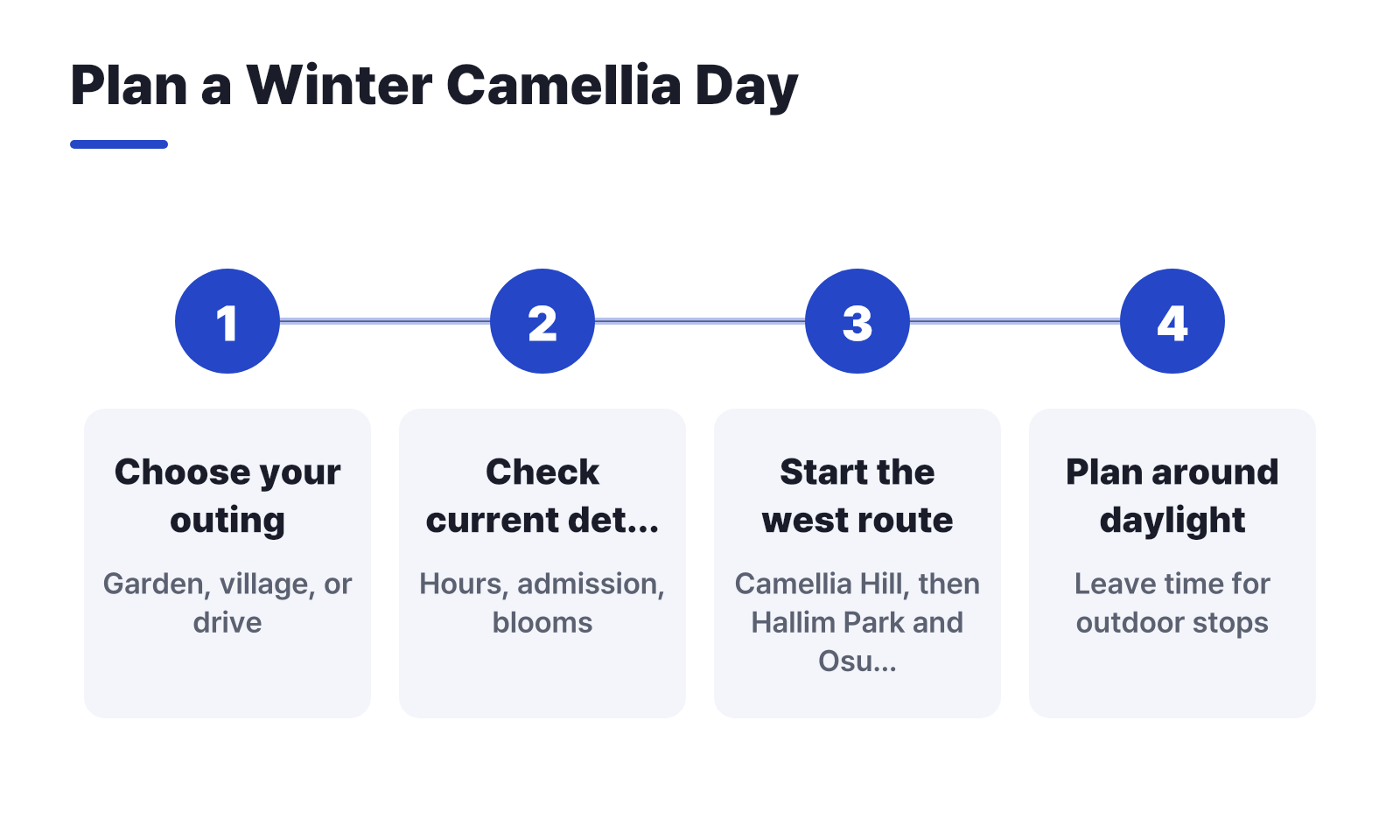
For a west Jeju day, start with Camellia Hill and consider adding Hallim Park and the Osulloc tea fields. Hallim Park offers gardens, caves, and topiary displays, while Osulloc is a place to walk among tea rows and have a warm drink. Pairing these stops gives the day a mix of flowers, landscaped grounds, and tea scenery rather than repeating the same kind of visit.
Put the garden walk early enough in your day that you can take your time there and still leave room for other outdoor stops. Camellia Hill can invite a slower visit than a quick roadside photo, especially if you want to explore its paths, look for different varieties, or pause at the café. If the garden takes longer than expected, adjust the rest of the route instead of trying to fit every possible stop into one outing.
A rental car is a practical option for reaching Camellia Hill and exploring camellia spots spread across Jeju. If you are staying on the east coast, a camellia-and-tangerine tour can be an alternative for combining stops across a wider area. The choice depends on whether you want control over the route or prefer an outing organized around several local stops.
Choose the type of experience first: a maintained garden for a concentrated flower visit, a village for camellia-related activities, or a flexible drive for outdoor sightings. Then build the rest of the day around that choice and the amount of time you want to spend walking. Travelers planning a broader cold-weather trip can also use this guide to visiting Jeju in winter to weigh the season’s advantages and trade-offs.
Note: Camellia bloom timing, garden admission, and opening hours are seasonal details; use the attraction’s current visitor information when setting the date and route.
References
- Official Jeju Tourism Guidebook (Pocket Book)
- 33 Incredible Things to Do in Jeju + My Secret Spots! – there she goes again
- 2026 Recommended Hiking in Camellia Hill Botanical Garden (Updated November)| Trip Moments
- 8D Korea + Eternal Nature In Jeju from ASA Holidays | TripZilla SG
- A Guide To Korea's Winter Bloom: Where To See Camellias – The Soul of Seoul
- Jeju Camellia Season: Where and When to See Winter Blooms
- Camellia Hill: Gorgeous blooms only in winter! - Tofu V Travels
- Jeju Camellia Season Guide: When & Where to See the Blooms
- Winter’s Crimson Delight, Must-Visit Camellia Attractions- VISITKOREA
Information in this post was checked as of November 2026. Policies and prices may change, so please verify important details with official sources.


Comments
Post a Comment