Warm Korean Drinks for Winter: What to Try

Warm Korean drinks range from honey-sweet citrus tea to a creamy sweet potato latte, so the best choice depends on whether you want bright fruit, gentle sweetness, or something closer to a dessert. For a traditional drink with a distinct citrus profile, try yuja-cha; for a filling café-style option, look for a hot sweet potato latte.
Key Takeaways
- Yuja-cha is a warm winter tea made with yuja preserved in honey, with a bright citrus character.
- Daechu-cha is made from dried jujubes and has a naturally sweet, caramel-like flavor.
- A sweet potato latte is a creamy, subtly sweet café drink served warm.
- Yuja hwachae and sujeonggwa are traditional drink names to recognize, but yuja hwachae is a fruit punch rather than a hot tea.
Table of Contents
Which warm Korean drink should you try first?
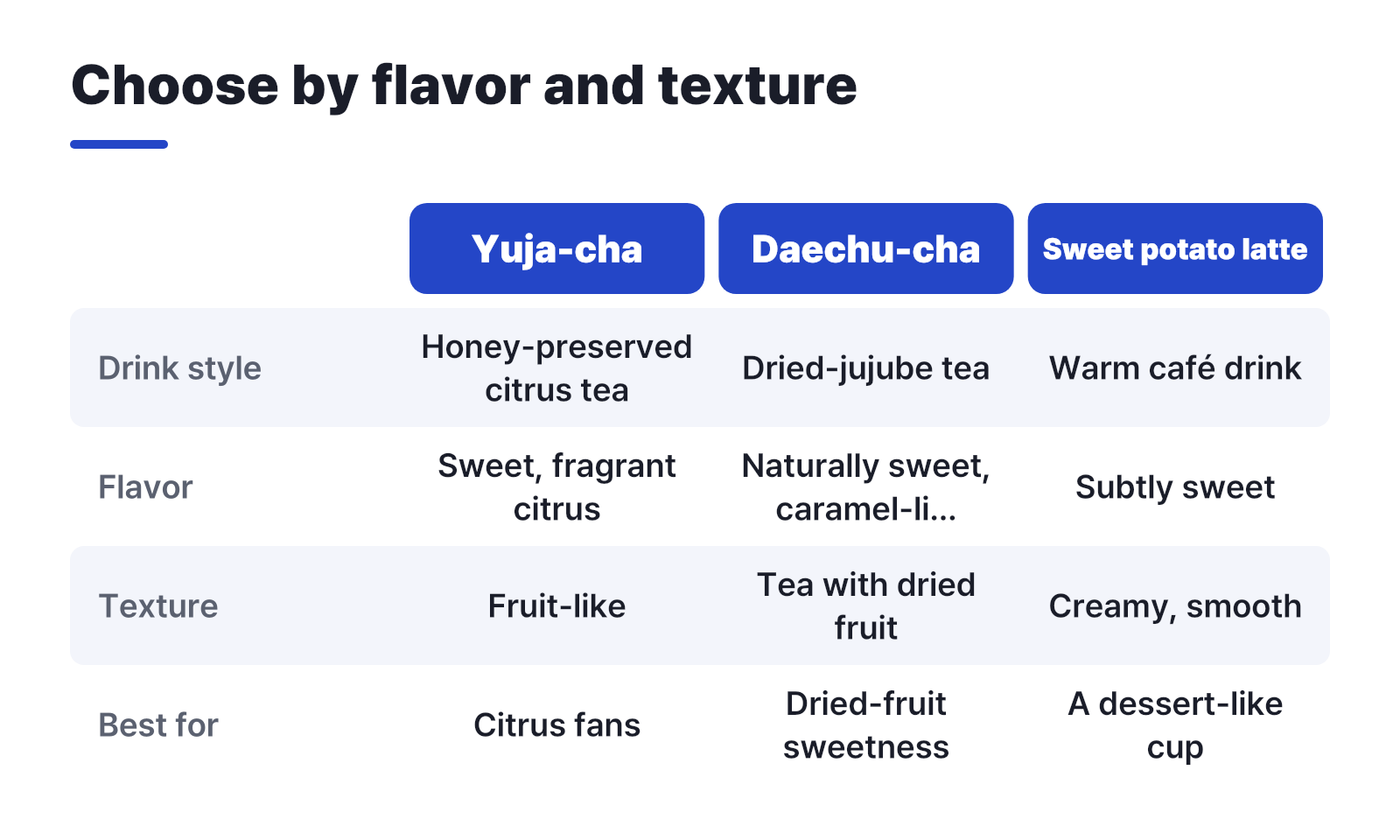
Choose yuja-cha for citrus and sweetness, daechu-cha for a mellow dried-fruit flavor, or a sweet potato latte for a creamy drink that feels more like a snack. Those three options offer different textures and flavor profiles, making them easy starting points when a winter café menu has several unfamiliar names.
| Drink | What it is | Choose it if you want |
|---|---|---|
| Yuja-cha | Tea made with yuja preserved in honey | Sweet, fragrant citrus |
| Daechu-cha | Tea made from dried jujubes | A naturally sweet, caramel-like taste |
| Sweet potato latte | A creamy, subtly sweet café drink served warm | A smooth, dessert-like cup |
| Yuja hwachae | A fruit punch made from citron | A fruit-based traditional drink rather than a hot tea |
These descriptions are useful when choosing by taste rather than by drink name. If you want a hot cup to sip slowly, focus on the teas or ask for the sweet potato latte warm; if you are curious about a traditional fruit drink, yuja hwachae is a separate style.
What does yuja-cha taste like?
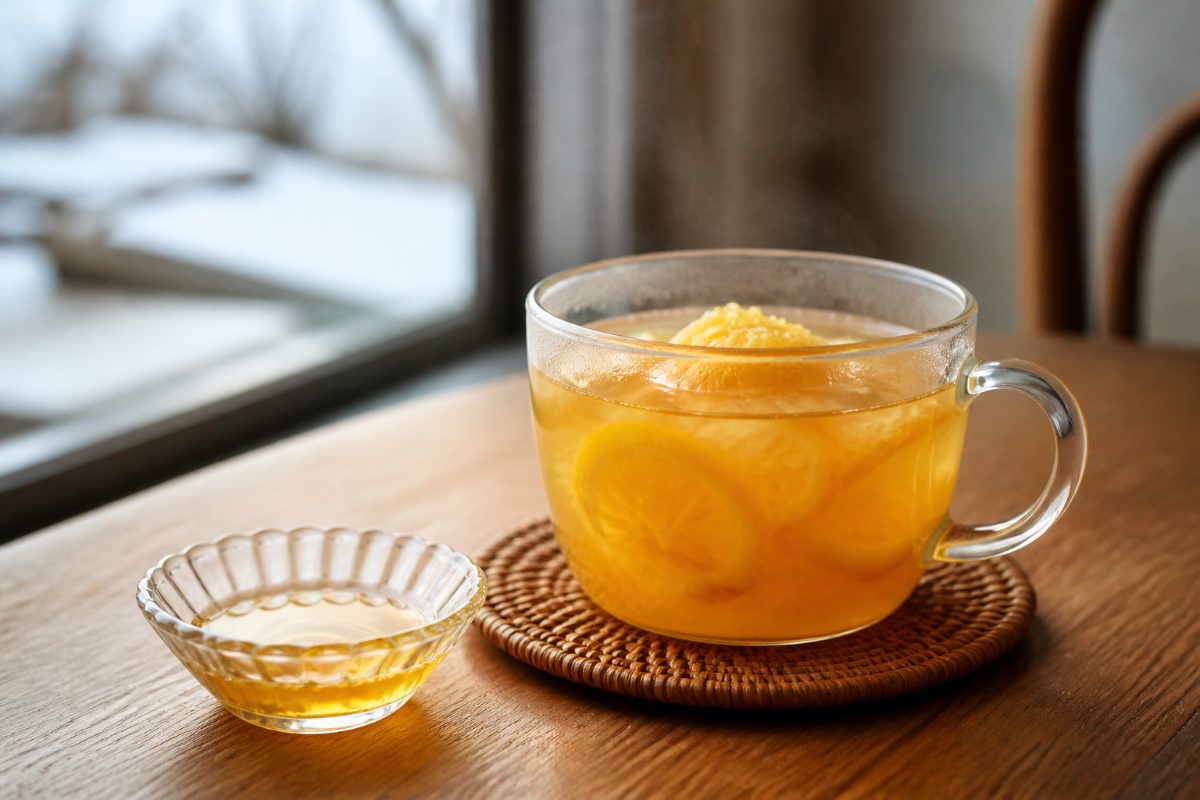
Yuja-cha is a Korean winter tea made with yuja, a fragrant citrus fruit, preserved in honey. Expect a sweet, aromatic drink with a citrus-forward flavor, rather than the simple, plain taste of steeped tea leaves.
The preserved fruit is part of the drink’s character: its honeyed sweetness and citrus scent give yuja-cha a fuller, more fruit-like impression. It is a natural pick if you enjoy sweet citrus flavors and want something that feels distinct from ordinary black or green tea.
For a first taste, take a small sip before deciding whether you want more sweetness. That lets the citrus come through before the honeyed part dominates your impression. If you prefer less-sweet drinks, yuja-cha may feel richer than a plain tea, so a different option may suit you better.
Yuja-cha is also a useful Korean menu word to recognize: yuja refers to the citrus fruit, while cha means tea. If you see yuja-cha listed, you can expect the honey-preserved citrus style described here.
Daechu-cha or sweet potato latte: which suits your taste?
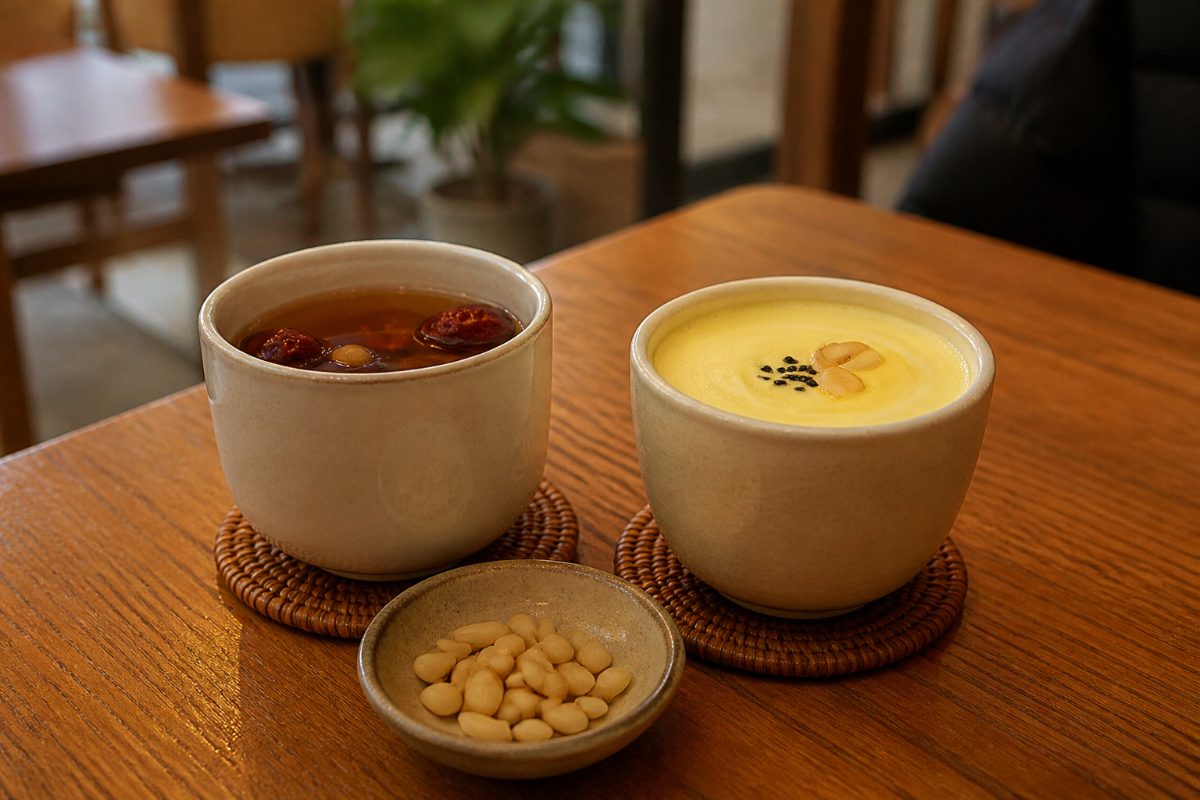
Daechu-cha is made from dried jujubes and is described as naturally sweet with a caramel-like flavor; a sweet potato latte is creamy, subtly sweet, and served warm. Pick daechu-cha when you want a fruit-based tea, and choose the latte when a smooth, café-style drink sounds more appealing.
The two drinks differ most in texture. Daechu-cha is a tea made with dried fruit, and it is sometimes served with pine nuts. A sweet potato latte is closer to a warm dessert in a cup, with a creamy feel and a mild sweetness.
That difference can guide your order even if you have never tasted either drink. If you want something fragrant and fruit-led, start with daechu-cha. If you want a more substantial-feeling café drink, try the sweet potato latte.
When comparing café choices, consider sweetness and texture together rather than choosing only by the word “tea” or “latte.” Daechu-cha’s dried-jujube base gives it a different flavor direction from yuja-cha, while the sweet potato latte is the smoothest option of these three.
Are yuja hwachae and sujeonggwa warm drinks?
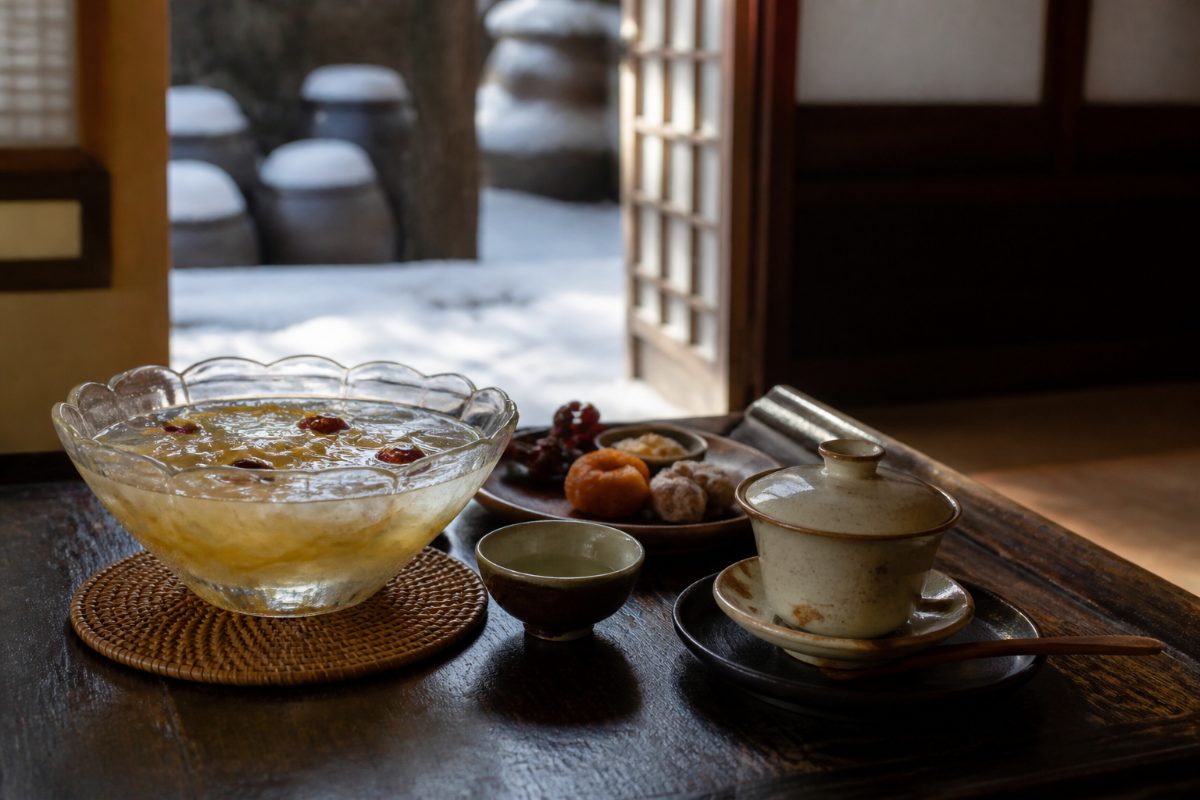
Yuja hwachae is a citron fruit punch, so it is a different kind of drink from a hot yuja tea. Sujeonggwa is another traditional Korean drink name worth recognizing, but it should not be confused with yuja-cha simply because both appear in lists of traditional Korean drinks.
The distinction matters if you are specifically looking for something warm to hold on a cold day. Yuja-cha is the tea option in this comparison; yuja hwachae is described as fruit punch. The two names share the yuja ingredient, but that does not make them the same drink.
Sujeonggwa is also a traditional drink featured alongside yuja hwachae in Korean winter-drink coverage. If you see the name on a menu, treat it as its own option and ask how it is served before ordering when temperature is your main priority.

How to choose a drink during a winter café stop
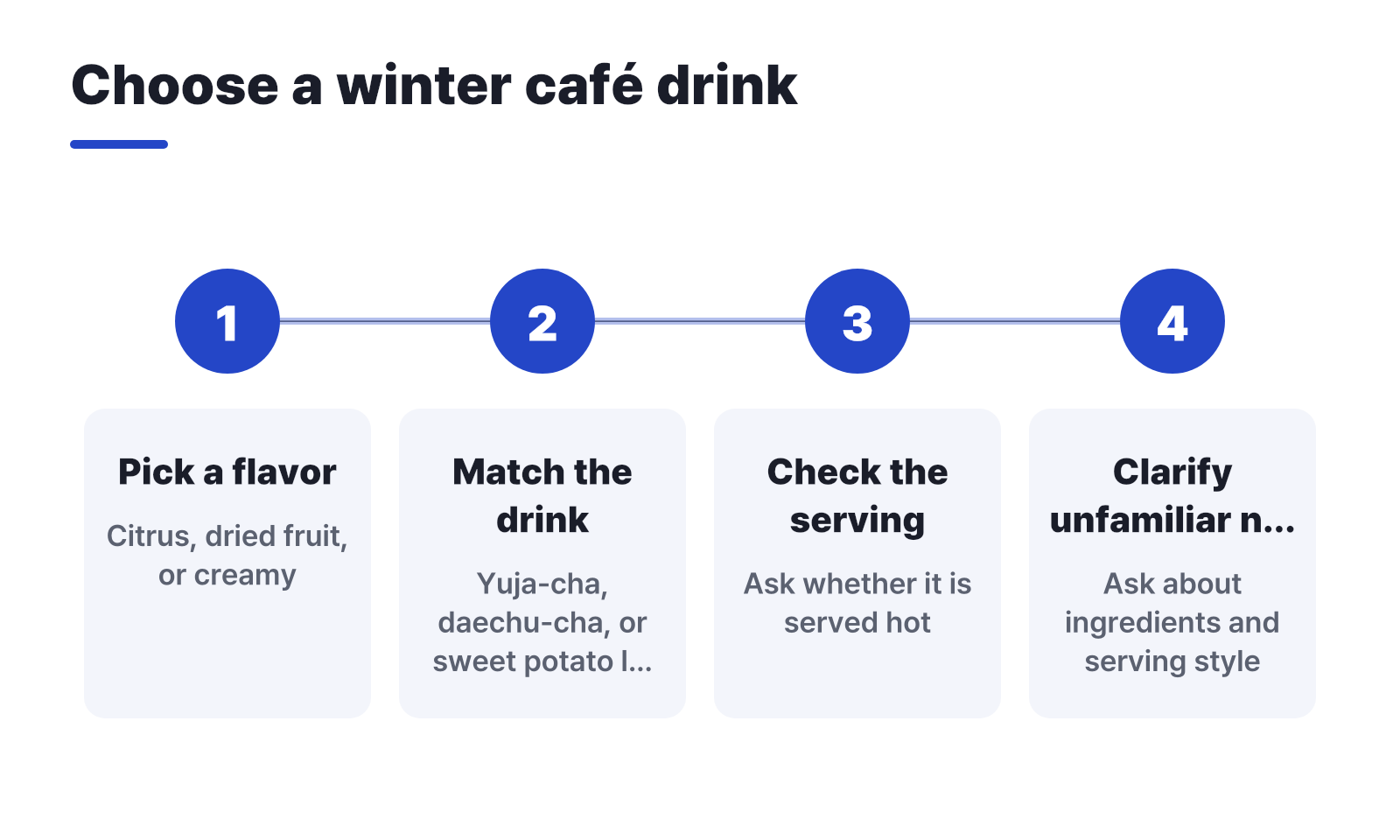
Start with the flavor and texture you want, then use the Korean drink name to narrow the choice. Yuja-cha suits citrus fans, daechu-cha suits people who enjoy dried-fruit sweetness, and a sweet potato latte is the creamy choice; yuja hwachae belongs in a fruit-punch category rather than the hot-tea category.
- For citrus: Look for yuja-cha, made with honey-preserved yuja.
- For a mellow fruit flavor: Choose daechu-cha, made with dried jujubes and described as caramel-like.
- For a creamy drink: Order a sweet potato latte and ask for it warm if the menu does not make the serving temperature clear.
- For a traditional fruit punch: Consider yuja hwachae, keeping in mind that it is not the same drink as yuja-cha.
If you are unsure about a menu description, ask the café staff what ingredients the drink uses and whether it is served hot. That simple question helps distinguish a tea from a punch or a latte without relying on a familiar-looking name.
For a first winter drink, choose yuja-cha if you want fragrant citrus, daechu-cha if you prefer a softer dried-fruit sweetness, or a warm sweet potato latte if you want a creamy café treat. Use yuja hwachae and sujeonggwa as separate traditional drink names, rather than assuming every Korean winter drink is a hot tea.
References
- Korean recipes: Traditional drinks keep you healthy in winter (유자화채, 수정과) : Korea.net : The official website o
- Top 10 Korean Winter Foods + 3 Winter Drinks You Must Try
Information in this post was checked as of November 2026. Policies and prices may change, so please verify important details with official sources.


Comments
Post a Comment