3 Days in Seoul: A First-Timer’s Itinerary
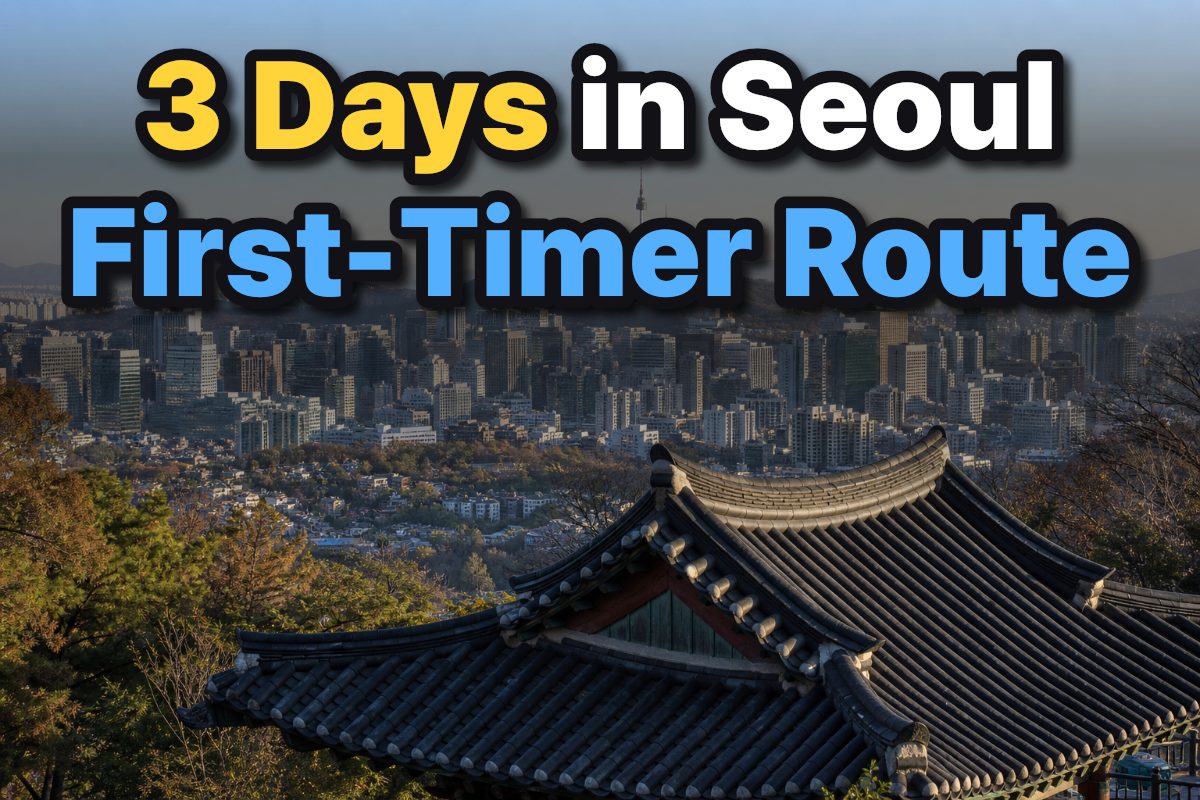
Three days in Seoul can cover the royal-palace district, a modern café neighborhood, shopping, and a skyline view without trying to cross the city for every stop. Spend Day 1 around Changdeokgung Palace, Gyeongbokgung Palace, and Insadong; use Day 2 for Hongdae or Seongsu; and pair Myeongdong or Namdaemun Market with Namsan on Day 3. Naver Map or Kakao Map can help plan local directions, while the itinerary leaves room to adapt for rain or a slower visit.
Key Takeaways
- Group Changdeokgung Palace, Gyeongbokgung Palace, and Insadong on the same historic-center day.
- Choose Hongdae or Seongsu as the main focus on Day 2, adding the other only if your pace allows.
- Pick Myeongdong for shopping streets or Namdaemun Market for a market visit, then continue to Namsan.
- Use a local map app for route planning and treat the daily $25–$40 estimate as excluding lodging, food, and transportation.
Table of Contents
Day 1: How do you plan a day around Seoul’s palaces?
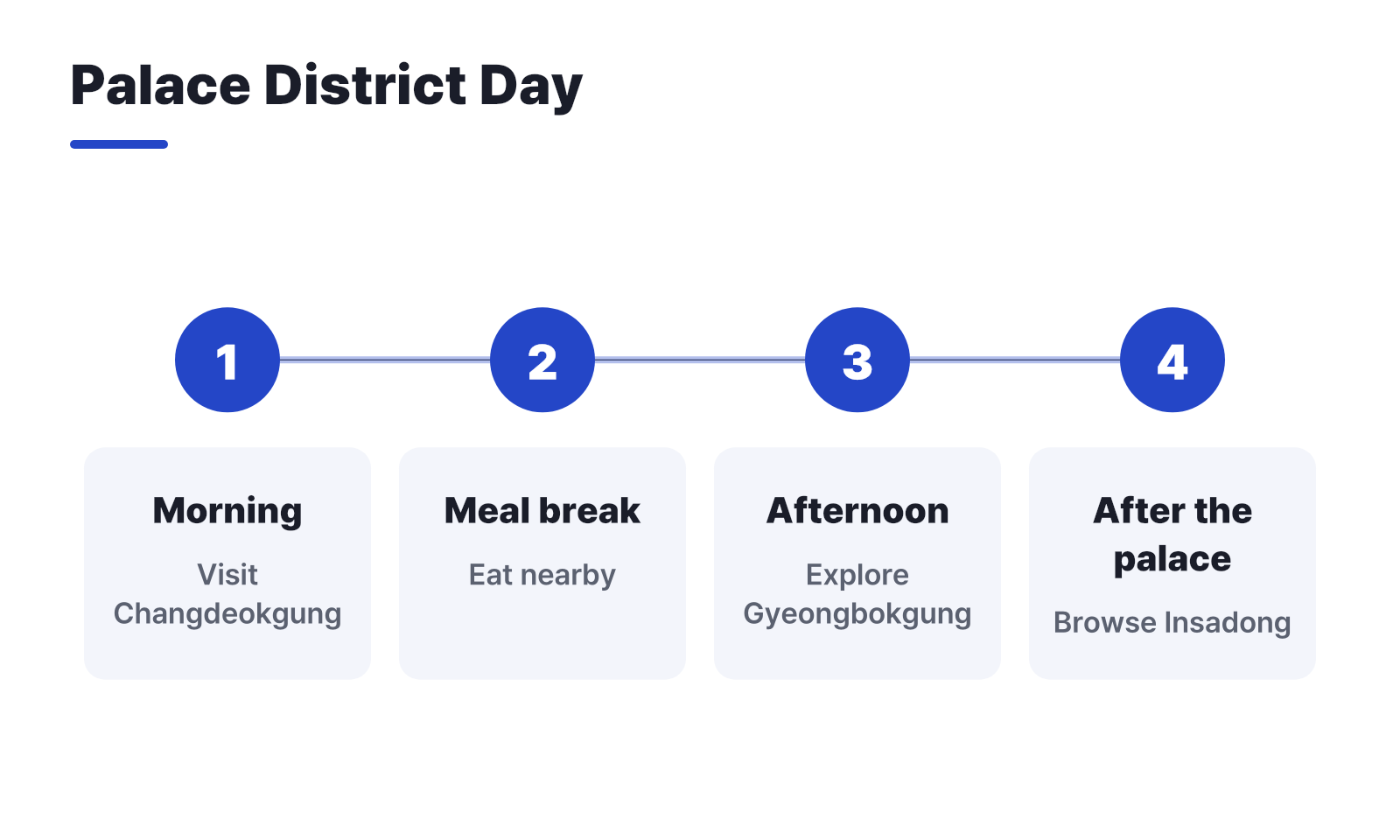
These stops form a history-focused day in Seoul’s central area, with palace grounds, traditional streets, and places to eat and browse. Keep the order flexible: a longer palace visit means trimming time from shopping or a second palace rather than rushing through every stop. Think of the day as a sequence of visits with room to pause, not as a checklist that has to be completed in full.
Changdeokgung Palace is near Anguk Station, making the Anguk area a practical starting point. The palace dates to 1405, and its grounds include several historic buildings. Give the visit enough space to explore the buildings and courtyards that interest you; the grounds are more than a quick photo stop. Before you arrive, decide whether you would rather spend your time looking around the palace grounds or move on promptly to the next part of the day. That simple choice can help you set a comfortable pace without committing to a rigid schedule.
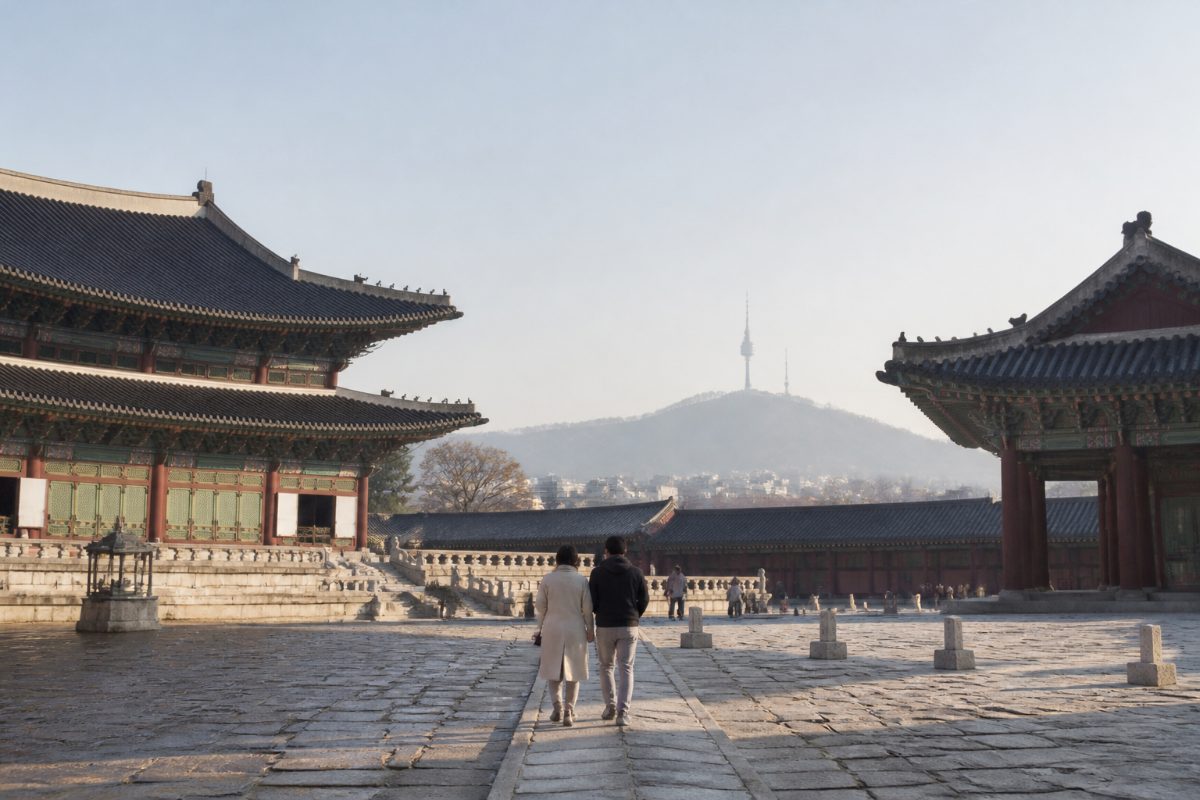
After the palace, walk through the nearby traditional-home streets and continue to Insadong for lunch or browsing. Insadong has restaurants and shops focused on arts and traditional crafts, so it works well as a break between palace visits. If shopping for a small keepsake is part of your plan, leave time to look around rather than treating the neighborhood as a short passage between attractions. You can also use this stop to take a proper pause before deciding how much time to give the next palace. A meal and some browsing need not become separate, tightly timed activities.
Gyeongbokgung Palace, built in 1395, is a large complex. Use its visitor map to choose the buildings and sections you most want to see instead of trying to cover every corner. A workable sequence is Changdeokgung in the morning, a meal in the area, and Gyeongbokgung followed by Insadong. If you have already spent longer than expected at the first palace, make your selections at Gyeongbokgung more focused rather than hurrying through the grounds. Palace arrangements and seasonal details can affect a visit, so check the current visitor information when setting the date.
For dinner, choose a meal that suits the pace of the day. Korean barbecue is a sit-down option; tteokbokki, spicy rice cakes, or mandu, Korean dumplings, make for a more casual meal. Insadong and nearby streets give you room to decide after the palace visits, rather than locking the day into several food stops in advance. Leaving dinner flexible also gives you a chance to finish the day without adding another planned attraction. The main trade-off is straightforward: allow more time for the palace visits, or keep the schedule lighter by shortening browsing and meal stops.
Day 2: Should you choose Hongdae or Seongsu?
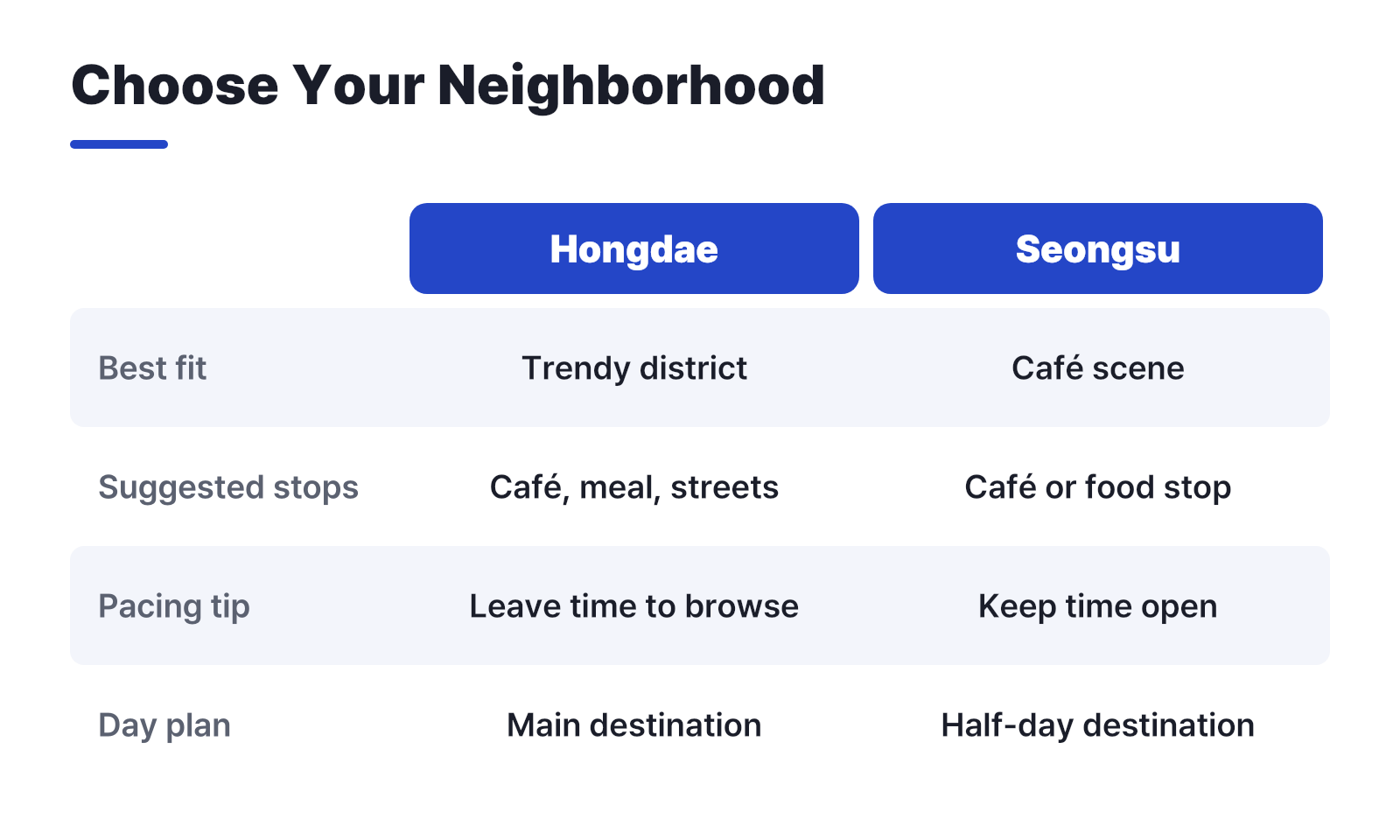
Hongdae and Seongsu both work as half-day neighborhood choices, so make one your main destination and add the other only if you have time and energy. Choose Hongdae for a day built around a trendy district, shops, and café stops; choose Seongsu if you would rather spend more time exploring its café scene. This keeps the day from turning into a rushed cross-city checklist. It also gives you a clear way to decide: start with the kind of neighborhood visit you want, then let the available time determine whether a second area fits.
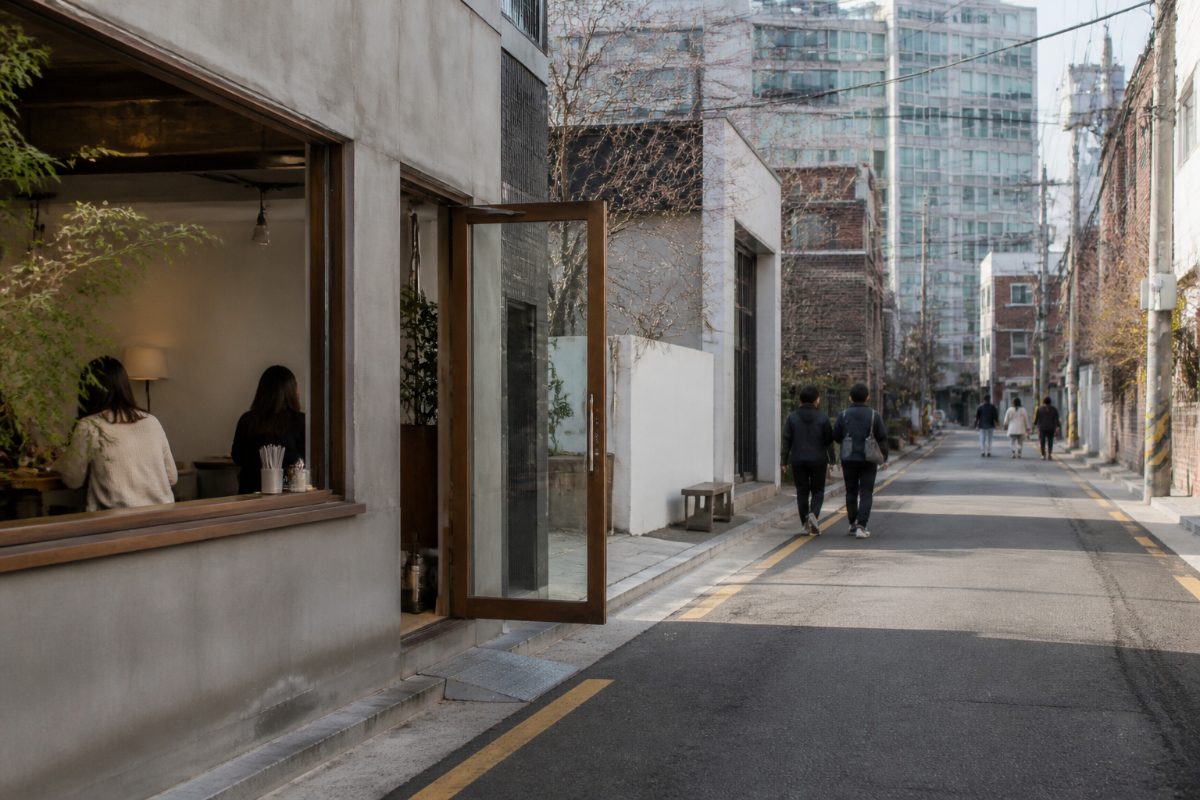
In Hongdae, build the visit around a few stops: a café, a meal, and time to look around the surrounding streets. The point is to leave space between plans, since a café break or browsing can take longer than a quick stop. If you want to see both neighborhoods, decide which one matters more and give it the larger share of the day. Keep the other area as a possible addition, not an appointment that forces you to cut short the place you chose as your priority. If you stay with Hongdae, the open time can simply become a less hurried chance to explore nearby streets.
Seongsu is another half-day option for visitors drawn to cafés and newer neighborhood scenes. Treat it as a destination in its own right rather than squeezing it between unrelated stops. A practical plan is to choose one café or food stop as an anchor, then leave the remaining time open for nearby browsing. This approach leaves room to decide what you want to do after that first stop, instead of filling the whole visit with fixed plans. If a slower café visit is important to you, avoid adding another neighborhood just because it appears possible on the itinerary.
For lunch, kimbap, rice and fillings rolled in seaweed, and mandu are casual choices. You can order a familiar dish alongside one new item, which makes a flexible meal plan for a group with different tastes. Keeping the meal simple can leave more of the day for the neighborhood you selected, while still giving everyone some choice. If your group is deciding between Hongdae and Seongsu, make that decision separately from the lunch choice; the meal can fit either plan without requiring another stop.
If rain makes an extended outdoor walk less appealing, shift part of the day indoors with a café stop or COEX Mall in Gangnam. COEX offers a mall-based change of pace, while staying in one neighborhood for the rest of the day avoids spending the afternoon on extra cross-city transfers. For a short trip, choose the indoor stop that fits your existing route rather than adding it automatically. You can also shorten the outdoor browsing portion and keep the meal or café break as the day’s main pause. The goal is to adjust the shape of the visit, not to replace a manageable neighborhood plan with several new destinations.
Day 3: How can you combine Seoul shopping with a skyline view?
Choose Myeongdong or the market for the shopping portion of Day 3, then set aside the later part of the day for Namsan and N Seoul Tower. Myeongdong suits a visit centered on shopping streets, while the market gives the day a market stop. The choice depends on what you want to browse; visiting both is an option when shopping is a priority. To keep the plan comfortable, decide which shopping area is the main stop before you set aside time for the view. That way, the skyline visit remains part of the day rather than something squeezed in only if every other plan ends early.
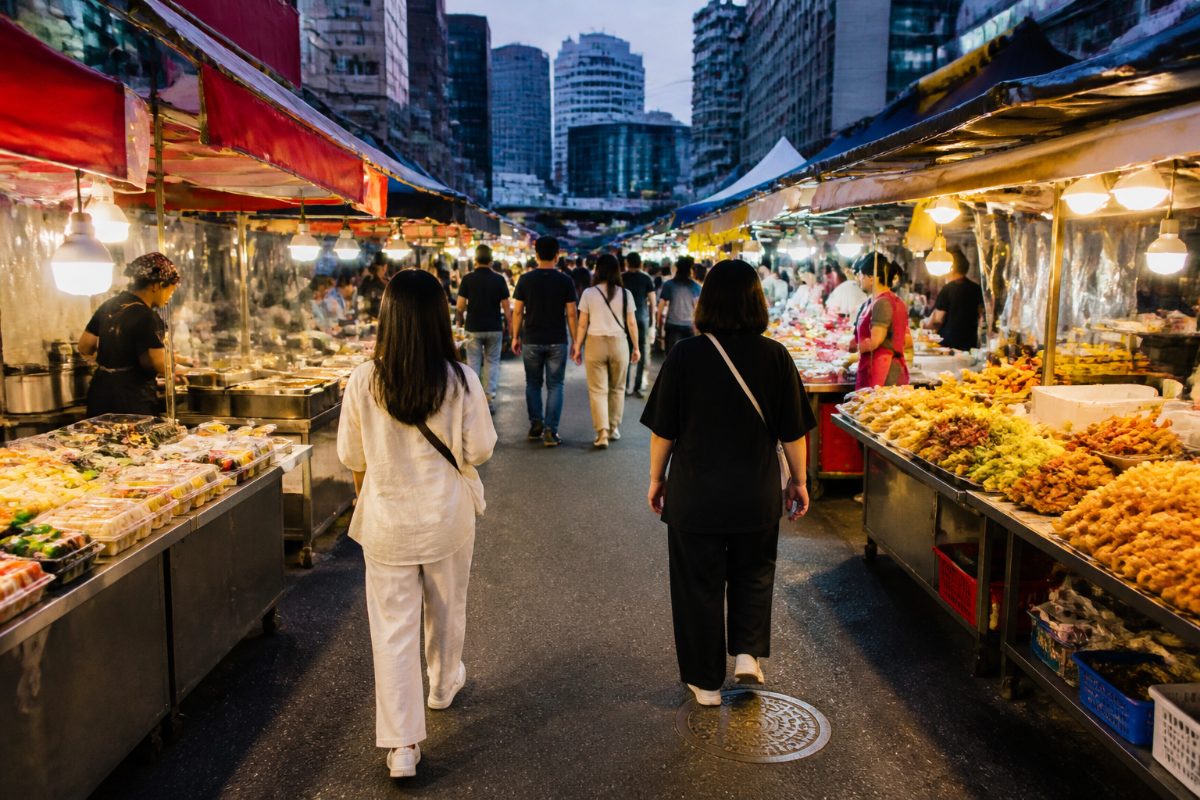
Myeongdong is a convenient area for first-time visitors who want shops and food close together. The market gives you a different setting for browsing, so plan it as its own stop rather than assuming it is simply another name for Myeongdong. If you visit both, leave the second area optional and make the first your main shopping destination. You can use that distinction to shape the shopping portion around the kind of browsing you prefer, without treating two separate areas as one continuous stop. If time feels tight, keep the optional visit out of the core plan instead of trying to rush through both.
Keep a meal in the plan instead of trying to fit shopping around several food stops. For something casual, kimbap, mandu, or tteokbokki can fit a market-style meal. Decide whether you want dinner before Namsan or after the view, then leave the other meal open so the day can run at a comfortable pace. The meal can serve as a pause between the shopping portion and the later view, or it can wait until after you have finished looking across the city. Leaving that choice open makes it easier to respond to how long you spend browsing.
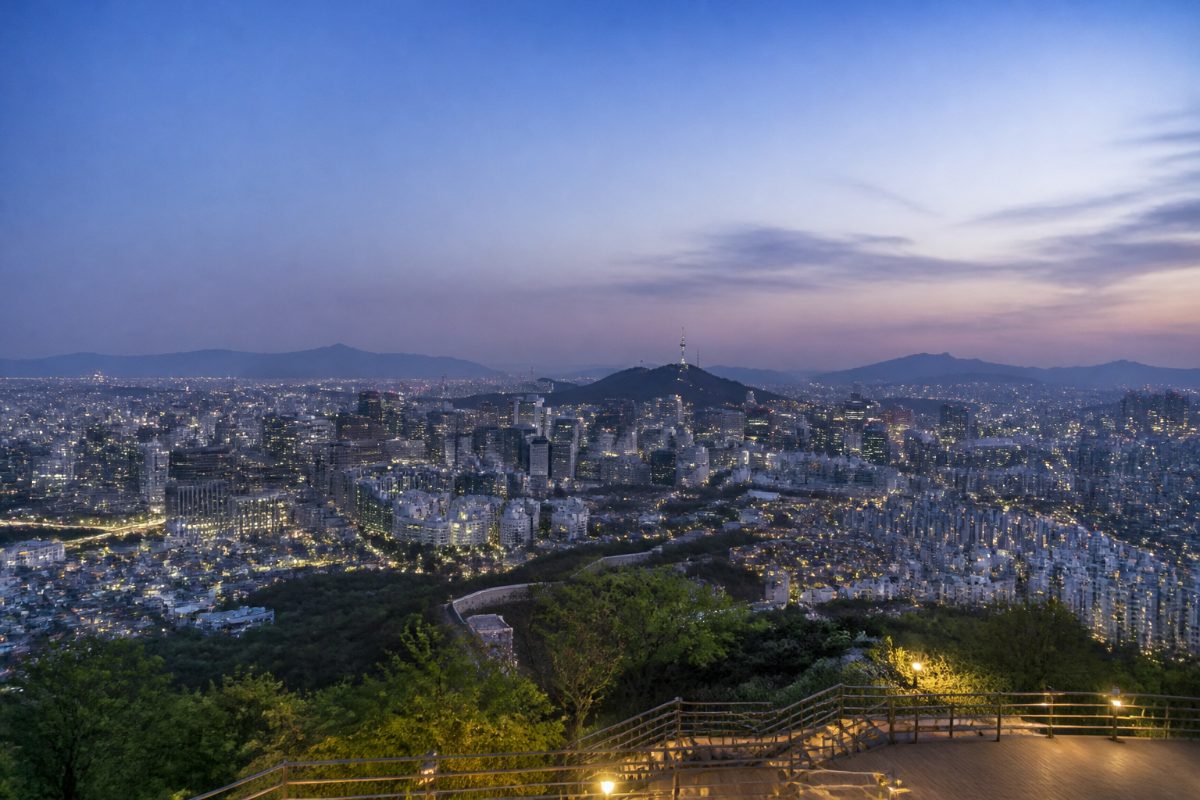
Continue to Namsan for a view across Seoul, with N Seoul Tower as the main landmark. The tower and surrounding area make a natural final stop because the focus shifts from street-level shopping to looking out across the city. If the view is clouded over, you can shorten the outdoor portion and spend more time in your chosen shopping area instead. You do not have to make the shopping and skyline portions equal in length: give more time to whichever matters most to you, while preserving a clear place for the other. If you would rather finish with the view, avoid adding an extra shopping stop late in the day.
Where should you stay, and how do you get around?
Myeongdong is a useful base for a first Seoul visit focused on central sights, shopping, and Namsan. Travelers whose plans center on large malls may prefer staying near Gangnam, but that shifts the starting point away from the palace-focused Day 1. Choose the base that fits the days you most want to make easy, and avoid changing hotels during a three-day itinerary. When comparing areas, consider the balance of your plans rather than choosing a hotel only for one attraction: a base that suits the main focus of the trip can make the daily starts simpler.
Save or enter the names of your planned destinations in a map app, then compare the route options before leaving your hotel; this makes it easier to see how a proposed detour affects the day. Anguk Station is a useful map search for the Changdeokgung area. Papago can help translate a short sign or menu item when you need a quick language aid. Before setting out, look at the route as a whole so you can tell whether the next stop fits naturally with the area you are already visiting. If it does not, consider leaving it for another day rather than making the day harder to follow.
Seoul is a large city, so group stops by neighborhood and use the subway or other transit directions shown in your map app for longer gaps. For example, keep Day 1 in the historic center and avoid inserting a distant café stop between the palaces. This makes the order of the day easier to follow and leaves more time for the places already on your plan. When you review directions, pay attention to how a proposed transfer fits between the stops, not just to whether each destination can be reached. A route that keeps nearby activities together is easier to adjust if one visit takes longer than expected.
A published budget estimate for budget travelers is $25–$40 per day, excluding accommodation, food, and transportation. It is therefore a limited estimate for spending outside those three major categories, not a complete daily travel budget. Build lodging, meals, and local transportation into separate parts of your trip budget. Keeping those categories separate makes it clearer what the estimate covers and what still needs to be planned. Use your own travel priorities to decide how much room to leave for shopping or other optional spending, rather than treating the estimate as a full cost for the day.
Before booking accommodation, choose whether central sights or Gangnam-area malls matter more to your plans. Save a main destination for each day, add meals nearby, and leave optional stops flexible. That gives you a clear route while preserving time for the palace grounds and the Namsan view. It also makes the itinerary easier to adapt: if you decide to spend longer in one neighborhood, you can shorten an optional stop without rebuilding the rest of the trip. A stable base, neighborhood-based plans, and a little open time help keep the three days manageable.
References
- Seoul 3-Day Itinerary: A First-Timer’s Plan That Works | Inside Seoul
- The Ultimate 3-Day Seoul Itinerary for First-Time Visitors
- The Best of Seoul: The Ultimate 3-Day Itinerary
- How to Spend 3 Days in Seoul, South Korea: Epic Itinerary
- Seoul Travel Guide 2026: Insider Secrets from an 8-Year Expat
- The best 3 days in Seoul itinerary, South Korea — Helena Bradbury
- What to do in Seoul for 3 Days - Best Things to Do in Seoul | Air NZ
- 17 Fun Things to do in Seoul, South Korea (First Timer's Guide) - Live Like It's the Weekend
- Visit Seoul: 2 Nights 3 Days Course for Novices
Information in this post was checked as of November 2026. Policies and prices may change, so please verify important details with official sources.


Comments
Post a Comment